
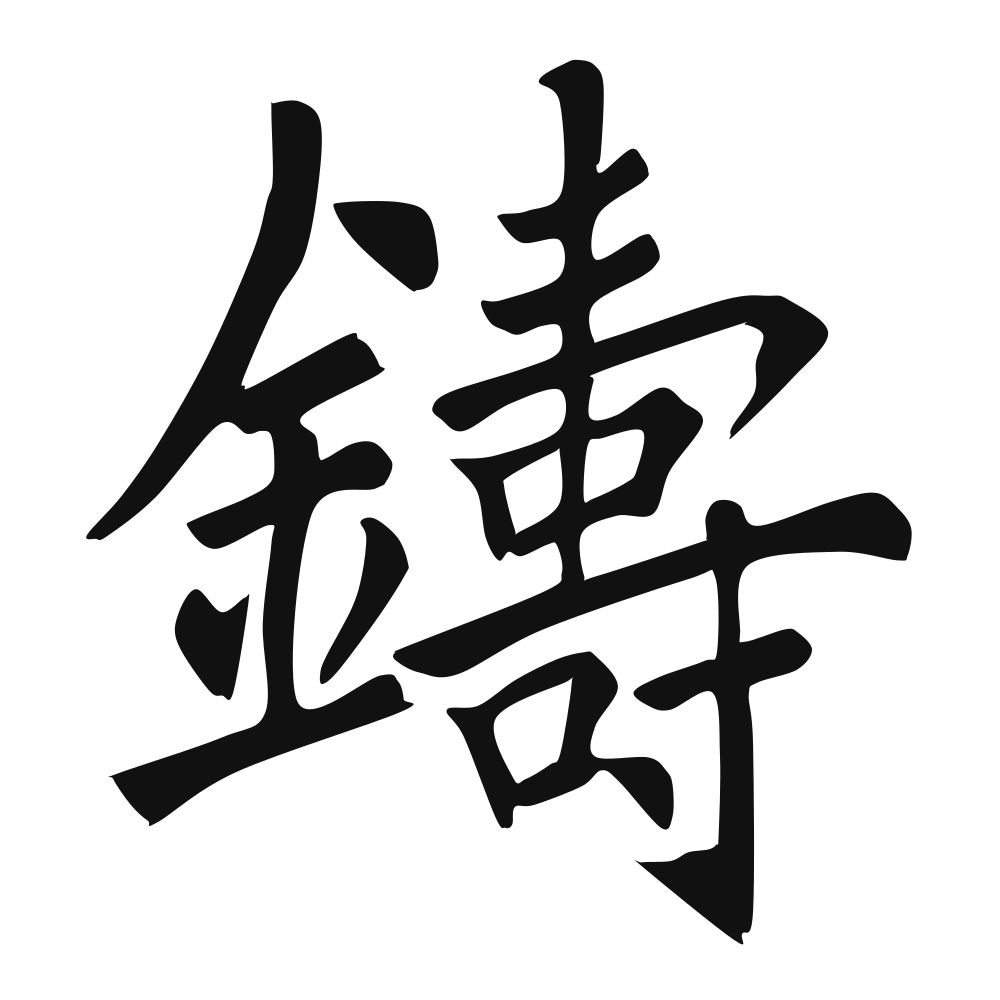
铸
to cast or found metals
Closest English meanings
cast·found·mold·forge·coin
The Calligrapher — Chǔ Suíliáng 褚遂良
Tang chancellor and regular-script master of elegant, balanced strokes.
Tang calligrapher (596–658), master of regular script — Tang master of graceful, tensile regular script favored by the imperial court. Tang dynasty
Cultural Story
铸, 'to cast', shows molten metal poured into a mould; the seal forms set 金 above a vessel of liquid metal. From bronzes to coins, 铸 was how the durable things of state were born.
Common words & phrases
- 铸造 cast · found · mold
- 铸就 forge · shape · create
- 铸铁 cast iron · iron casting
- 铸币 coin · mint money · cast coin
- 熔铸 melt and cast · fuse
Read the story behind the character
Foundries 铸造 engine blocks and 铸铁 yields cast-iron pans; mints 铸币 to spend. We speak of 铸就 a character through hardship and 熔铸 ideas into a book. To 铸 is to give lasting shape to what was formless.
Why this character belongs on skin
Metal meets a mold and becomes permanent: 铸, to cast, to pour molten bronze into a shape that will outlive the hands that made it. The radical is 金, gold and metal; beside it a character meaning 'to pour.' The ancients cast tripods—massive vessels inscribed with laws and oaths—and a dynasty's legitimacy lived in that poured metal. Nothing careless survives casting. The heat removes everything impure; what remains is the decision itself, made physical. 铸 is the verb for when you stop sketching and commit: the vow, the habit, the self you've been rehearsing finally set in permanent form. You are the foundry and the mold at once. Some things should only ever be cast, never carved. This is one.
Own this character
Purchase delivers the original SVG of this glyph, brushed by Chǔ Suíliáng 褚遂良, ready to place on skin, paper, or screen.