
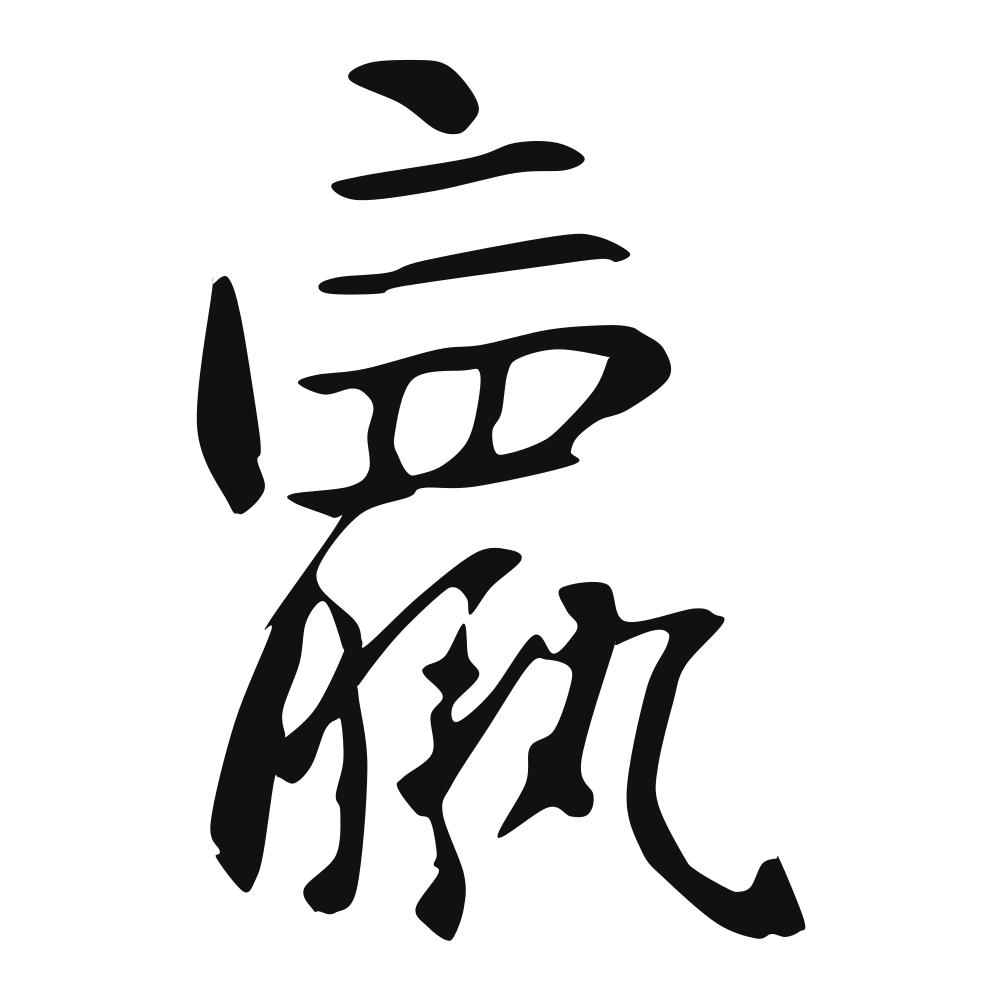
The Calligrapher — Zhōng Yáo 钟繇
Wei official credited as the father of regular script.
三国魏 calligrapher (151–230), master of regular script — the Han-Wei transition master who raised regular script from a clerical hand into a courtly art. Wei kingdom (Three Kingdoms)
Cultural Story
Shuowen glosses 羸 as lean, and early texts applied it to starved cattle, exhausted soldiers, and emaciated horses limping home from long campaigns. Chroniclers wrote of 羸兵, weak troops, left behind at burned camps. The sheep radical that shapes the character hints at its earliest scene: a bony flock dragged through a bitter winter, ribs showing under matted wool.
Common words & phrases
- 羸弱 weak · frail
- 羸瘦 thin and weak
- 羸病 sickly
Read the story behind the character
The word survives mainly in written description. A doctor's report might note a patient grown 羸弱 (weak, frail) after months of illness, or 羸瘦 (thin and weak) following surgery; an old man's 羸病 (sickly) frame needs a walking stick and warmer rooms. Everyday speech prefers simpler words, yet historical novels still deploy 羸 for starving horses and fevered generals.
Own this character
Purchase delivers the original SVG of this glyph, brushed by Zhōng Yáo 钟繇, ready to place on skin, paper, or screen.