
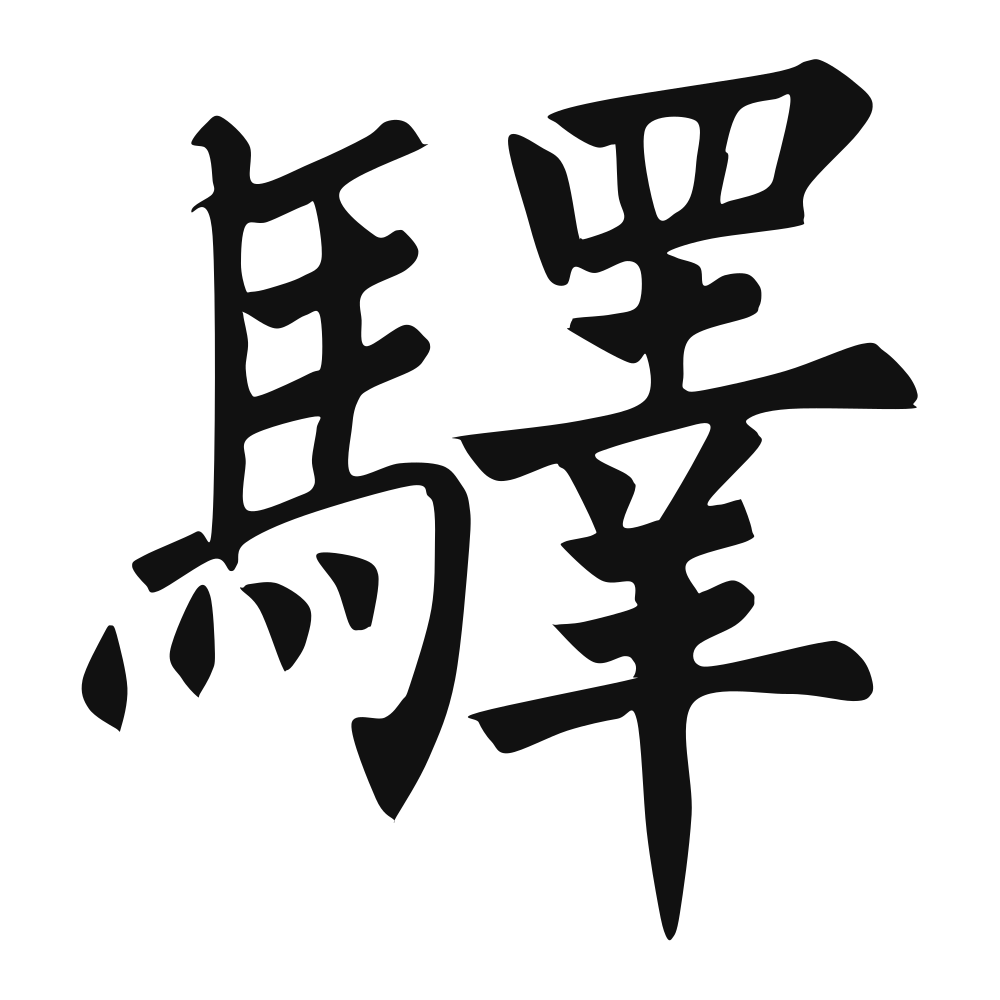
驿
post horse; relay station
Closest English meanings
post station·courier
The Calligrapher — Chǔ Suíliáng 褚遂良
Tang chancellor and regular-script master of elegant, balanced strokes.
Tang calligrapher (596–658), master of regular script — Tang master of graceful, tensile regular script favored by the imperial court. Tang dynasty
Cultural Story
驿 (yì) sets 馬 beside the phonetic 睪, the post station of imperial China where couriers swapped tired 驿马 (post horses) and sped official letters along the road. It was the empire’s nervous system.
Common words & phrases
- 驿站 post station · stagecoach station
- 驿使 courier · messenger
- 驿马 post horse
Read the story behind the character
驿 names the old relay post. A 驿站 (post station) once dotted the highways, a 驿使 (courier) raced royal decrees, and a 驿马 (post horse) galloped the news. Today it survives in place names and history.
Why this character belongs on skin
Along the imperial roads, every thirty li stood a 驿 — a post station where horses were changed, letters rested, travelers found one night of lamplight before the dark resumed. Whole poems live inside that word: rain on the inn roof, a friend seen off at the gate, plum blossoms sent a thousand miles in a letter. 驿 is the architecture of transit, the proof that even the longest journey is only a series of brief arrivals. For anyone whose life has been movement — cities, countries, leaving — this is the mark. It says: I know how to stop for a night and go on at dawn. Place it near the ankle or the wrist, wherever your pulse keeps its own post road.
Own this character
Purchase delivers the original SVG of this glyph, brushed by Chǔ Suíliáng 褚遂良, ready to place on skin, paper, or screen.