
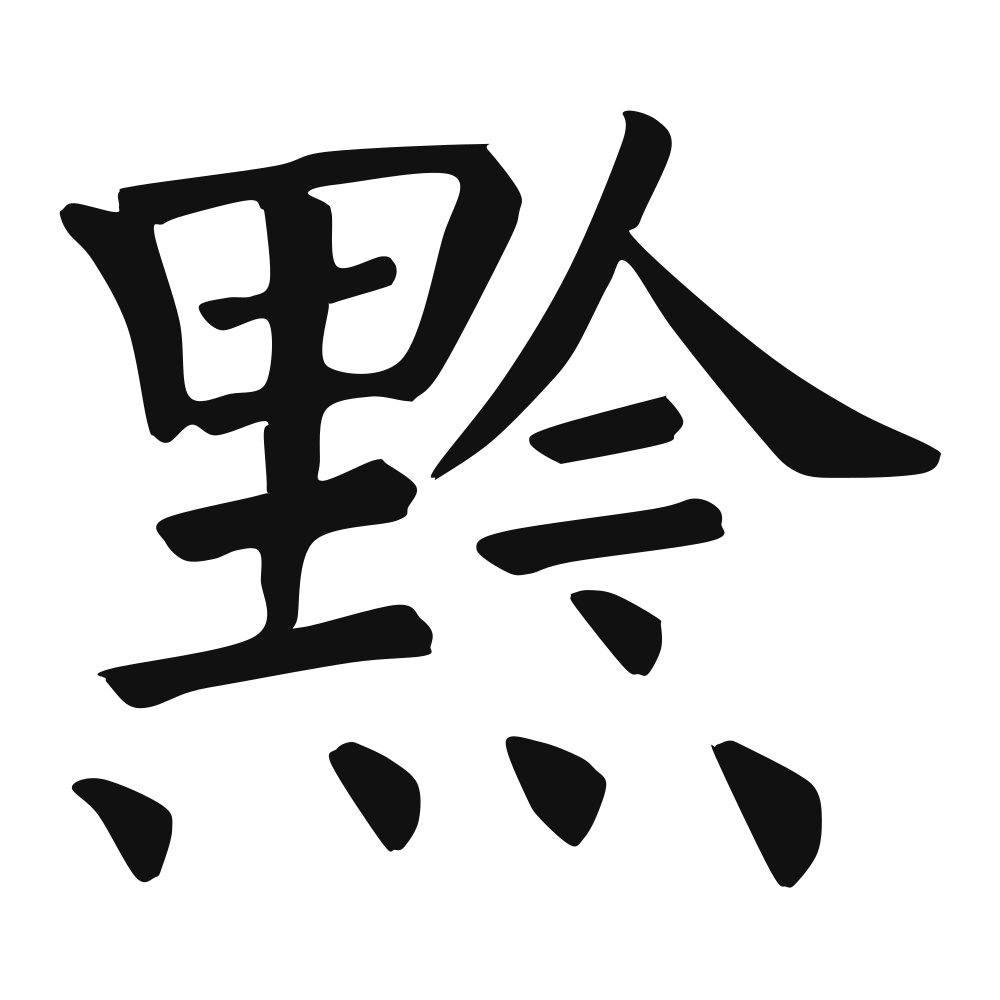
黔
short name for Guizhou 貴州|贵州[Gui4 zhou1]; (literary) black; to blacken
Closest English meanings
black·Guizhou
The Calligrapher — Chǔ Suíliáng 褚遂良
Tang chancellor and regular-script master of elegant, balanced strokes.
Tang calligrapher (596–658), master of regular script — Tang master of graceful, tensile regular script favored by the imperial court. Tang dynasty
Cultural Story
《説文解字》gives 黔 as “黎也” (black), a phono-semantic compound from the black radical with the sound 今. The Qin called the people 黔首, “black-headed,” for their dark head-cloths. The same word became the abbreviation for Guizhou, the mountainous southwest province still nicknamed 黔 today.
Common words & phrases
- 黔首 common people (ancient)
- 黔剧 Guizhou opera
Read the story behind the character
The old 黔首 (common people, ancient) appears in Qin-history lessons, while 黔 now simply means Guizhou—as in 黔剧 (Guizhou opera), a regional stage art. Travel guides and license plates use 黔 for the province, so one black-headed word bridges the empire's subjects and a modern southwestern region.
Why this character belongs on skin
The character 黔 is black made bureaucratic and then made beautiful: the black radical beside a sound, first naming ink-dark, then the common folk of old China who stained their foreheads—the black-headed people—then the mountain province of Guizhou, a place of fog and limestone and mists that swallow roads. Its most famous story is a fable: the donkey of Guizhou, carted in from elsewhere, grand and useless until a tiger studies it for days, tests it, realizes the braying has no teeth behind it, and eats it. The lesson is old and useful: noise is not power, and empty ceremony is a kind of lunch. But the color itself is worth keeping too—black as river stone, black as the ink that outlasts every dynasty that banned it. Wear the darkness that is yours: not the fog of confusion, but the deep, calm, patient black of fertile ground.
Own this character
Purchase delivers the original SVG of this glyph, brushed by Chǔ Suíliáng 褚遂良, ready to place on skin, paper, or screen.