
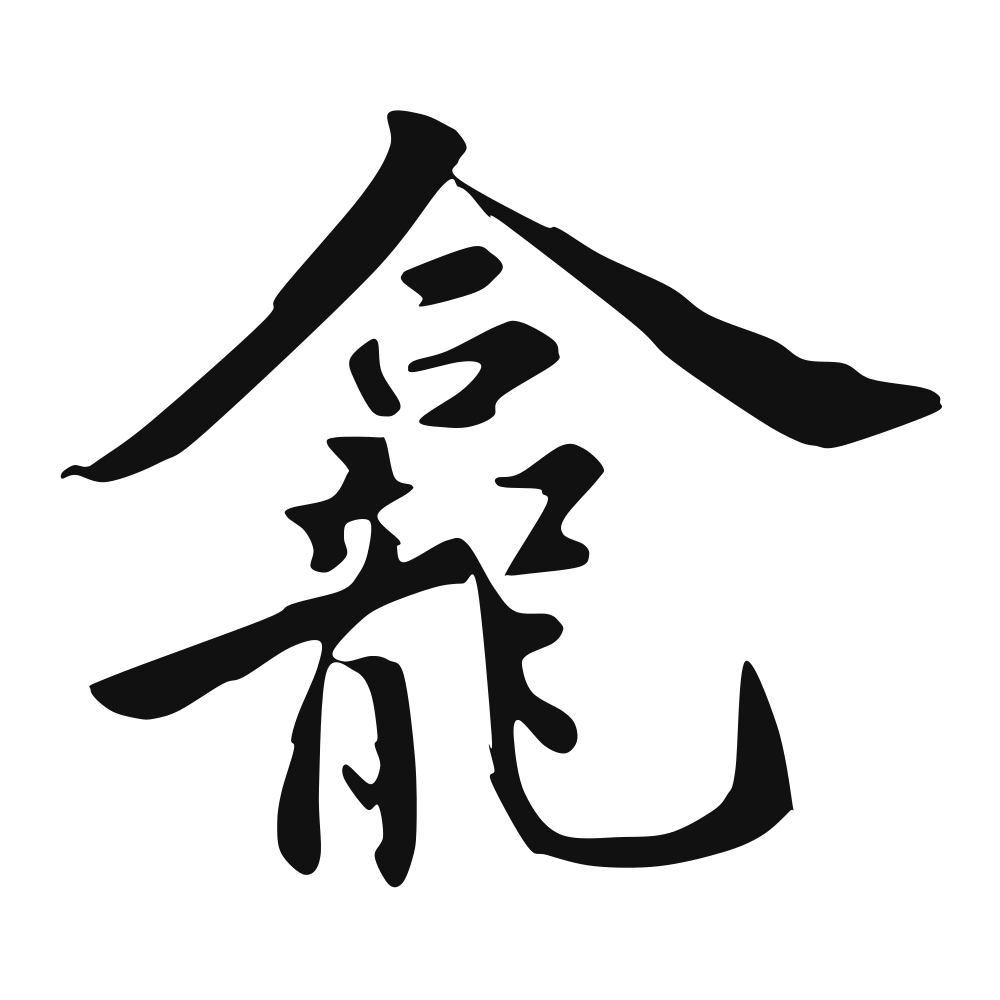
龛
(bound form) niche; shrine
Closest English meanings
niche·shrine
The Calligrapher — Chǔ Suíliáng 褚遂良
Tang chancellor and regular-script master of elegant, balanced strokes.
Tang calligrapher (596–658), master of regular script — Tang master of graceful, tensile regular script favored by the imperial court. Tang dynasty
Cultural Story
龛 names a niche — originally a shelf or alcove carved to hold sacred images. Buddhist cave builders at Yungang and Longmen cut hundreds of 佛龛 into sandstone cliffs, each framing a Buddha in miniature architecture; household altars held a 神龛 for ancestors and local gods. The character joined the dragon radical with a sound element.
Common words & phrases
- 佛龛 Buddhist shrine · niche
- 神龛 shrine
Read the story behind the character
Modern homes keep the idea alive in miniature: a grandmother places fruit before the 神龛 on the living-room cabinet each New Year, temple gift shops sell carved 佛龛 for travelling icons, and museum guides point visitors to cliff walls honeycombed with 佛龛 niches at Longmen, each once housing a serene carved Buddha.
Why this character belongs on skin
Every sacred thing needs a small room. In temples across Asia, the Buddha does not float in open air; he rests in a carved recess, a hollow made precisely the size of devotion. That recess is this character — a dragon over a vessel in its oldest form, a container for what must not be dropped. We all keep one somewhere: a niche behind the ribs where a name, a memory, a promise sits lit by its own small flame. The genius of the word is its modesty. It does not claim the whole temple, only the hollow that holds what matters. To wear it is to admit you are a building with one consecrated room, and that you know which thing lives there. Place the mark where your hand can find it, the way a hand finds a shrine in passing.
Own this character
Purchase delivers the original SVG of this glyph, brushed by Chǔ Suíliáng 褚遂良, ready to place on skin, paper, or screen.