
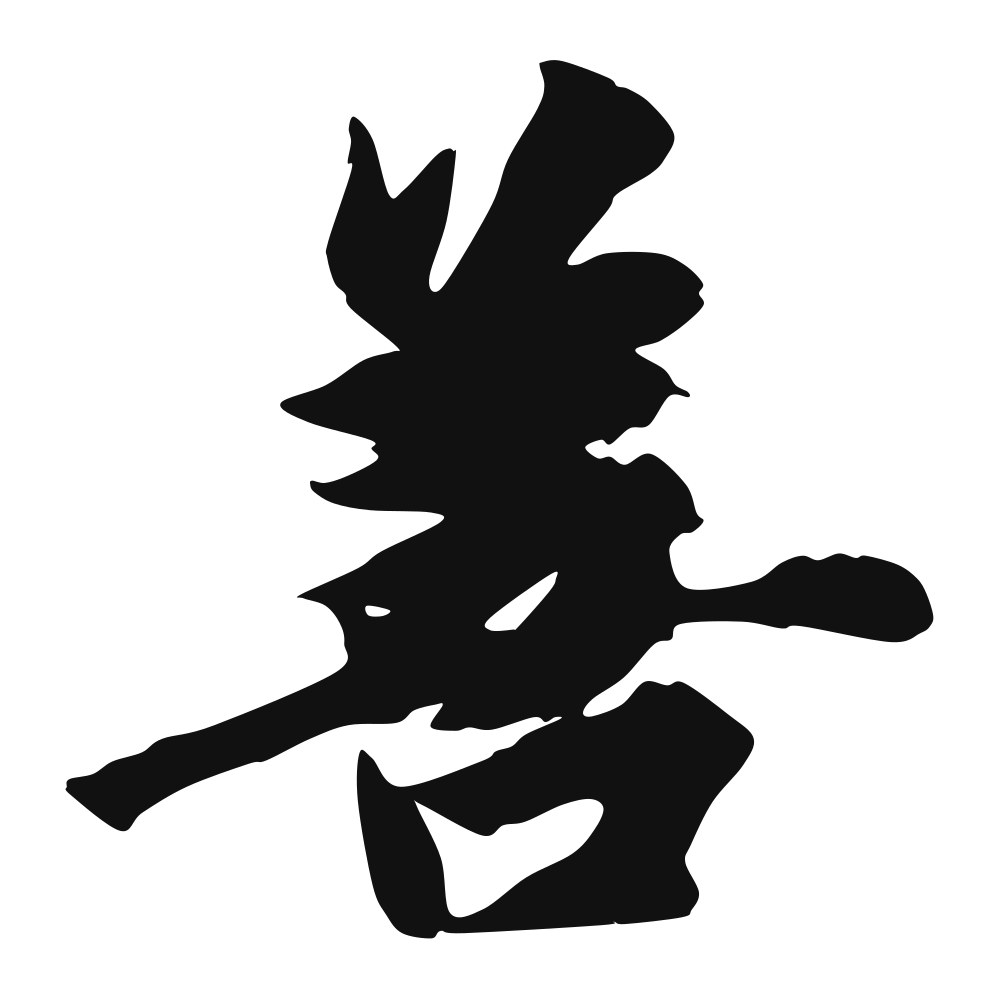
善
善 (shàn) — good, kind, skilled. Sheep 羊 (auspicious) + 言: auspicious words — goodness. Classical life: 上善若水 — the highest good is like water (Laozi). Grammar: free morpheme — also: good (virtuous); benevolent; well-disposed; good at sth; to improve or perfect
Closest English meanings
good·kind·virtuous·skilled·well
The Calligrapher — Cuī Yuàn 崔瑗
Han pioneer of cursive script and author of an early cursive treatise.
Han calligrapher (77–142), master of cursive script/clerical cursive — known for 《贤女帖》. Han dynasty
Etymology & Meaning · 字义溯源
2 · The Character: 善 Shàn (4th tone). 《说文·誩部》: 「善,吉也。从誩从羊。此与义、美同意。」 — 'auspicious; from 誩 (two words in dispute or in praise) over 羊 (sheep); this shares its sense-formation with 義 (right) and 美 (beautiful).' Chinese ethics, aesthetics and rightness all grow from the same sheep radical: what is good is what is well spoken of, publicly. 《老子》 八章 「上善若水,水善利万物而不争」 — the highest good is like water, which benefits all things and does not contend. 《易·坤·文言》 「积善之家,必有余庆」 — a house that accumulates good has surplus blessing. 《论语·述而》 「择其善者而从之,其不善者而改之」. Honest disclosure: 善 also means simply 'good at' (善于), and its Buddhist compounds (行善, 善哉, 善男信女) are strong enough that a viewer may read a religious declaration. Modern slang can also shade 善良 toward 'pushover' (烂好人).
Cultural Story
In the classical tradition: 善 shows 羊, sheep, a sign of offering, and means good, kind, virtuous, and skilled. The 論語 urges 善人, good people, and 行善, doing good, as the root of rule; 慈善 became organized benevolence. A 善心, good heart, and 善良, kind virtue, were the gentleman's inner weather. To be 善於, skilled in, something joined moral and practical excellence. 善 was the highest everyday word for the good life well lived.
Where a Western reader can stand: Where a Western reader can stand: 善 is the good — specifically the effortless good of 上善若水, water that benefits all things and competes with none. Honest caveat: it plainly also means 'skilled at' (善于), so a viewer may read competence rather than virtue; and 行善, 善哉 are standard temple vocabulary, so a lone 善 can land as a religious statement.
Energy Reading
Metal (金)
Comparative symbology, not fortune-telling.
Common words & phrases
- 善良 kind · good · virtuous · benevolent
- 慈善 charitable · benevolent · philanthropic
- 善心 good heart · kindness · benevolence
- 完善 perfect · complete · consummate
- 善于 good at · adept in · expert in
- 行善 do good · charity · perform good deeds
Read the story behind the character
In the modern world: A 善良 — kind, good, virtuous — neighbor brings 善心, a good heart, meals to the sick, and the 慈善, charitable, gala raises funds for kids. Grandpa is 善於, good at and adept in, fixing anything, and we 行善, do good, by volunteering. Brands tout 完善, perfect, service to win trust; 善 is the word stretched from quiet kindness to skill and the polished promise of a better product.
Why this character belongs on skin
Before it meant morality, 善 pictured a lamb at the feast — 善 is the auspicious, the favorable, the way things go well. Confucius made it the second great virtue after love: to do good is to extend your own ease to others. But the character keeps its older warmth — goodness not as duty but as weather, the conditions under which life flourishes. The Daoist is good without trying, like water that benefits all and contends with none. To carry 善 is to choose benefit over victory, to let your smallest acts lean toward the lamb rather than the blade. It is not sainthood. It is the daily, unglamorous mercy — the door held, the temper held — that makes a life habitable. The tattoo is a reminder you are allowed to be gentle.
Own this character
Purchase delivers the original SVG of this glyph, brushed by Cuī Yuàn 崔瑗, ready to place on skin, paper, or screen.