
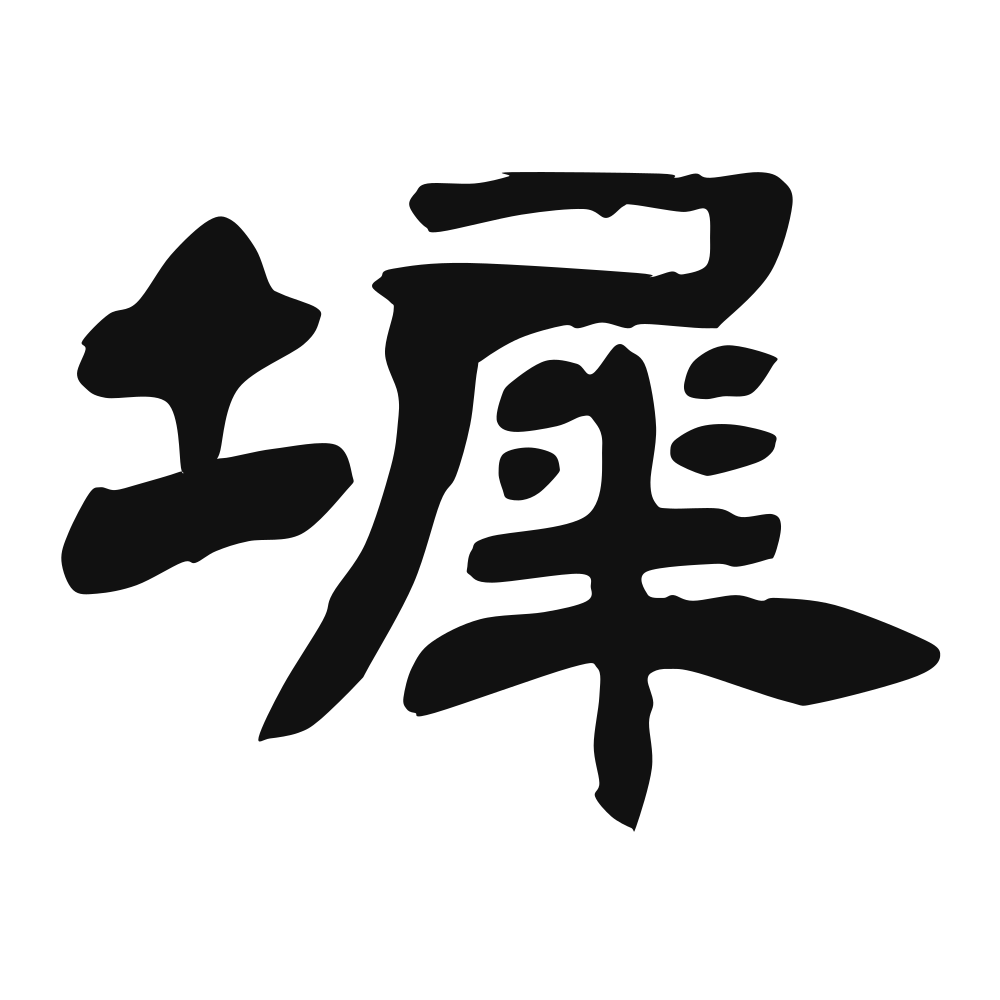
The Calligrapher — Dèng Shírú 邓石如
Qing revivalist who restored seal and clerical script to prominence.
Qing calligrapher (), master of seal script/clerical script — Qing self-taught reviver of seal and clerical script, carved energy in every stroke. Qing dynasty
Cultural Story
墀 is the paved step or courtyard before a hall. The imperial 丹墀 (red steps) before the Tang court at Chang'an was where ranked officials bowed at dawn; 玉墀 (jade steps) graced the palace poems of the era. 阶墀 simply means a stairway leading up to a door. To mount the 墀 was to approach power — the threshold made of stone and of rank.
Common words & phrases
- 丹墀 imperial courtyard · red steps
- 阶墀 steps · stairway
- 玉墀 jade steps
Read the story behind the character
The word survives in heritage descriptions of palace 丹墀 and in recordings of classical poetry readings. Restorers repave a 阶墀 at a temple before the festival; a garden catalogue sells 玉墀-style slabs for a pond edge. Architecture students sketch a 墀 as part of a courtyard's grammar — the exact stone where subjects once knelt before an emperor.
Why this character belongs on skin
Before the throne there are the steps. This character names the painted floor of a palace hall and the reddened stone of its staircase, the exact place where an ordinary person becomes an audience. Chinese poetry uses it to measure fortune: one line has an orphan weeping on the cold step, another has jade dew gleaming there at dawn. It is a threshold word, all liminality, standing for every polished surface you have ever crossed to meet your fate. There is sensuality in it too, vermillion lacquer under bare feet, the cool of stone in summer heat. To wear it is to remember that you have stood before powers, said your piece, and climbed. Or that you will. The step does not ask your name; it only asks that you rise. Ink it at the ankle, where every climb begins.
Own this character
Purchase delivers the original SVG of this glyph, brushed by Dèng Shírú 邓石如, ready to place on skin, paper, or screen.