
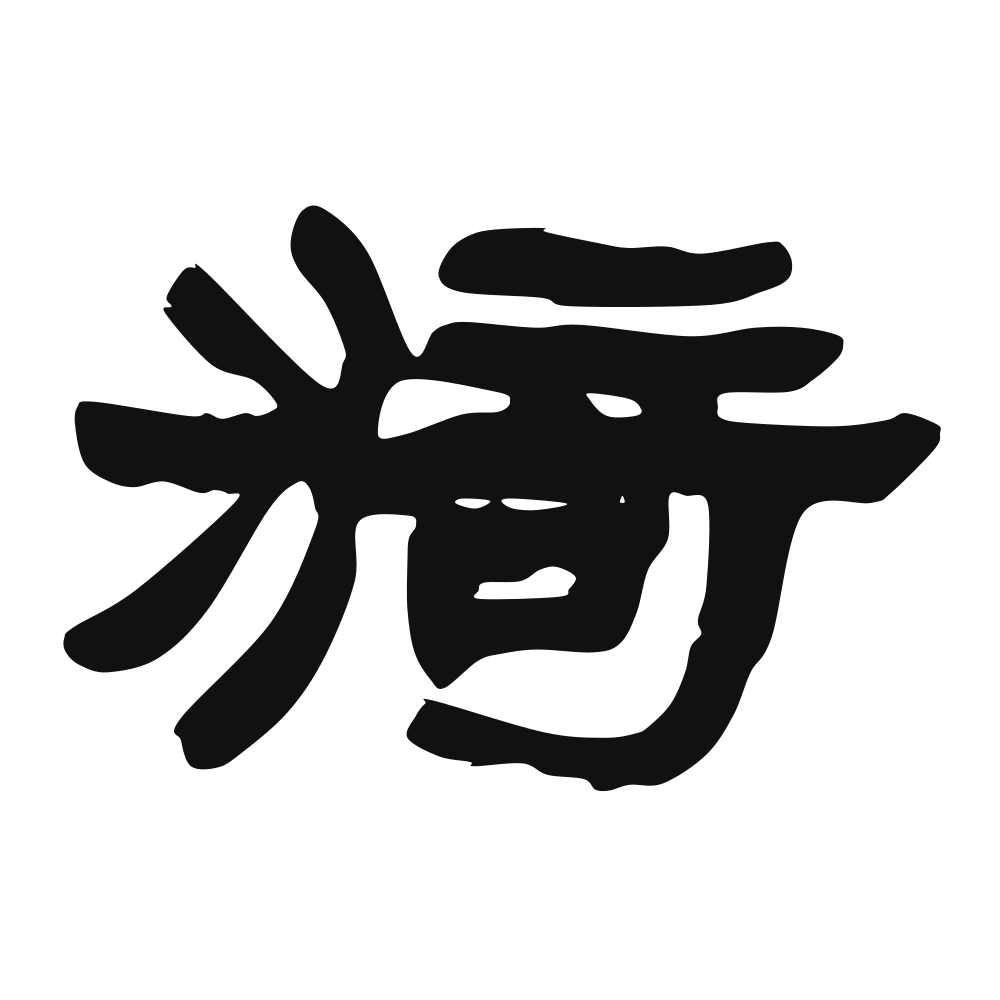
猗
(interj.)
Closest English meanings
beautiful·exclamatory particle
The Calligrapher — Dèng Shírú 邓石如
Qing revivalist who restored seal and clerical script to prominence.
Qing calligrapher (), master of seal script/clerical script — Qing self-taught reviver of seal and clerical script, carved energy in every stroke. Qing dynasty
Cultural Story
猗 is an exclamatory particle of praise in the 詩經: '河水清且涟猗' sings of clear rippling water. It also means beautiful or graceful; 楚辭 uses it for luxuriant growth. Soft and musical, the word ornaments verse like a sigh of admiration at something lovely and alive.
Common words & phrases
- 涟猗 ripples · rippling water
- 猗郁 luxuriant · flourishing
- 猗靡 winding · graceful
Read the story behind the character
We meet 猗 in 涟猗 (rippling water) describing a pond's gentle rings, in 猗郁 (luxuriant) for a garden in full leaf, and 猬靡 (graceful, winding) for a dancer's flowing sleeve. Though rare in speech, it survives in poetry and place names, a whisper of ancient musical praise.
Why this character belongs on skin
The Book of Songs opens with it: lush, so lush, the green bamboo — a lover praising what grows. This character is that exclamation, the sigh of a poet two and a half millennia old watching something flourish and finding no plain word sufficient. It carries the curve of a whip and the field of grass together, motion and abundance fused. The ancients used it for anything that sways and thrives: willows over water, a beautiful gait, a banner lifting in wind. What a thing to carry — not a noun but an adjective at its most intoxicated, praise itself, the moment beauty makes a language stumble. It suits someone who has been looked at and occasionally gaped at, and who has decided to enjoy it. Wear it as the ancients wore their best silk: lightly, deliberately, with the confidence of a thing in season.
Own this character
Purchase delivers the original SVG of this glyph, brushed by Dèng Shírú 邓石如, ready to place on skin, paper, or screen.