
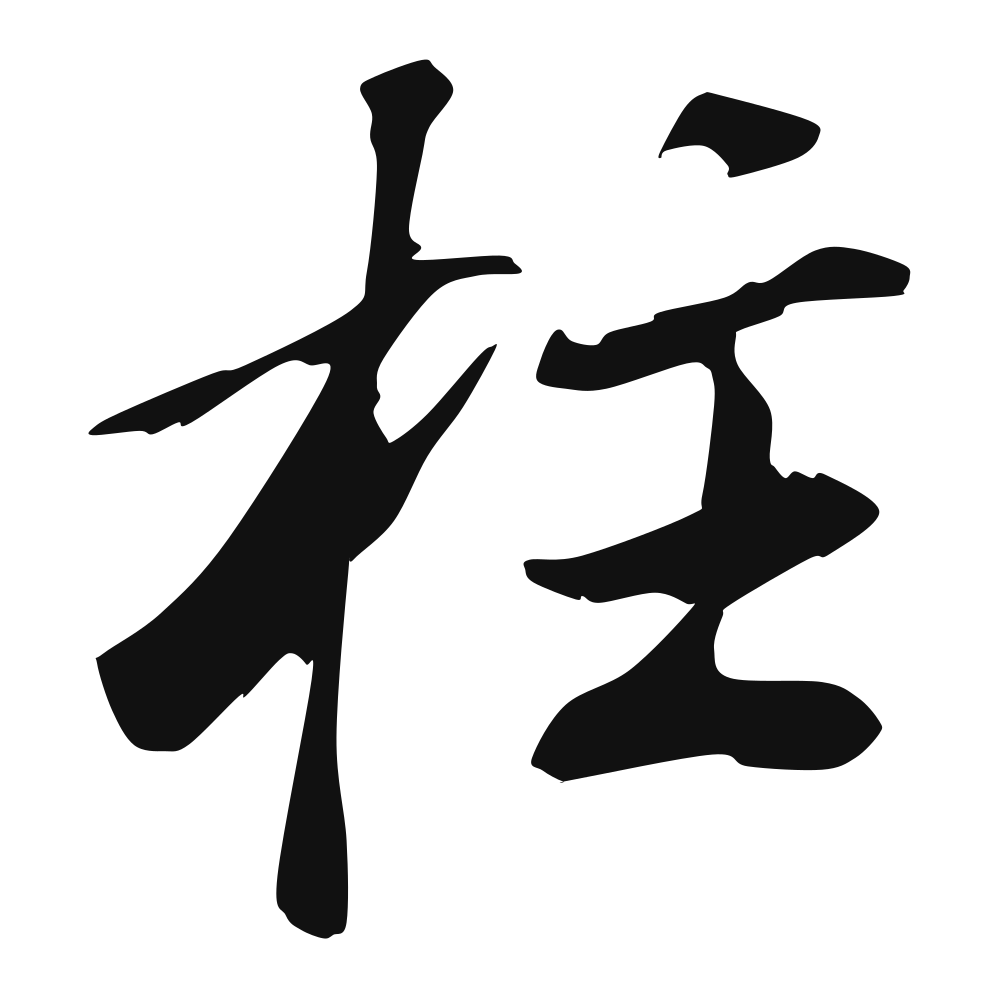
The Calligrapher — Dǒng Qíchāng 董其昌
Late-Ming theorist and running-script master who shaped later taste.
Ming calligrapher (1555–1636), master of running script/regular script — late-Ming connoisseur-critic of understated, misty elegance. Ming dynasty
Cultural Story
柱 is the upright that holds a roof — the 木 set vertical, the 支柱 of hall and state. The 史記 tells of a man who, to prove a point, once stood by a pillar until it meant something to the court. The character is support made vertical, the thing a building and a nation lean on without thinking.
Common words & phrases
- 柱子 pillar · column · post
- 支柱 pillar · mainstay · support
- 圆柱 cylinder · column
- 水柱 water column · jet
Read the story behind the character
柱 is structure and metaphor: 柱子 the concrete column in a parking garage, 支柱 the industry a town depends on, 水柱 the geyser at a fire. 圆柱 is the math solid and the marble porch. The character holds roofs and economies, the upright that bears weight literally and figuratively, day and night.
Why this character belongs on skin
The column takes the weight of the roof and says nothing. The pillar, the column, the vertical truth that holds the horizontal world above our heads. In the temple it is painted and gilded; in the humble house it is plain timber, doing the same work unnoticed. To be a pillar is to be relied upon absolutely, the thing that does not move when everything else does. The community leans and is caught. To carry this mark is to accept that role, the steady one, the one they call at 3 a.m., the vertical answer in a falling room. It is a mark of quiet dependability, inked straight down the spine or the shin, a line that bears. Let it say you are the column others are built against, that where you stand, the roof holds. The pillar does not boast. It simply carries, and the house lives.
Own this character
Purchase delivers the original SVG of this glyph, brushed by Dǒng Qíchāng 董其昌, ready to place on skin, paper, or screen.