
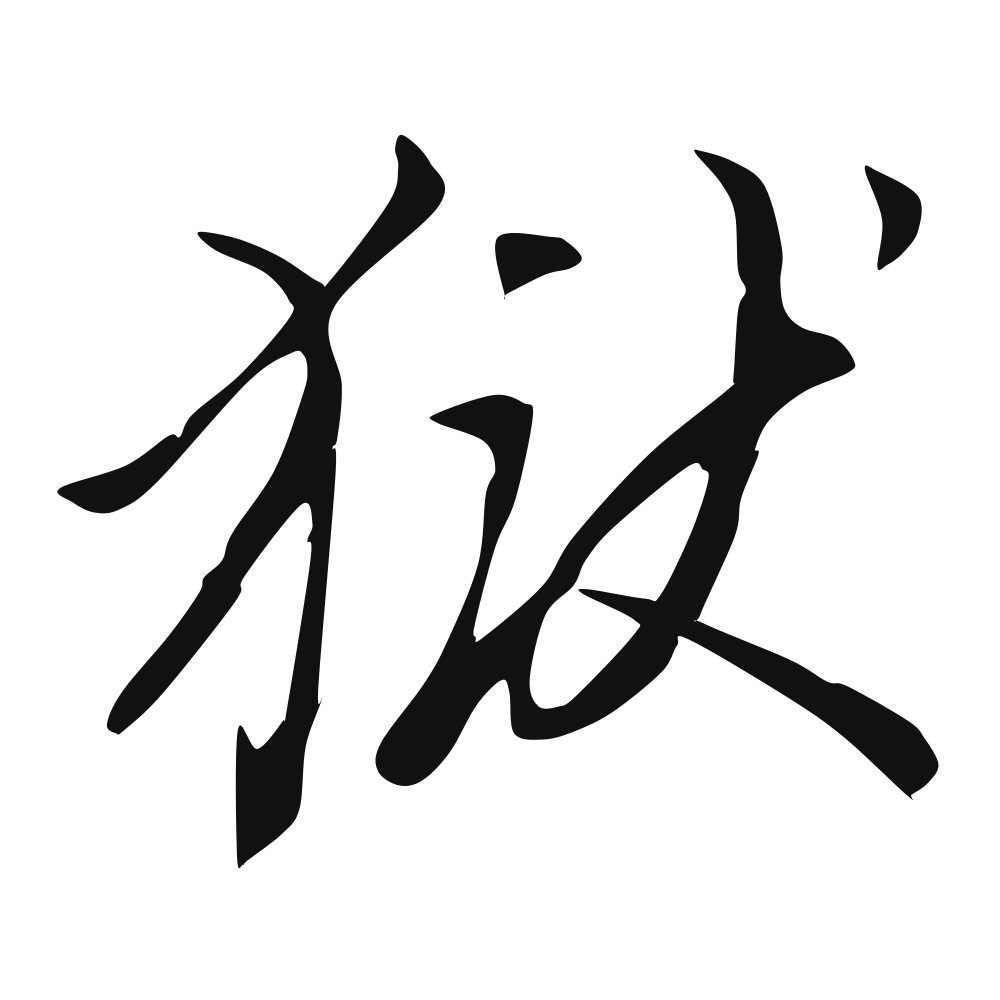
The Calligrapher — Dǒng Qíchāng 董其昌
Late-Ming theorist and running-script master who shaped later taste.
Ming calligrapher (1555–1636), master of running script/regular script — late-Ming connoisseur-critic of understated, misty elegance. Ming dynasty
Cultural Story
獄 shows two 犬 (dogs) flanking 言 (speech): an image of disputants snarling like dogs over a quarrel, hence 'lawsuit' and later 'prison.' The 周禮 set up judges for 獄訟, and 史記 records famous 冤獄 (wrongful cases). Prisons were cold stone, chains, and the jangling keys of the 獄卒.
Common words & phrases
- 监狱 prison
- 狱卒 jailer · prison guard
- 入狱 imprisoned
- 冤狱 wrongful conviction
- 牢狱 prison
Read the story behind the character
Today 监狱 (prison) is where convicted criminals serve time, watched by a 獄卒 (jailer). A defendant fears 入狱 (imprisonment), and reformers fight 冤獄 (wrongful conviction) with better evidence. Old 牢獄 (prison) cells still stand as museums, reminders of how justice, and its failures, have shaped society.
Why this character belongs on skin
The walls are often of our own making. 狱 is the enclosure — the character for prison, built in the old script from two dogs and a voice between them, the barking that keeps a man contained. Yet the word also names the ordeal, the hardship endured, and endurance is its own freedom. The Daoist finds liberation not by breaking the wall but by seeing it was never there; the Christian meets his cell as a place to meet God. To carry 狱 is to mark the confinement you survived, the year that locked and the self that outlasted it. It is a somber, powerful vow: I was contained and I remained. Ink it where the bars once were, and let it testify — the prison could hold my body, never my inward sky. I came out, and the mark is my proof, worn so I never mistake the cage for the world again.
Own this character
Purchase delivers the original SVG of this glyph, brushed by Dǒng Qíchāng 董其昌, ready to place on skin, paper, or screen.