
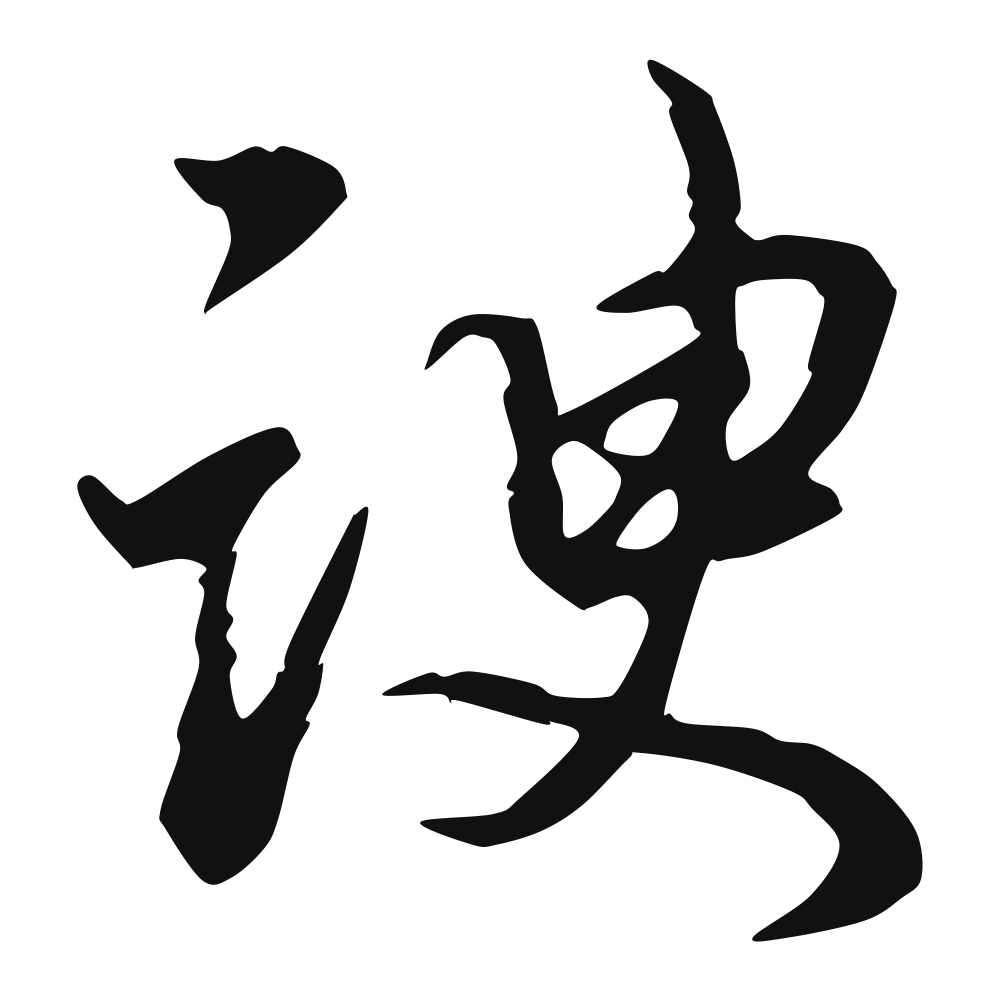
The Calligrapher — Dǒng Qíchāng 董其昌
Late-Ming theorist and running-script master who shaped later taste.
Ming calligrapher (1555–1636), master of running script/regular script — late-Ming connoisseur-critic of understated, misty elegance. Ming dynasty
Cultural Story
Han Yu's essay on teachers warns that a man who courts the powerful dares not correct them, for to serve the great is to lean toward yu, flattery. The line jin yu, drawing near in sycophancy, names the temptation of the dependent scholar. The character yu is the smear on honest speech, the softening of truth so it pleases the ear of someone who pays or promotes.
Common words & phrases
- 阿谀 to flatter · toady
- 谄谀 to flatter · sycophantic
- 谀辞 flattery · flattering words
Read the story behind the character
A junior nods through the boss's weak idea and offers a quiet e yu, the oil of the ambitious. At the banquet a guest lays on chan yu until the host glows, and a colleague's yu ci in the group chat earns the promotion nobody expected. The character yu still greases every room where candor is costly and agreement is cheap.
Why this character belongs on skin
Sweet poison, poured in the ear. The character means flattery of the courtly kind — the minister who tells the king his misgovernance is wisdom, the friend who prices your vices as charms. The classics warn of it constantly: the man surrounded by 谀 goes blind and calls the blindness broad daylight. It is a word with teeth, meant to warn. So why on skin? As an antidote. Carrying the character is like carrying a written vaccination — a permanent reminder that sweetness is not the same as truth, that the most dangerous voice you'll ever hear may be saying exactly what you hoped. The flatterers will still come; let them. You can read the script they speak. The ink is your taste for honesty, worn where the honey would land.
Own this character
Purchase delivers the original SVG of this glyph, brushed by Dǒng Qíchāng 董其昌, ready to place on skin, paper, or screen.