
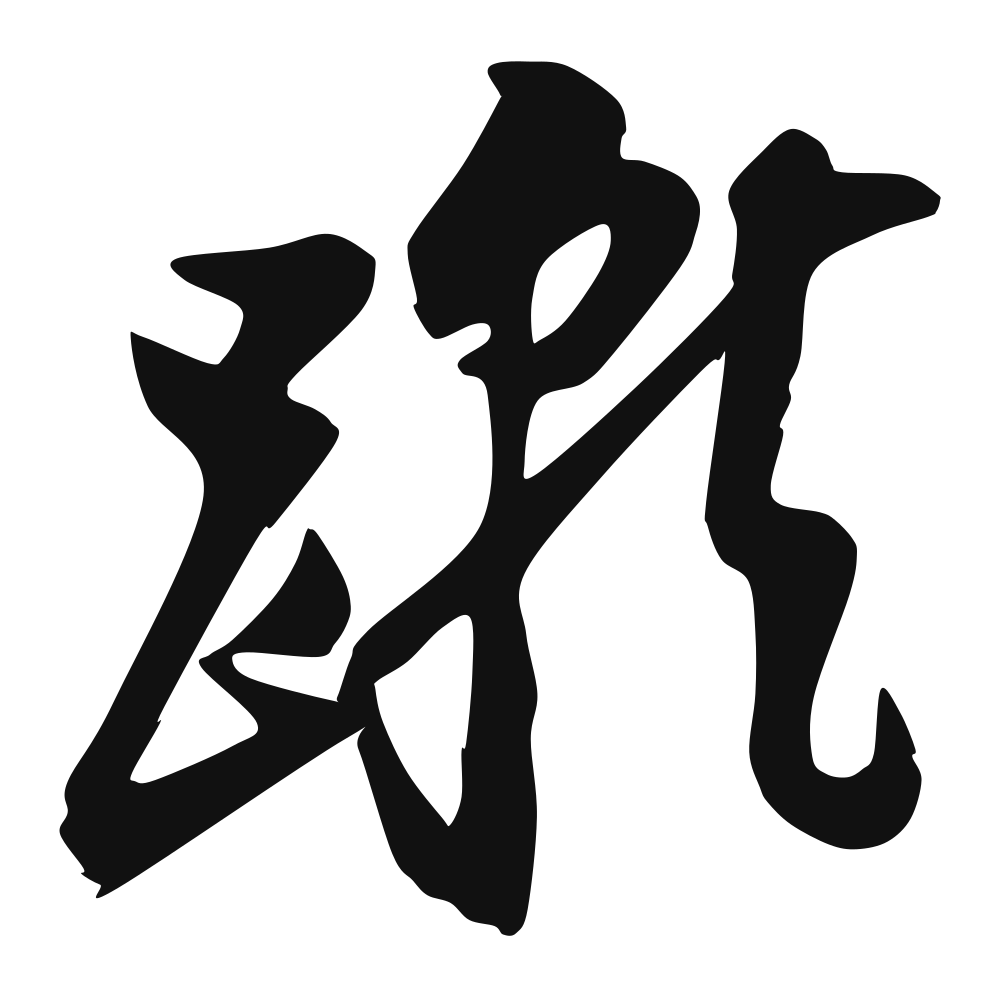
蹴
carefully; to kick; to tread on; to stamp
Closest English meanings
kick·tread·stamp
The Calligrapher — Dǒng Qíchāng 董其昌
Late-Ming theorist and running-script master who shaped later taste.
Ming calligrapher (1555–1636), master of running script/regular script — late-Ming connoisseur-critic of understated, misty elegance. Ming dynasty
Cultural Story
Played from the Han court to the Tang squares, the game of 蹴鞠 gives the character 蹴 its history: a leather ball kicked at a goal with the instep. In the Water Margin, the upstart Gao Qiu rises to power precisely because he can 蹴鞠 better than any noble. The character means to kick or stamp, and here it lifted a man from servant to minister of state.
Common words & phrases
- 蹴鞠 ancient football · cuju
- 一蹴而就 accomplish at one stroke · attain easily
- 蹴踏 tread · trample
Read the story behind the character
On a school field boys 蹴鞠 in the loose modern sense, booting a ball against a wall during break, though few know the word's old glory. A coach shouts to 蹴踏 the ball cleanly rather than toe it. And 一蹴而就 — 'done at a single kick' — still headlines an editorial about a reform that promised quick success and delivered only a stumble on the grass.
Own this character
Purchase delivers the original SVG of this glyph, brushed by Dǒng Qíchāng 董其昌, ready to place on skin, paper, or screen.