
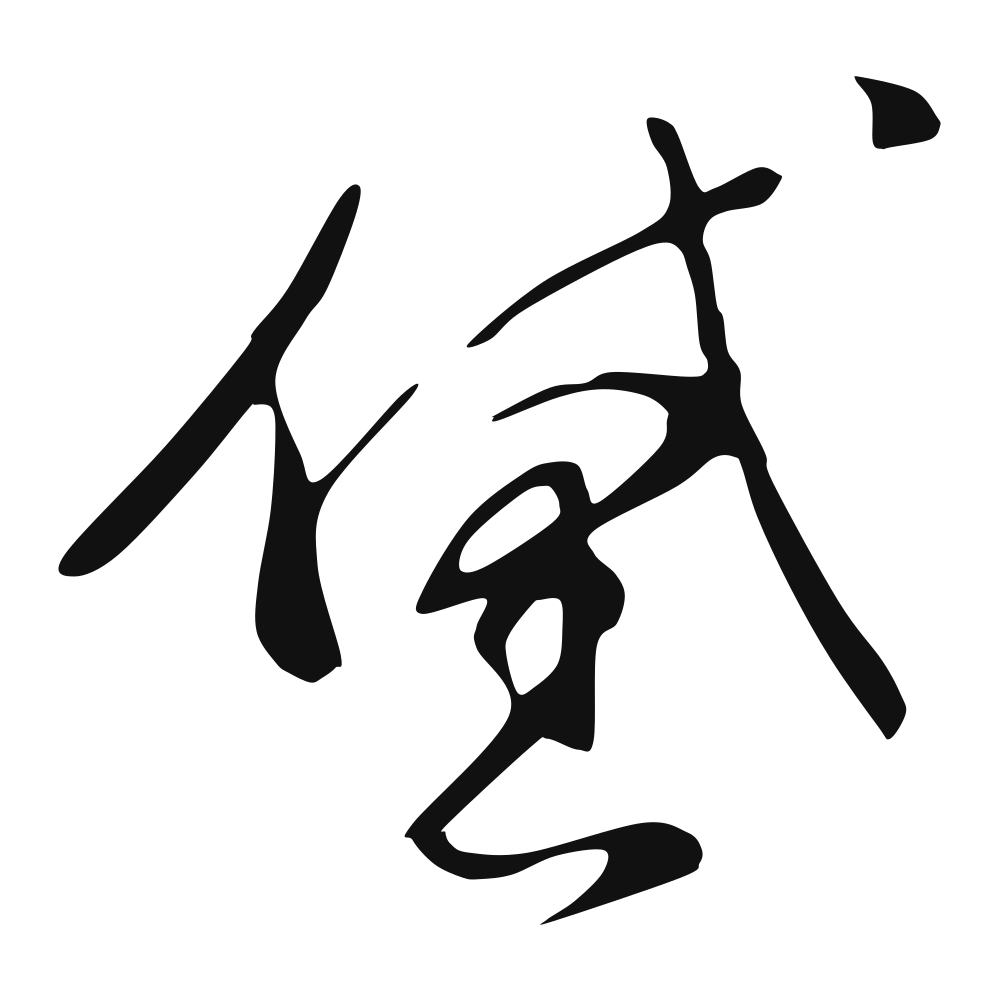
黛
(literary) dark pigment traditionally used to paint the eyebrows
Closest English meanings
black pigment·eyebrow black·dark blue·dark green
The Calligrapher — Dǒng Qíchāng 董其昌
Late-Ming theorist and running-script master who shaped later taste.
Ming calligrapher (1555–1636), master of running script/regular script — late-Ming connoisseur-critic of understated, misty elegance. Ming dynasty
Cultural Story
《説文解字》defines 黛 as “畫眉也” (that used to paint the brows), a phono-semantic compound from the black radical with the sound 代. It was a dark blue-black pigment, mined and pressed into cakes, with which women drew their eyebrows. The 黛眉 became the very mark of a beauty's face.
Common words & phrases
- 黛眉 dark eyebrows · black brows
- 粉黛 cosmetics · beautiful women
- 黛色 dark blue · dark green
Read the story behind the character
The 黛眉 (dark eyebrows) frame a classical beauty's face, 粉黛 (cosmetics, beautiful women) stands for lovely women in old verse, and 黛色 (dark blue, dark green) names distant hills. Period dramas and makeup brands revive 黛 for brow powders, so an ancient pigment still colors both poetry and vanity tables.
Own this character
Purchase delivers the original SVG of this glyph, brushed by Dǒng Qíchāng 董其昌, ready to place on skin, paper, or screen.