
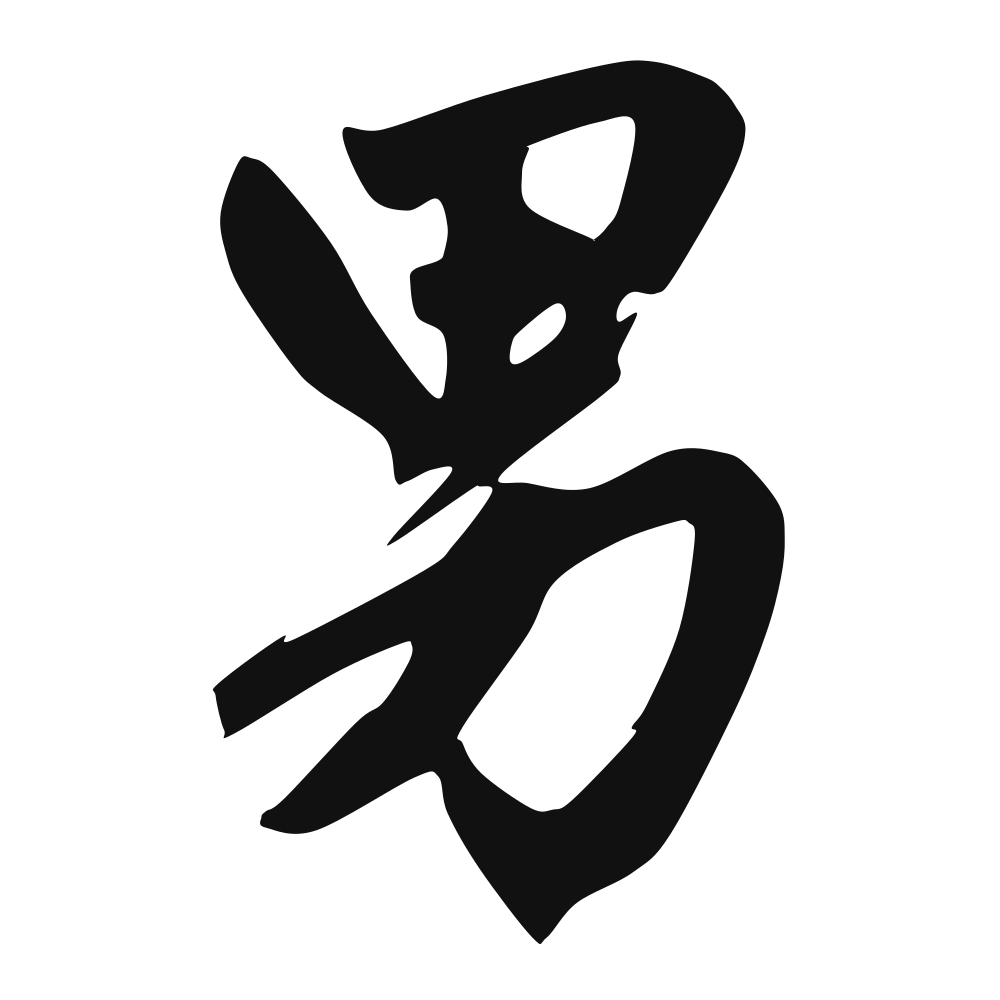
男
(bound form) male; baron, the lowest of the five ranks of nobility 五等爵位[wu3 deng3 jue2 wei4]
Closest English meanings
male·man·son
The Calligrapher — Gāo Xián 高闲
Tang monk calligrapher of cursive script, author of the Thousand-Character Classic.
Tang calligrapher (), master of cursive script — known for 《千字文》残卷. Tang dynasty
Cultural Story
The Shuowen explains the graph as strength in the field: 田 field plus 力 force — the man's assigned labor under the old order. The Book of Songs celebrated the newborn boy given a jade zhang to hold, while ritual fixed men's roles in sacrifice and inheritance.
Common words & phrases
- 男人 man
- 男孩 boy
- 男性 male
- 男女 men and women · both sexes
- 男儿 man · son
- 男装 men's clothing
Read the story behind the character
Contemporary usage is plainly grammatical: 男人 men, 男孩 boys, forms asking your 性别 with 男性 as a checkbox, 男女 discussions of balance in hiring and admissions. 男儿, a true son, still headlines stirring old songs — and gender debates keep the character politically awake.
Why this character belongs on skin
Strength under the fields. That is the whole character—力, the muscle, set down inside 田, the planted earth. 男 was not born in a gym or a battlefield; it was born at the furrow, the man whose back bent the soil into bread. The West built its masculinity from conquest and code; the Chinese rooted theirs in the quiet covenant between a body and the ground it feeds. To wear 男 is to reclaim that older manhood—not the swagger, the stewardship. The one who shows up, who breaks the clod, who answers the land's demand without complaint. It is labor as honor, the unsung ethic of every father who never called it noble. This mark is for the man done performing, ready instead to be useful. Let it sit close to the shoulder or the forearm, the place where real work is done. A man, the character insists, is measured by what he tends.
Own this character
Purchase delivers the original SVG of this glyph, brushed by Gāo Xián 高闲, ready to place on skin, paper, or screen.