
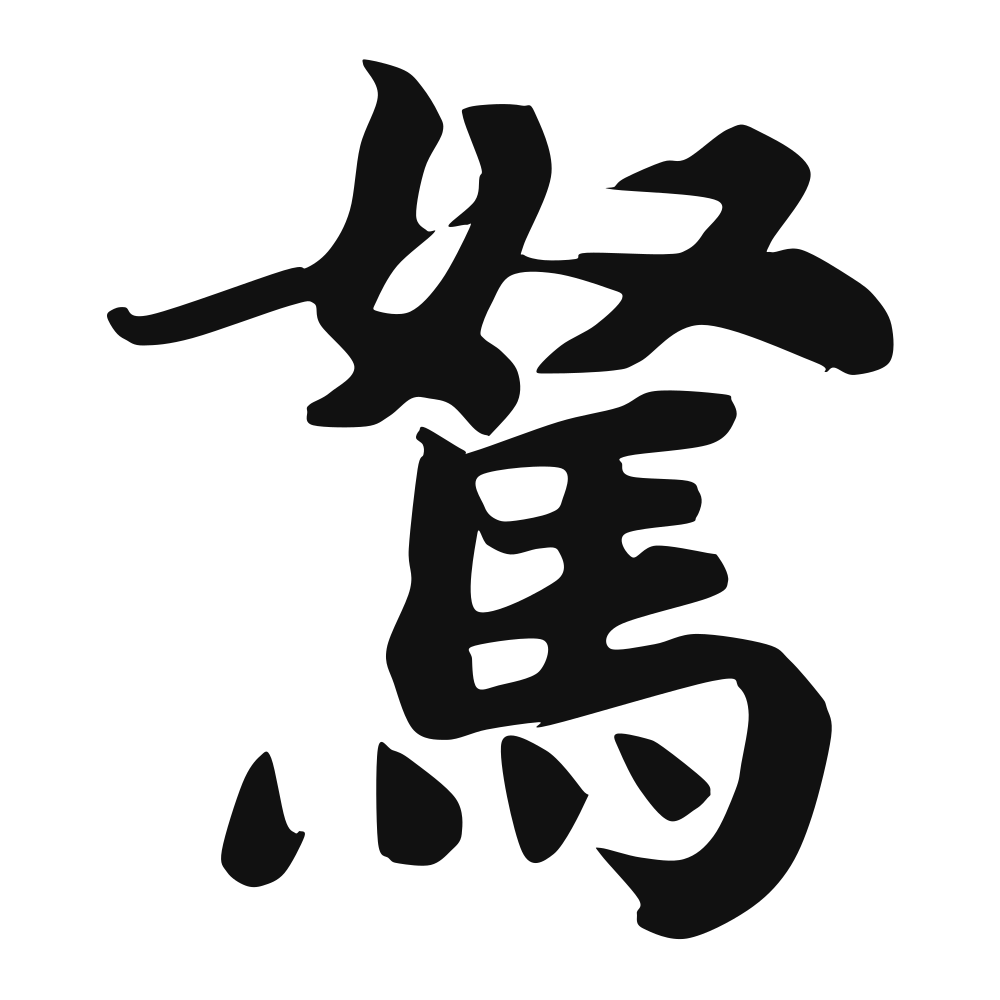
驽
(literary) inferior horse
Closest English meanings
inferior horse·dull·mediocre
The Calligrapher — Cài Xiāng 蔡襄
One of the Four Song masters, known for graceful regular and running script.
Song calligrapher (1012–1067), master of regular script/running script — Song master of warm, disciplined regular script, the most 'proper' of the Song Four. Song dynasty
Cultural Story
驽 (nú) pairs 馬 with the phonetic 奴. 《説文解字》 gives 馬劣也, “an inferior horse,” slow and weak. Scholars borrowed it as humble self-deprecation for their own dull, plodding ability of mind.
Common words & phrases
- 驽马 inferior horse · jade horse
- 驽钝 dull · stupid
- 驽才 mediocre talent
- 驽劣 inferior · mediocre
Read the story behind the character
驽 means inferior and dull. A 驽马 (inferior horse) plods where steeds race, we confess 驽钝 (dullness) of mind, own 驽才 (mediocre talent), and admit 驽劣 (inferior) skill. The character is modesty’s worn beast.
Why this character belongs on skin
The slow horse wins more races than pride expects. 驽 is the inferior steed — the horse radical joined to a root of labor, the plodding animal that trails while thoroughbreds blaze and break. Chinese strategy turned this into doctrine: the ten-chariot proverb of the lame tortoise, where the humble creature conquers a thousand leagues not by strength but by refusing to stop. Han Yu, the great essayist, wrote angrily about fine horses ruined by ignorant handlers, but his deeper point was about the thousands of ordinary horses — ability, he said, is everywhere; what is rare is the eye that sees it, including your own. This is the patron character of every late bloomer, every C student who outworked the prodigies, every craftsman whose greatness was simply years that nobody else was willing to spend. Talent sprints and quits; temperament walks through the night. To wear 驽 is a quiet boast of the only kind that pays — the plodder's vow: they may be faster, but I will still be coming.
Own this character
Purchase delivers the original SVG of this glyph, brushed by Cài Xiāng 蔡襄, ready to place on skin, paper, or screen.