
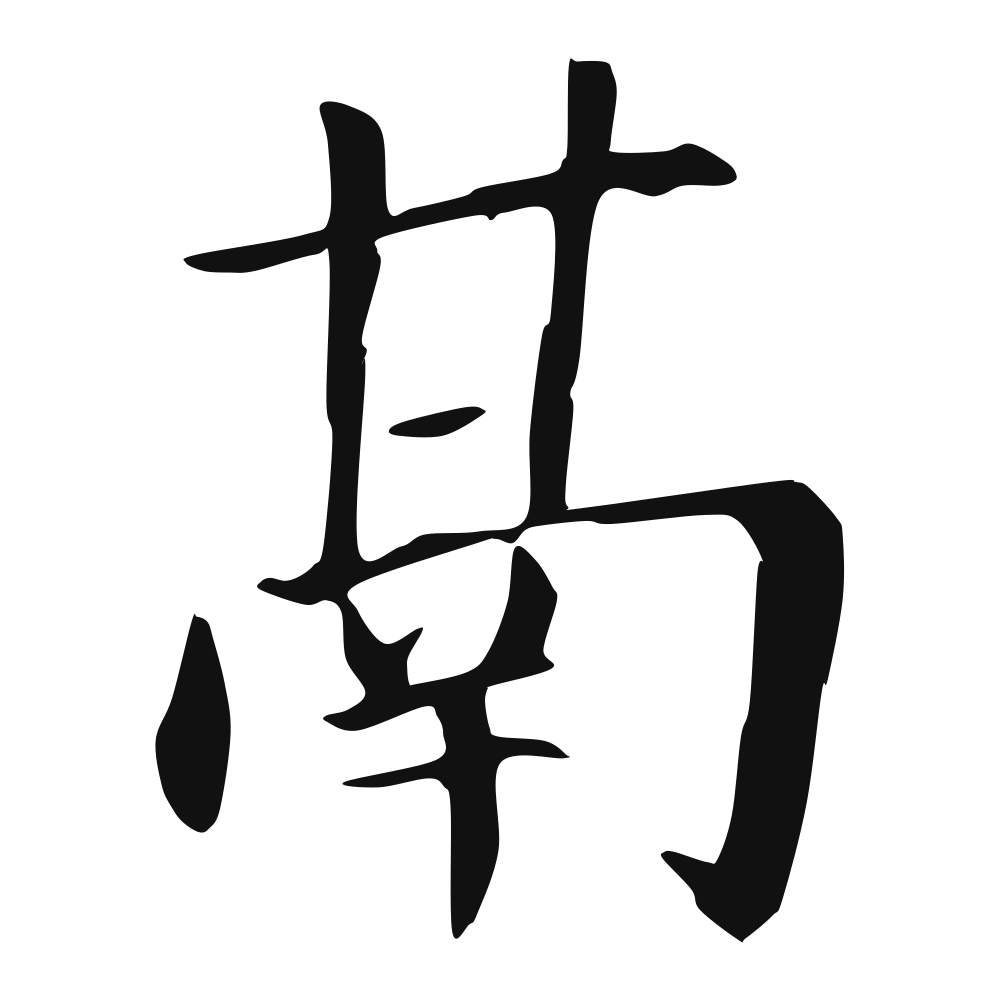
鬲
surname Ge; earthen pot; iron cauldron; ancient ceramic three-legged vessel used for cooking with cord markings on the outside and hollow legs
Closest English meanings
ancient tripod cauldron
The Calligrapher — Cài Xiāng 蔡襄
One of the Four Song masters, known for graceful regular and running script.
Song calligrapher (1012–1067), master of regular script/running script — Song master of warm, disciplined regular script, the most 'proper' of the Song Four. Song dynasty
Cultural Story
鬲 is drawn from a round cooking vessel with three hollow legs that met the fire. The 《説文解字》 calls it 鼎属也, "a kind of tripod," used for boiling grain over an open flame in antiquity.
Read the story behind the character
鬲 is the ancient cauldron archaeologists lift from digs, a three-legged pot that cooked the daily millet. Museums label it beside the 鼎. Though no kitchen uses one now, the form survives in bronze halls and in the study of early Chinese cuisine.
Why this character belongs on skin
Three thousand years ago, dinner was a ritual. The 鬲 was a bronze tripod cauldron, pouch-legged, set over fire to boil millet and meat for ancestors and kings. Its silhouette survives in oracle-bone script, one of the oldest images in the language—vessel, flame, offering. The Han buried them in tombs so the dead would not go hungry; museums keep them now under glass, still holding their steam somewhere in the patina. A character like this is older than most nations. It says: I come from fire, from grain, from people who believed a meal could be sacred. Some ink marks a moment. This one marks the whole long human table. The shape still hides in the character for every pot that ever boiled, in the three-legged silhouettes archaeologists lift from loess soil, crusted with centuries of soot from real family fires. Someone's grandmother stirred it. The old bronzes were small, and they fed dynasties.
Own this character
Purchase delivers the original SVG of this glyph, brushed by Cài Xiāng 蔡襄, ready to place on skin, paper, or screen.