
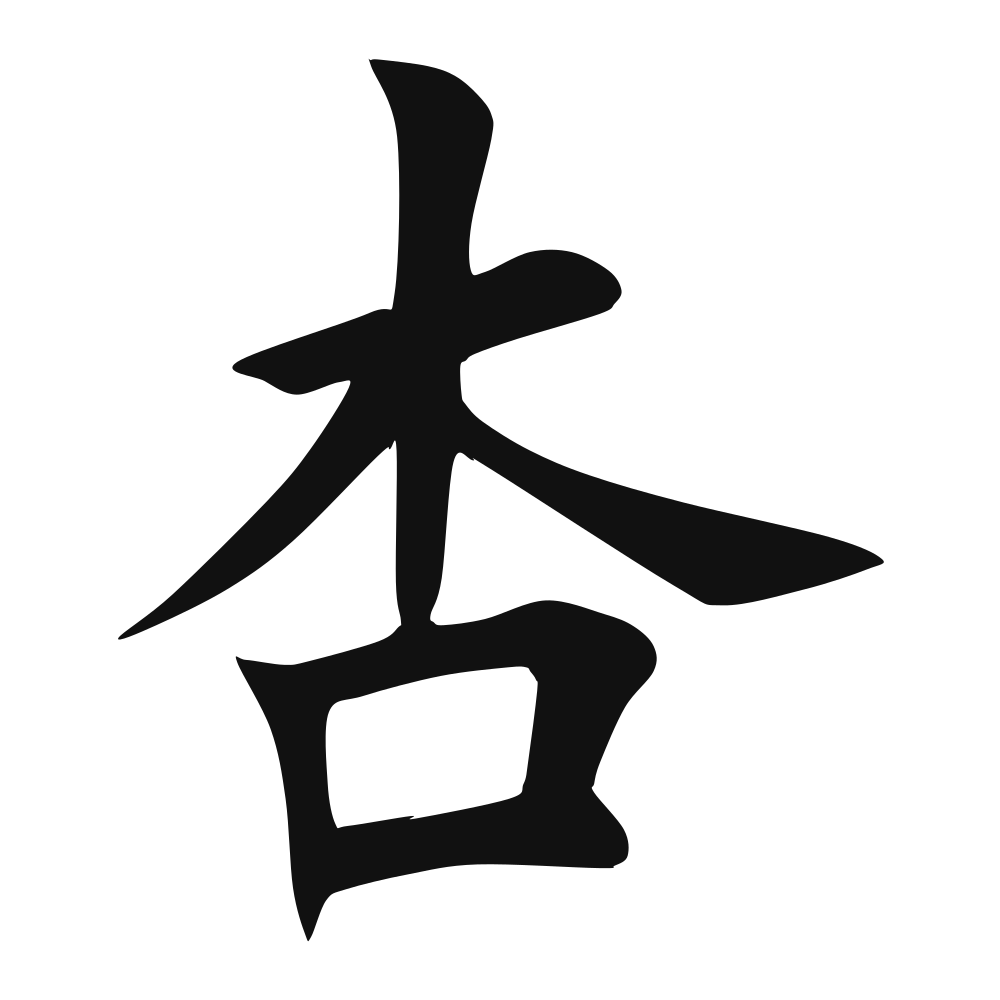
杏
apricot; (bound form) almond
Closest English meanings
apricot
The Calligrapher — Huáng Bósī 黄伯思
Song calligrapher and theorist renowned for his seal and clerical script.
Song calligrapher (), master of seal script/clerical script — known for 《东观余论》. Song dynasty
Cultural Story
杏 is the apricot, and the 杏壇 — the apricot altar — is where Confucius was said to have taught, so it names a school still. The 杏林 became the physician's grove, after a doctor who planted apricots for each cure. A pink 杏花 is the earliest blush of northern spring, the signal that winter has loosened.
Common words & phrases
- 杏仁 almond · apricot kernel
- 杏树 apricot tree
- 杏花 apricot blossom
- 杏子 apricot · apricot fruit
Read the story behind the character
杏 is the fruit and the kernel: 杏子 eaten fresh in June, 杏仁 the bitter-nutty bite in almond-tea powder and mooncakes. 杏花 is the postcard pink of a village wall. The character is culinary and medicinal, the small orange fruit and its seed, less a poem now than a grocery line and a cough remedy.
Why this character belongs on skin
The xìng is the apricot — early, brief, the first sweet thing the spring orchard offers before the heat comes. In old gardens it grew by the physician's gate, and the doctors were called the men of the apricot grove, because healing and this small fruit were said to share a root. There is a lesson in how fast it ripens and how fast it's gone. We hoard what should be eaten now. Xìng says: the good is early and leaving — taste it while the branch still holds it. A tattoo of the fruit is a small defiance of postponement, ink pressed where a pulse runs, like a bite taken and kept. You will not wait for the perfect season. The mark is the apricot you ate with both hands, in the only spring you were given.
Own this character
Purchase delivers the original SVG of this glyph, brushed by Huáng Bósī 黄伯思, ready to place on skin, paper, or screen.