
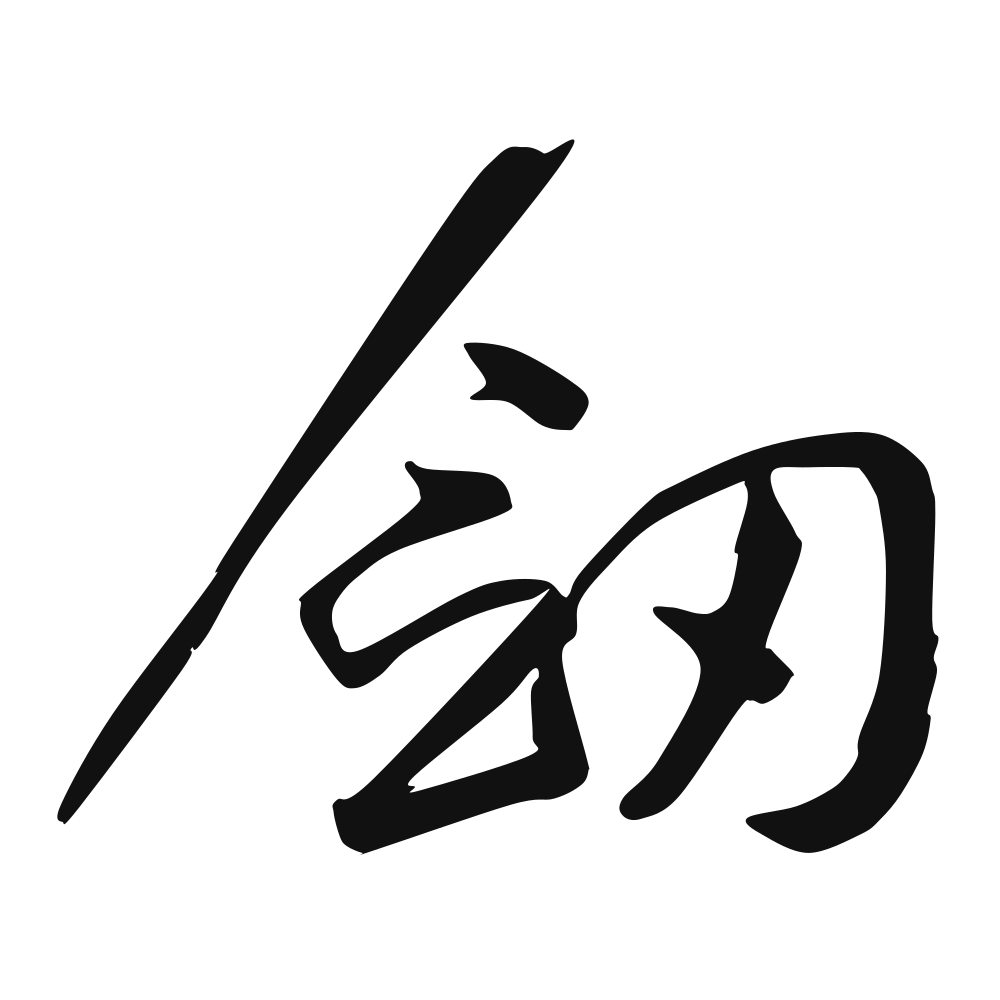
The Calligrapher — Huáng Tíngjiān 黄庭坚
Song master of elongated, radical running and cursive script.
Song calligrapher (1045–1105), master of running script/cursive script — Song master of long, sweeping, deliberately stretched running strokes. Song dynasty
Cultural Story
(The bronze sword of King Goujian of Yue, dug from a Chu tomb in 1965, still took a edge after two thousand years; its name is cast in gold along the blade. The 越王勾践剑 sits in the Hubei museum as the proof of a legend. 剑 is the gentleman's weapon, kept bright through defeat.
Common words & phrases
- 宝剑 precious sword · fine sword
- 剑客 swordsman
- 剑术 swordsmanship
- 舞剑 sword dance
- 剑法 swordplay · sword art
- 利剑 sharp sword
Read the story behind the character
The coach drills 剑术 at the club. The troupe 舞剑 in the park at dawn. The 利剑 hangs on the wall as a gift. The fencer 击剑 for the school team. The word names the blade, the art, and the exercise that keeps the old stroke alive.
Why this character belongs on skin
Cold steel sings only when drawn. 剑 is that song — the double-edged blade of the Chinese knight-errant, the weapon that was also a poem, carried at the waist like a second spine. The wandering 侠 lived by it and by a code sharper than the edge: defend the helpless, answer insult with justice, never boast. A sword kept sheathed is still a sword; restraint is part of its power. To wear 剑 is to carry that discipline in your own flesh — the readiness, the refusal to be prey. It is sensual in the way all clean lines are, a thin stroke of certainty down the body. Let it lie along a rib or the forearm, and make a vow the ancients would know: I am gentle, and I am not afraid. The blade sleeps. But it is real, and so am I, and the ink is the edge I keep against the dark.
Own this character
Purchase delivers the original SVG of this glyph, brushed by Huáng Tíngjiān 黄庭坚, ready to place on skin, paper, or screen.