
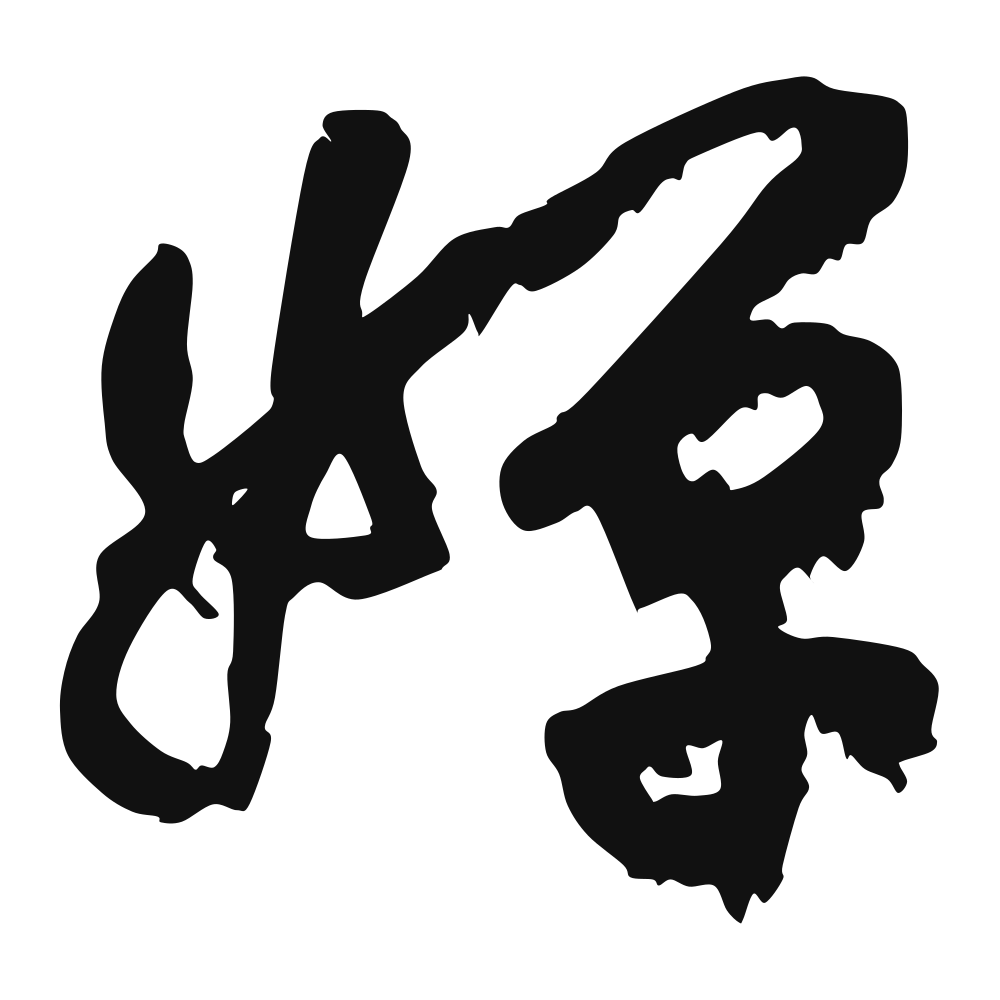
婵
usually seen in: (literary) beautiful woman (婵娟); (literary) (of a woman) graceful (婵媛)
Closest English meanings
beautiful·graceful
The Calligrapher — Huáng Tíngjiān 黄庭坚
Song master of elongated, radical running and cursive script.
Song calligrapher (1045–1105), master of running script/cursive script — Song master of long, sweeping, deliberately stretched running strokes. Song dynasty
Cultural Story
In the classical tradition 婵 forms 婵娟, a word for graceful beauty and, most famously, the moon — 蘇軾's "千里共婵娟" sends shared moonlight to a distant friend. It also appears as 婵媛 for a graceful, lingering charm. The character binds loveliness to light and longing.
Common words & phrases
- 婵娟 beautiful · the moon
- 婵媛 graceful
Read the story behind the character
In the modern world 婵 surfaces in poetry and names. A Mid-Autumn post calls the moon 婵娟, echoing Su Shi; a parent names a daughter 婵 for its lyrical grace, and 婵媛 describes a gentle, lingering beauty in a compliment. The word keeps classical moonlight shining on modern sentiment.
Why this character belongs on skin
Some nights the moon is not an object but a woman — graceful, cool, unhurried — leaning over the water. The old poets called her exactly that: chan-juan, the loveliness of the moon, and they meant both the light and the longing it stirs. Su Shi wrote that though a thousand miles may part us, we still share her grace; grief turned astronomy into tenderness. That is the character's whole inheritance: beauty that does not demand, that simply shines on the separated and makes them one. To ink it is to claim that kind of presence — the serenity that needs no audience, the light that travels farther than the body ever could. Somewhere, someone you love is under the same pale disk. The distance is real. So is the light. The ink simply says you know it.
Own this character
Purchase delivers the original SVG of this glyph, brushed by Huáng Tíngjiān 黄庭坚, ready to place on skin, paper, or screen.