
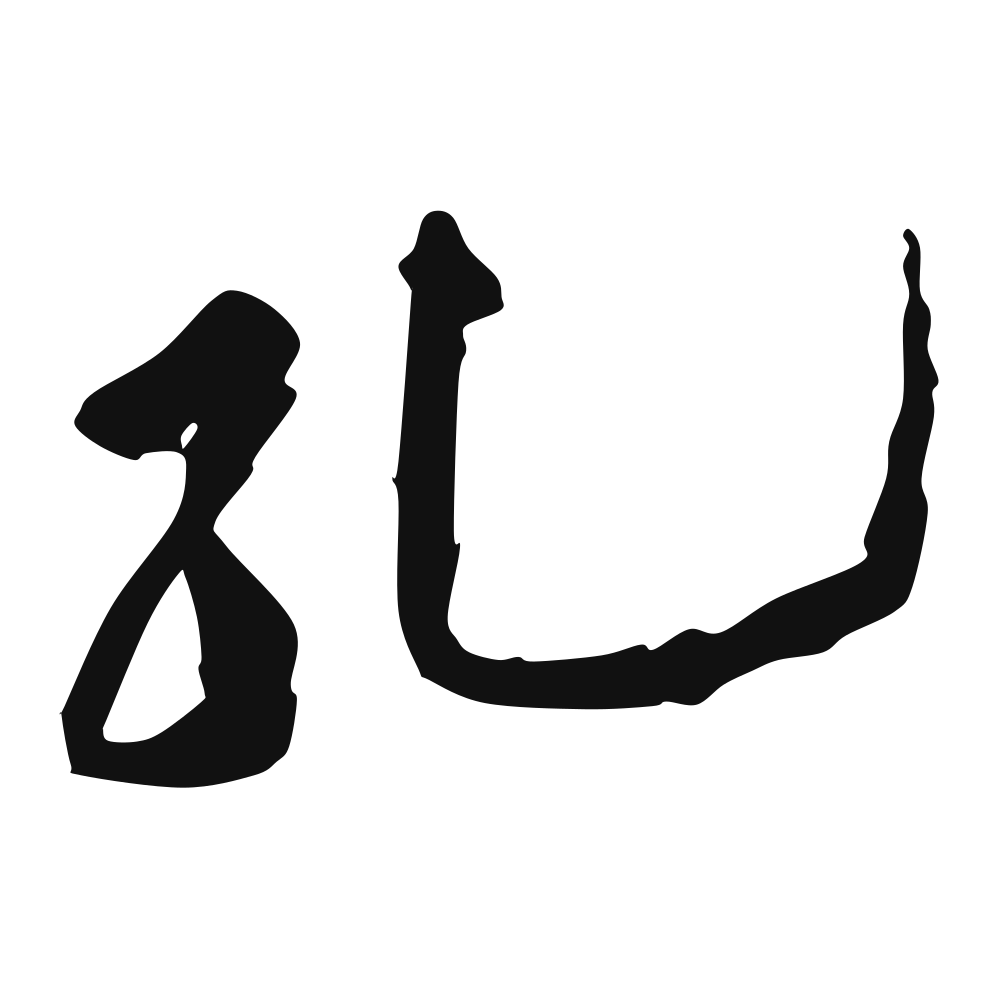
孔
surname Kong; hole
Closest English meanings
hole·aperture·Confucius
The Calligrapher — Huáng Tíngjiān 黄庭坚
Song master of elongated, radical running and cursive script.
Song calligrapher (1045–1105), master of running script/cursive script — Song master of long, sweeping, deliberately stretched running strokes. Song dynasty
Cultural Story
孔子, born in 551 BCE at Qufu, shaped two millennia of schooling; his 孔庙 there still draws pilgrims. The graph also meant an aperture — 鼻孔 the nostrils, 毛孔 the skin's pores — so the Sage's name and a bodily hole share one character. Qufu's courtyards make the double sense concrete: teaching and breathing.
Common words & phrases
- 孔子 Confucius · Master Kong
- 鼻孔 nostril · nostrils
- 毛孔 pore · skin pore
- 孔庙 Confucius Temple · Temple of Confucius
- 孔洞 hole · aperture · opening
Read the story behind the character
Skincare ads promise to unclog 毛孔, and 鼻孔 appears in cold-relief commercials. Tour buses fill Qufu's 孔庙, while 孔子 tops every civics syllabus. The word moves from the body's small openings to the founder's large shadow, taught in classrooms and sold in pharmacies by turn.
Why this character belongs on skin
A small opening and the light gets through—孔 is the hole, the aperture, the nostril through which breath becomes life. The character means both the tiny passage and the great, as in the man whose name it became: 孔子, the Master, called great not for conquest but for the openings he cut in the human mind. To 孔 is to let something pass—air, light, understanding. A tattoo of this character is a celebration of the threshold, the doorway scaled to a single breath. It is for the one who knows that wisdom is mostly learning where to make the hole. Let it sit where breath moves, the throat or the chest. The aperture is small, but through it flows everything. You are the opening. What passes through you is the world.
Own this character
Purchase delivers the original SVG of this glyph, brushed by Huáng Tíngjiān 黄庭坚, ready to place on skin, paper, or screen.