
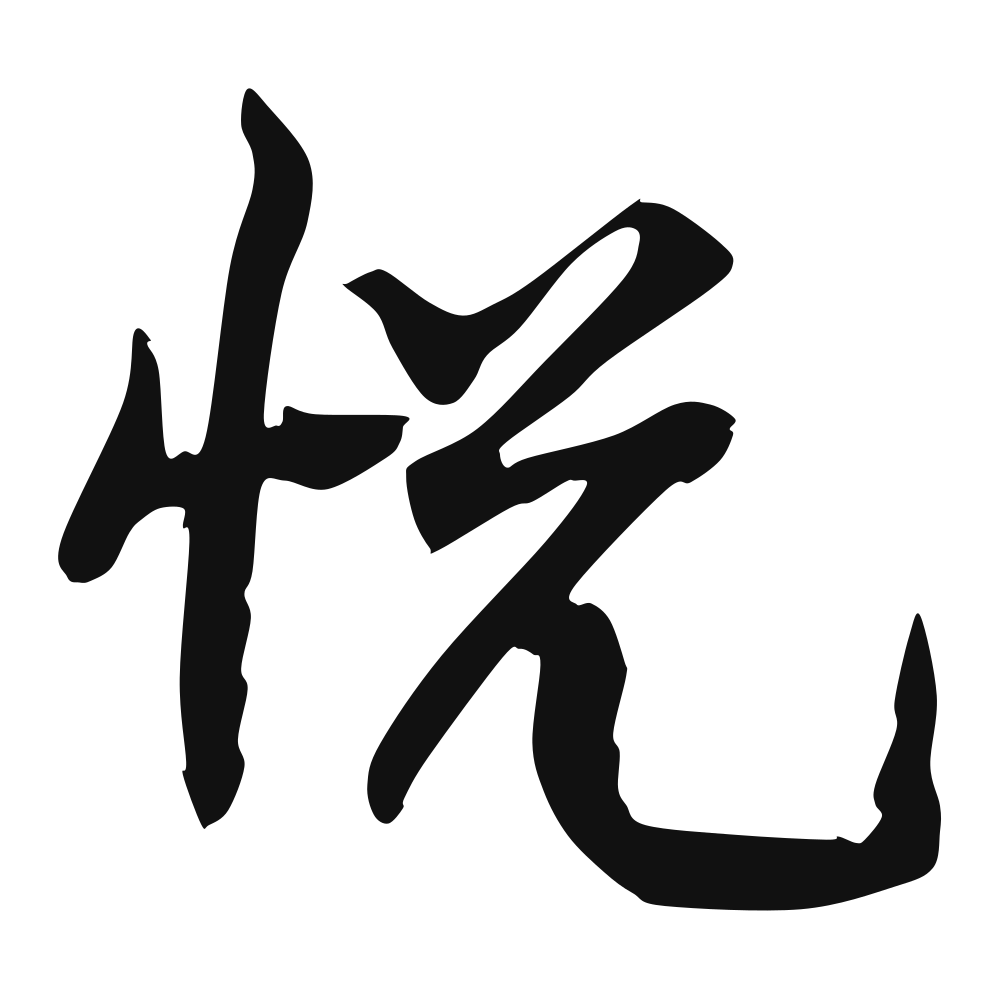
悦
(literary) pleased; to please
Closest English meanings
pleased·delighted·joyful
The Calligrapher — Huáng Tíngjiān 黄庭坚
Song master of elongated, radical running and cursive script.
Song calligrapher (1045–1105), master of running script/cursive script — Song master of long, sweeping, deliberately stretched running strokes. Song dynasty
Cultural Story
悅 is pleasure worn on the face. The 論語 opens with a near-twin: 学而时习之,不亦说乎, where 说 is read yuè, glad — the later 悅 was split off so the happy sense had its own body. The heart with 兑, to exchange or open, is delight that shows, a face that gives something back.
Common words & phrases
- 喜悦 joy · delight
- 愉悦 cheerful · joyful
- 悦耳 pleasant to the ear · sweet
- 悦目 pleasant to the eye
- 取悦 please · win favor
- 和悦 gentle · kindly
Read the story behind the character
悦 is the softer yes: 喜悦 the news you wanted, 愉悦 a decent evening, 悦耳 a voice on the phone, 悦目 a well-set table. 取悦 is the flattery nobody admits to wanting. It is the word for contentment that asks nothing further, the mild cousin of 喜 that prefers a smile to a cheer.
Why this character belongs on skin
It arrives without warning—the small bright lift when the kettle sings, when her name appears, when morning lays gold on the floor. 悦 is delight, the heart pleased for no reason it can defend. The Confucians set it beside righteousness, as if joy were a duty owed to a good life; the Daoist finds it in the ordinary current, free and unforced. This is not the loud happiness that performs. It is the inward smile, the settling of the chest. To wear this character is to refuse the grim doctrine that maturity means losing your light. Let it be inked where your own hand will find it, a private yes to the world. It is a reminder that delight is a form of loyalty—to the day, to the body, to the improbable fact that you are here, and that here, sometimes, is enough.
Own this character
Purchase delivers the original SVG of this glyph, brushed by Huáng Tíngjiān 黄庭坚, ready to place on skin, paper, or screen.