
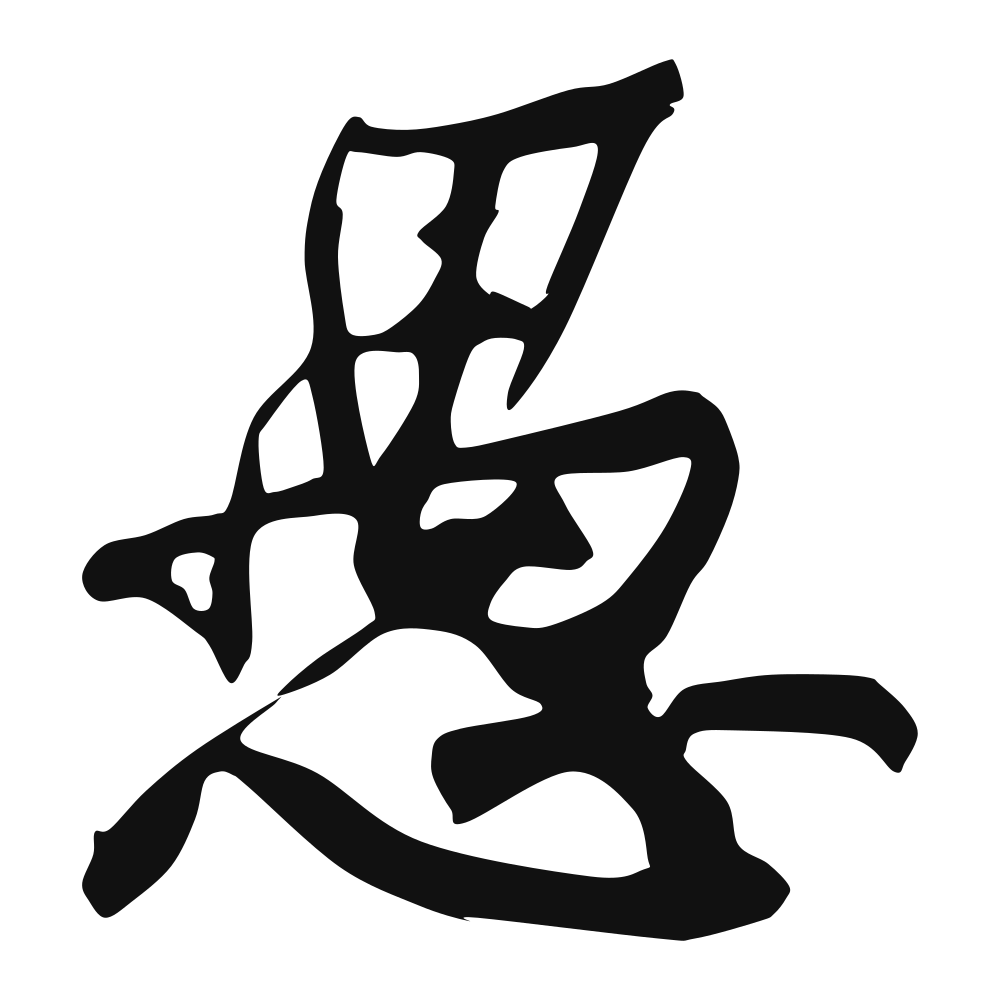
愚
to be stupid; to cheat or deceive; me or I (modest)
Closest English meanings
foolish·stupid·ignorant
The Calligrapher — Huáng Tíngjiān 黄庭坚
Song master of elongated, radical running and cursive script.
Song calligrapher (1045–1105), master of running script/cursive script — Song master of long, sweeping, deliberately stretched running strokes. Song dynasty
Cultural Story
愚 is the fool the sages loved to praise. The 列子 tells of 愚公, the old man who set his family to move two mountains with baskets, and shamed the clever man into silence. The heart with 禺, an ape, is the slow one — but slowness here wins. Confucius used 愚 of himself when playing dumb saved the day.
Common words & phrases
- 愚蠢 stupid · foolish
- 愚昧 ignorant · benighted
- 愚弄 deceive · make a fool of
- 愚公 foolish old man · Yu Gong
- 愚笨 dull · slow-witted
- 愚见 my humble opinion
Read the story behind the character
愚 is the modest mask: 愚见 my humble opinion, 愚蠢 the insult, 愚弄 the con job. 愚公移山 is still the slogan of the patient campaign. It toggles between self-deprecation and scorn, the word you use to seem harmless or to call someone a fool.
Why this character belongs on skin
Here is the paradox that made the character beloved: 愚 means foolish, and yet the wisest people in Chinese history chose it for themselves. Laozi praised the great simplicity; the sage 愚公, the Foolish Old Man, moved a mountain with a basket, one load at a time, laughing at those who called it impossible. The character shows a heart under a roof of seeming — the appearance of simplicity concealing something whole. The Christian tradition arrived at the same irony: the wisdom of this world is foolishness to God, and the fool is often the only honest one at the table. Cleverness calculates; foolishness commits. To wear 愚 is to claim the older, stranger virtue — the willingness to look naive while you do the one long, unglamorous thing that matters. Let the quick ones laugh. The mountain moves all the same.
Own this character
Purchase delivers the original SVG of this glyph, brushed by Huáng Tíngjiān 黄庭坚, ready to place on skin, paper, or screen.