
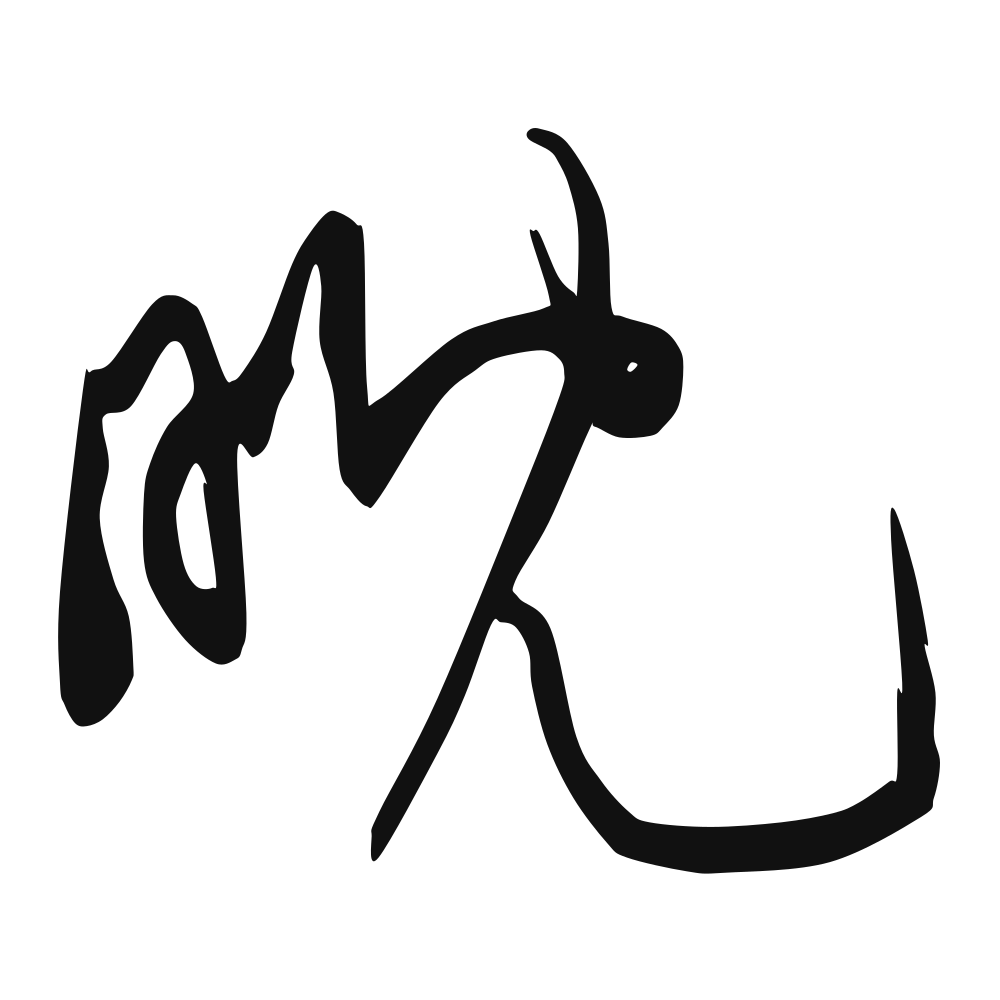
睨
to look askance at
Closest English meanings
squint·look askance
The Calligrapher — Huáng Tíngjiān 黄庭坚
Song master of elongated, radical running and cursive script.
Song calligrapher (1045–1105), master of running script/cursive script — Song master of long, sweeping, deliberately stretched running strokes. Song dynasty
Cultural Story
睨 is the sideways look — scorn, calculation, or cool appraisal. History's great scene has Lin Xiangru holding the He jade, 睨柱, glancing at the pillar, ready to smash treasure and himself together rather than yield it to the king of Qin.
Common words & phrases
- 睥睨 look askance · look down upon
- 睨视 look sideways
Read the story behind the character
睨 is a bookish gem: novelists write 睨视 for a hero sizing up a threat, costume dramas slow-motion the sidelong glance, and literature students cite Lin Xiangru's 睨柱 moment as the peak of composed defiance. In essays, 睥睨 and 睨视 lend instant hauteur.
Why this character belongs on skin
To look askance — 睨 is the sideways eye, the glance that measures from the corner rather than facing head-on. In classical usage it slid easily into contempt: 睥睨, to survey the world slightly over the rim of one's gaze, as emperors and mountains do. But there is a gentler reading hiding in the same angle. Zhuangzi's sages rarely stare; the fisherman on the river watches the water sidelong, and the fish come close. Lovers do it too — the glance across a room, never full-on, all the more devastating for its obliqueness. Directness is for transactions; the slanted look is for things that matter, things you are not ready to name. Even the moon works this way, showing us always a turned face. 睨 on your skin is that suspended gaze: cool, appraising, half-concealed. A promise that you see more than you show, and that the tilt of an eye can hold an entire unspoken sentence.
Own this character
Purchase delivers the original SVG of this glyph, brushed by Huáng Tíngjiān 黄庭坚, ready to place on skin, paper, or screen.