
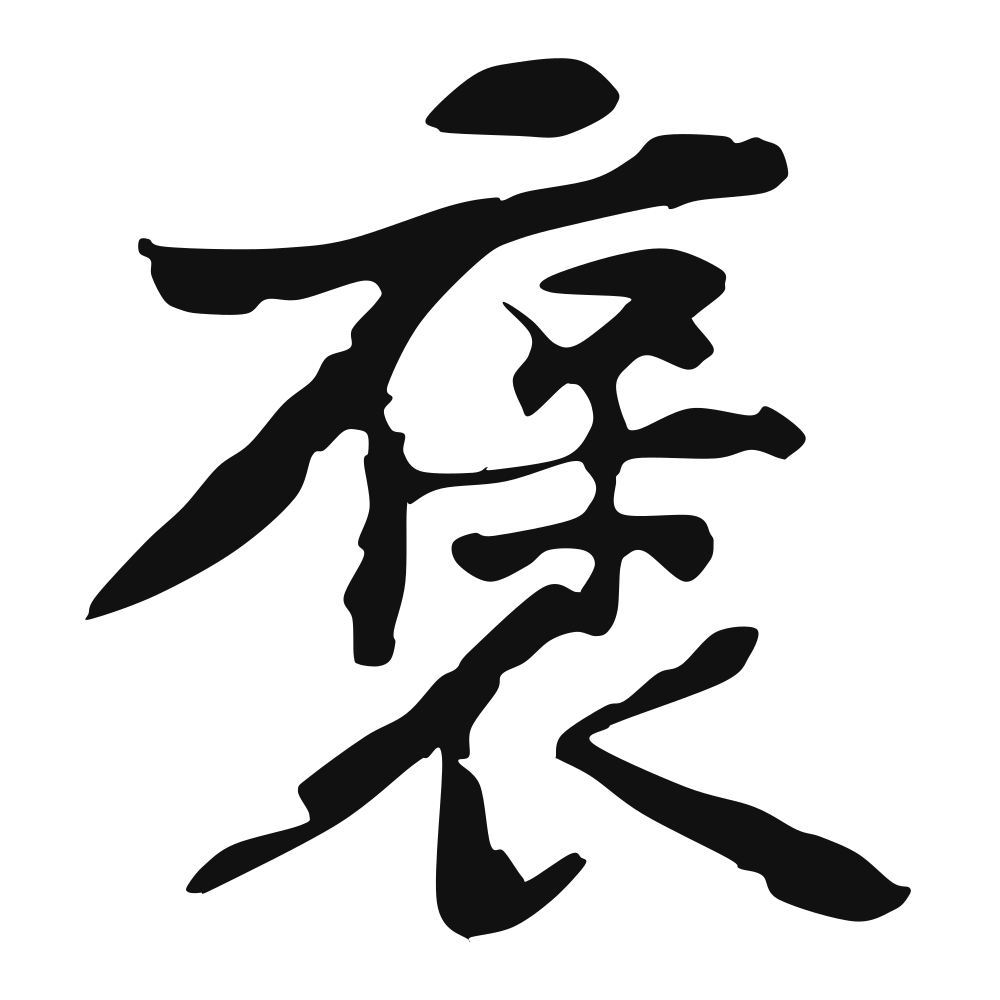
褒
to praise; to commend; to honor; (of clothes) large or loose
Closest English meanings
to praise·honor·commend·to extol
The Calligrapher — Huáng Tíngjiān 黄庭坚
Song master of elongated, radical running and cursive script.
Song calligrapher (1045–1105), master of running script/cursive script — Song master of long, sweeping, deliberately stretched running strokes. Song dynasty
Cultural Story
Confucius' Spring and Autumn Annals was said to praise and blame with a single chosen word, the bao bian by which the sage judged princes without raising his voice. The bao was the stroke that honoured, the invisible verdict carried in plain ink. To be baoed was to be remembered well by the brush.
Common words & phrases
- 褒奖 to praise · to commend · award
- 褒贬 to praise or blame · comment
- 褒义 commendatory (sense)
- 褒扬 to praise · to commend
Read the story behind the character
A teacher bao jiang, praises, a shy student's effort, and a reviewer's bao bian, comment, weighs the film's flaws against its wins. The dictionary marks a word's bao yi, commendatory sense, and the mayor bao yang, commends, the rescue team. The character is the yes the tongue or the pen gives.
Why this character belongs on skin
Open robes, the glyph suggests—褒 began as ample clothing, generous enough to wrap someone whole. From that image grew its meaning: praise that covers, honors that drape a person in something larger than themselves. An imperial edict of commendation was 褒奖, a blessing stitched in formal silk. Yet the ancients were wary; Laozi warned that praise and blame are twins, and to be praised is to be measured. So the character carries a quiet double edge: the warmth of recognition and the danger of living for it. The wise wear commendation loosely, the way you wear a fine coat—glad of it, unowned by it. If you have been seen and honored for what you truly did, this character is that moment made permanent: a robe of words, flowing, earned, and slightly dangerous in its beauty.
Own this character
Purchase delivers the original SVG of this glyph, brushed by Huáng Tíngjiān 黄庭坚, ready to place on skin, paper, or screen.