
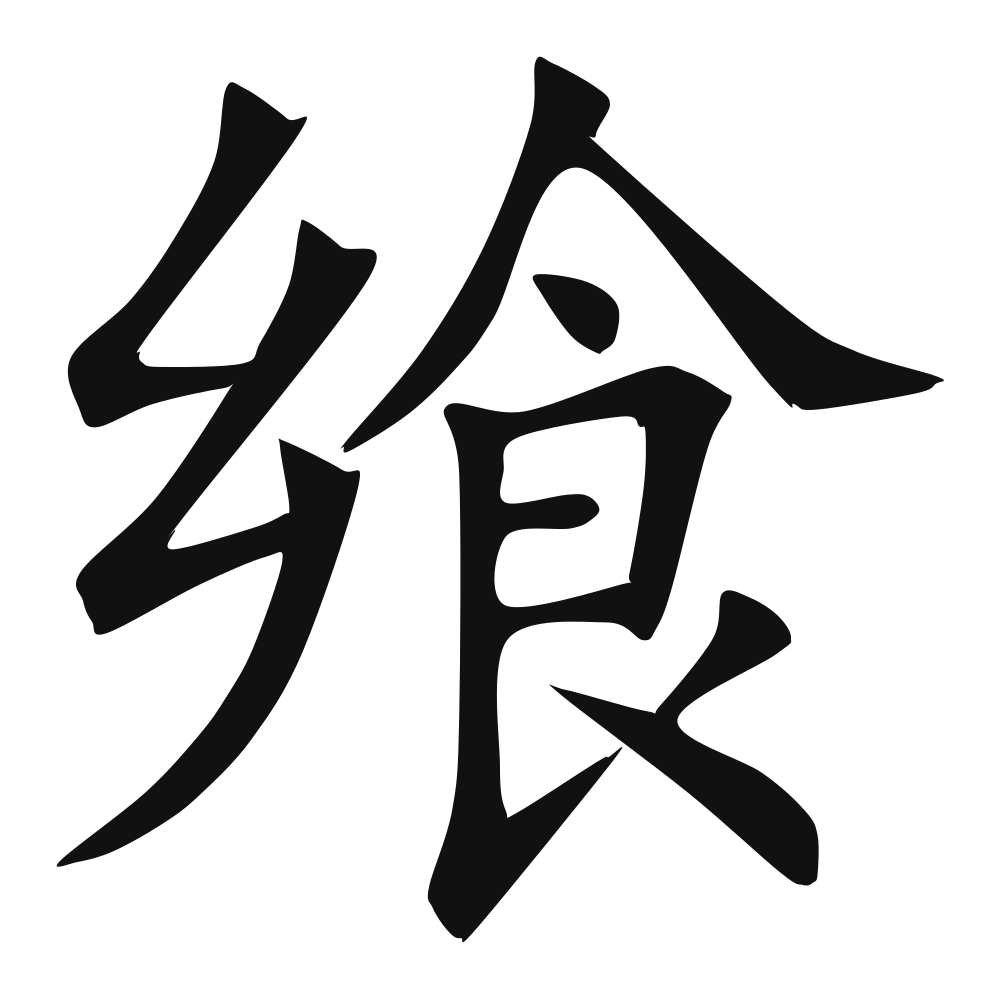
飨
(literary) to offer food and drinks; to entertain
Closest English meanings
to feast·to entertain
The Calligrapher — Bāo Shìchén 包世臣
Qing theorist whose 'Art Boat' (艺舟双楫) championed the stele school.
Qing calligrapher (), master of running script — known for 《艺舟双楫》. Qing dynasty
Cultural Story
飨 (xiǎng) sets 食, “food,” above the phonetic 鄉, originally “to face one’s village.” 《説文解字》 glosses it 鄉人飲酒也, a feast where villagers shared wine and meat — an act of hospitality offered to guests and ancestors alike.
Common words & phrases
- 飨宴 banquet · feast
- 飨客 entertain guests
- 以飨读者 to present to readers
Read the story behind the character
Today 飨 means to feast or entertain. A grand 飨宴 (banquet) honors visitors, a host may 飨客 (entertain guests) at home, and authors often close by saying 以飨读者, “presented to the reader,” as if sharing a meal of ideas.
Why this character belongs on skin
A bowl, an altar, two people seated across from each other: that is 飨, the character for the shared feast, and it once meant something larger than dinner. To 飨 the ancestors was to feed them—wine poured, meat offered, the dead invited to the table by smoke and sincerity. To 飨 guests was to fold strangers into kin for an evening. The Book of Songs describes these banquets: harmony over robes and cups, the ritual of generosity. Underneath every feast the Chinese ever held runs the same assumption—that hunger is the doorway to the soul, and that to feed someone is a sacred act, unfinished unless it is shared. Remember your best table: the laughter, the second helping nobody planned, the dead as present as the living. This character is that table's hieroglyph. Ink it where your hands will find it, near the wrist or over the heart, and let it keep the covenant: to gather, to pour, to offer up—because appetite, honored properly, becomes love.
Own this character
Purchase delivers the original SVG of this glyph, brushed by Bāo Shìchén 包世臣, ready to place on skin, paper, or screen.