
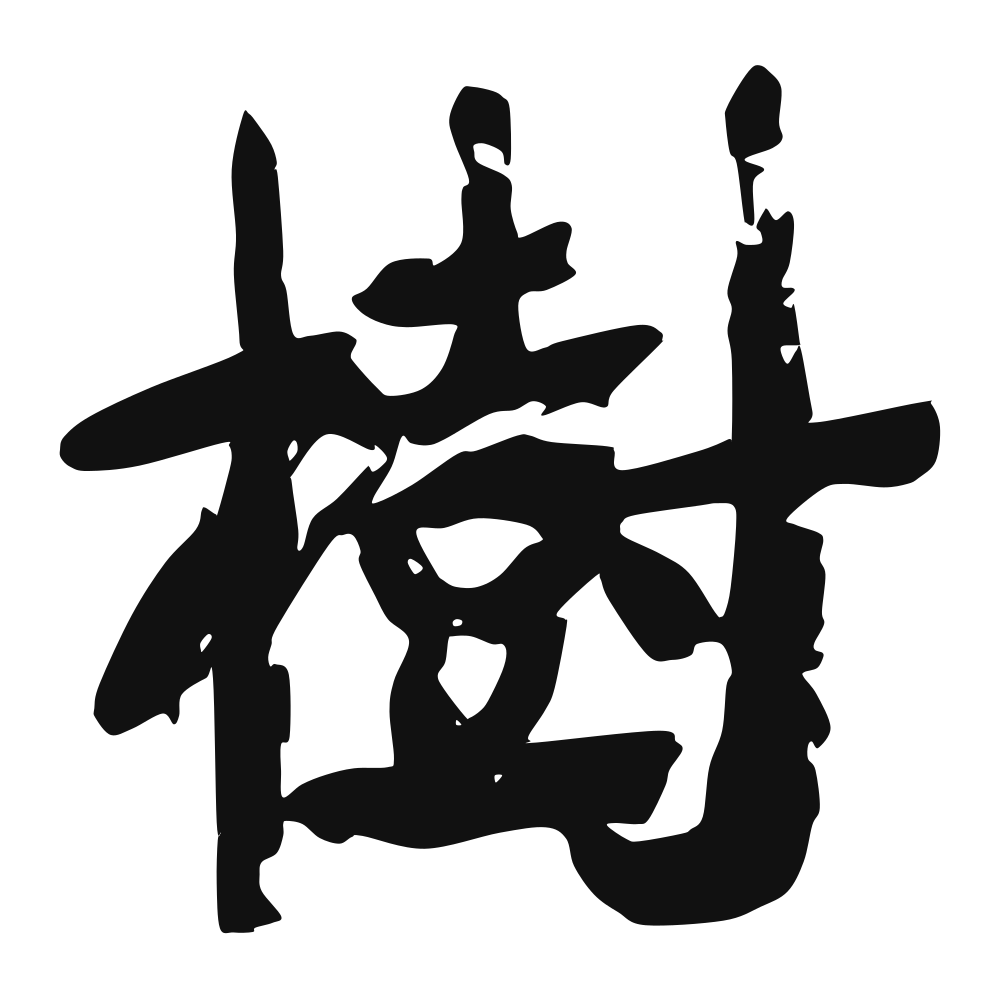
树
tree; to cultivate; to set up
Closest English meanings
tree·plant·establish
The Calligrapher — Kāng Yǒuwéi 康有为
Qing reformer and theorist who championed stele-based calligraphy.
Qing calligrapher (), master of regular script — Qing reformer-scholar who championed the rugged stele-school aesthetic. Qing dynasty
Cultural Story
树 is the planted tree and the act of planting — the 詩經 sings of 树之榛栗, setting saplings. Confucius says a gentleman 树德, plants virtue, so it grows. The character is the living trunk and the verb of setting something down to take root and stand through the seasons against the wind.
Common words & phrases
- 树木 trees · tree
- 树立 establish · set up · build
- 树林 woods · forest · grove
- 树叶 leaf · leaves
- 树根 tree root · roots
- 树枝 branch · twig
Read the story behind the character
树 is the tree and the brand: 树木 the city plants in a median, 树叶 the thing a broom chases in fall, 树根 the crack in the pavement. 树立 is what a leader does with an example. The character is the organism and the metaphor, the green thing and the reputation you plant and then must tend for years.
Why this character belongs on skin
Stand at the base of an old tree and feel it: the slow authority of something that decided, centuries ago, to stay. 树 is tree, but also to plant, to establish—the character carries both the thing and the act of setting it down. A warrior plants his standard; a lover plants a date tree by the gate. The Dao says the oak and the reed both survive by knowing what they are. To bear this mark is to declare yourself rooted, not driftwood. In a life of constant motion, the tree is the radical choice: to grow in one place and mean it. Let this character lie along your ribs or your spine like a trunk, a quiet testament that you have put down roots somewhere, that you are not passing through. The ink becomes your bark, and under it, something old and patient keeps living.
Own this character
Purchase delivers the original SVG of this glyph, brushed by Kāng Yǒuwéi 康有为, ready to place on skin, paper, or screen.