
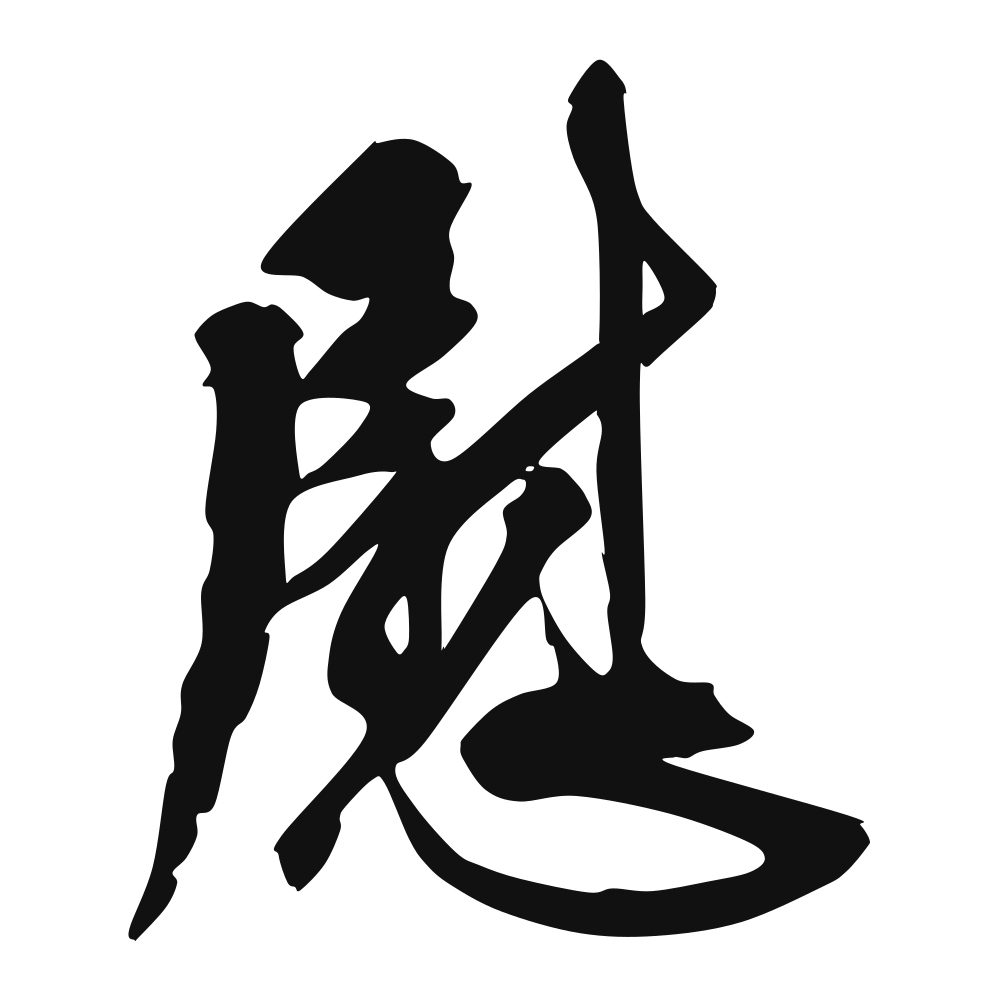
慰
to comfort; to console; to reassure
Closest English meanings
to comfort·to console
The Calligrapher — Kānglǐ Náonáo 康里巎巎
Yuan cursive master of Kipchak origin, paired with Zhao Mengfu as 'North-Nao, South-Zhao.'
Yuan calligrapher (1295–1345), master of cursive script — known for 《谪龙说》. Yuan dynasty
Etymology & Meaning · 字义溯源
2 · The Character: 慰 Wèi (4th tone). The Shuowen: 「慰,安也。从心尉聲」 — to set at ease, from heart (心) with 尉 (wèi, 'to warm/Press') for sound; Duan notes the original graph showed fire warming cloth — comfort as warmth. Classical use: 《诗经·邶风·凯风》 「有子七人,莫慰母心」 (none could ease the mother's heart); 《庄子》 uses 慰 as solace; and 慰 as 'to console' is everywhere (慰问, 安慰). Grading: 慰 is gentle and positive — 'comfort / solace / to console' — and stands alone (慰藉, 安慰). Disclose it is the receiving, consoling kind of peace (慰安), not the active calm of 安; and that 慰 alone is uncommon without a complement. Still a safe, tender standalone for 'solace'.
Cultural Story
慰 is the warmth laid on a wound. The old letters close with 慰 to the grieving family, and the physicians wrote of 慰 as the easing of a troubled breath. The heart with 尉, the pacifier, is comfort administered like a press of the hand. It is solace given, not merely felt.
Where a Western reader can stand: Where a Western reader can stand: 慰 is 'to comfort / solace' — the Latin solari, the Greek paramutheomai, the warmth Duan Yucai reads in fire-warmed cloth. The Shijing's 凱風 carries it (莫慰母心). Honest caveat: 慰 is the receiving, consoling kind of peace, not the active calm of 安, and alone it is uncommon without a partner, so a lone 慰 may look like a sentence left unfinished; pair it (安慰) or accept the tender fragment. Kangli Naonao's blazing, elegant Yuan cursive suits the word as a current of warmth rather than a carved monument.
Common words & phrases
- 安慰 to comfort
- 慰问 express sympathy
- 慰藉 solace
- 欣慰 gratified
Read the story behind the character
慰 is the care word: 安慰 the thing you say, 慰问 the official visit with flowers, 慰藉 the book that got you through. 欣慰 is the parent's quiet pride. It names the act of standing beside the hurting, the small labor of making a loss weigh less.
Why this character belongs on skin
Grief does not ask for solutions. It asks for a hand. 慰 is comfort—the heart radical cradled by a hand pressing down, gentling, like a palm flat against a shaking back, with 尉 the old word for smoothing what is ruffled. This is the verb of the vigil: the night after the diagnosis, the airport when the plane leaves, the funeral where casseroles stand in for language. The Bible's paraclete, the one called alongside, is the same gesture translated into theology. 慰 knows that consolation is mostly presence—weight, warmth, the refusal to leave the room. There is a quiet sensuality in it too: the pressed palm, the forehead touching a temple, breath slowing to match breath. To wear this character is to declare yourself a place where people can put their sorrow down. Not fixer, not preacher. Hand, heart, presence. Ink it on the inside of the arm, where a wrist would rest, and become the sentence someone needed to hear without hearing anything at all.
Own this character
Purchase delivers the original SVG of this glyph, brushed by Kānglǐ Náonáo 康里巎巎, ready to place on skin, paper, or screen.