
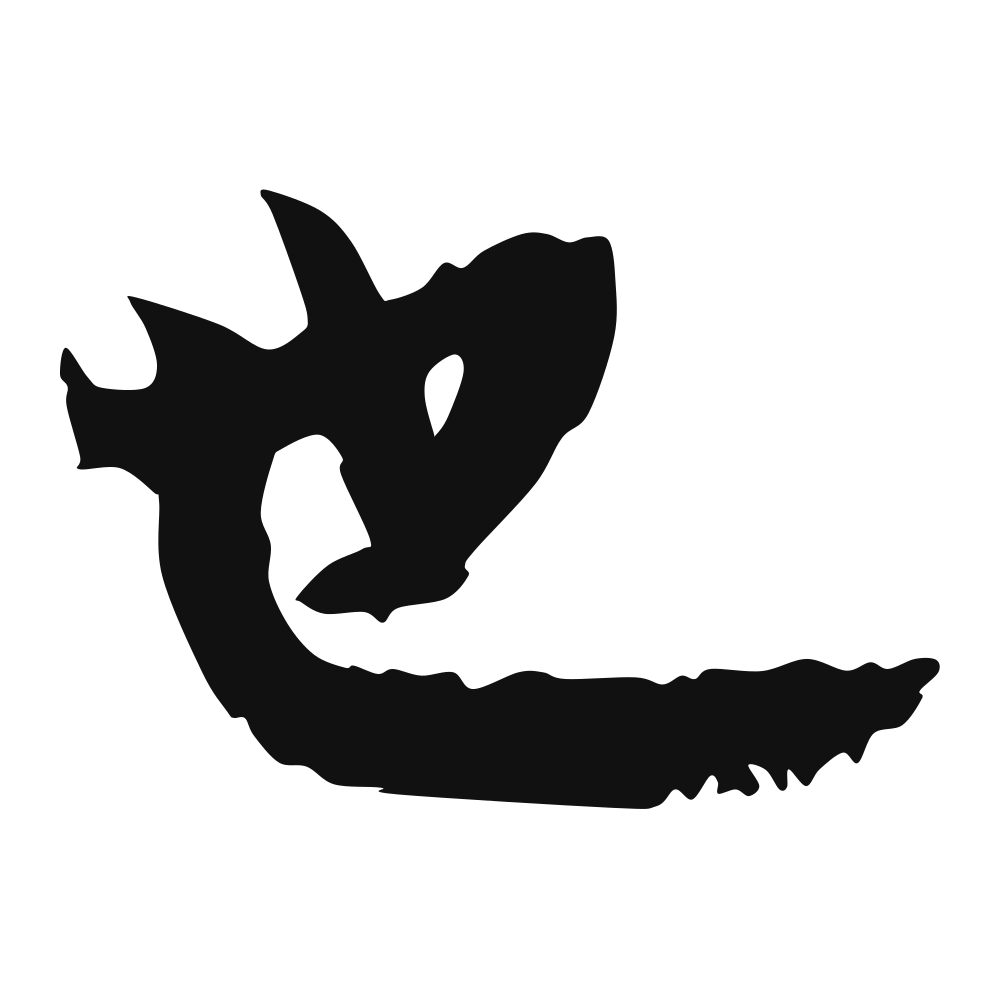
也
surname Ye; also; too; as well; (not ...) either; (used after a verbal or nominal expression X to indicate that X is an extreme or unexpected case) even (X); (literary) particle having functions similar to 啊[a5]
Closest English meanings
also·too·as well
The Calligrapher — Lǐ Jiànzhōng 李建中
Early-Song 'Li Xitai', a Tang-to-Song bridge figure famed for calm, classical running script.
Song calligrapher (945–1013), master of running script — known for 《土母帖》. Song dynasty
Etymology & Meaning · 字义溯源
2 · The Character: 也 也 (yě, 3rd tone) began life in the Shuowen Jiezi as 女陰也。象形 — 'the female private part; pictographic' (羊者切). That original body-sense was almost immediately borrowed as a function word, and it is as a grammatical particle that 也 has lived for two millennia: the sentence-final 'also / indeed / it is…' that closes clauses in the Lunyu and the Zhuangzi. It carries no lexical meaning of its own — it is pure grammar, the hinge between subject and predicate. Classical usage is everywhere, sealing a Master's saying ('不亦说乎' and the countless 也 that end Confucius's words). Because of this, 也 cannot stand alone as a 'word' the way 九 or 一 can. Honest disclosure for tattoo buyers: a lone 也 reads to any Chinese-literate viewer as an unfinished sentence, a particle waiting for the noun that never comes. It is not 'harmony' and not 'eternity'; it is punctuation made flesh. If used, it must be paired (e.g., 道也 / 君子的也) so the grammar closes. Kangxi: 3 strokes, 乙部; Wuxing: Earth (土).
Cultural Story
也 is the sentence-final particle that gave classical statements their settled close, the indeed at the end of a clause. The 論語 uses it to seal a truth, 不朽也. Originally it may have marked a pause or an expansion. It is the period with a breath, the sound of a thought laid down and not taken back, the grammatical calm of the mastered line.
Where a Western reader can stand: Li Jianzhong, 'Li Xitai', bridged Tang solidity and Song warmth, and his gentle running script suits a calm, humanistic feel. On a 也, that means the character reads as a soft, closing stroke — but be clear it is a grammatical particle, not 'harmony' or 'eternity.' To a Chinese-literate eye a lone 也 looks like a sentence left hanging, so pair it (道也, 君子的也) or frame it as pure grammar.
Common words & phrases
- 也许 perhaps · maybe
- 也罢 let it be · whatever
- 也是 also is · too
- 也好 may as well · also good
- 也门 Yemen
Read the story behind the character
也许 is the hedge in every forecast; 也是 the agreement, 我也是. 也罢 is the sigh of giving up; 也好 the shrug of consent. 也门 is Yemen, the one proper noun that wandered in. The particle sense is gone from speech, but the character lives in these compounds, the register of possibility and resignation, the maybe, the me-too, the let it be.
Own this character
Purchase delivers the original SVG of this glyph, brushed by Lǐ Jiànzhōng 李建中, ready to place on skin, paper, or screen.