
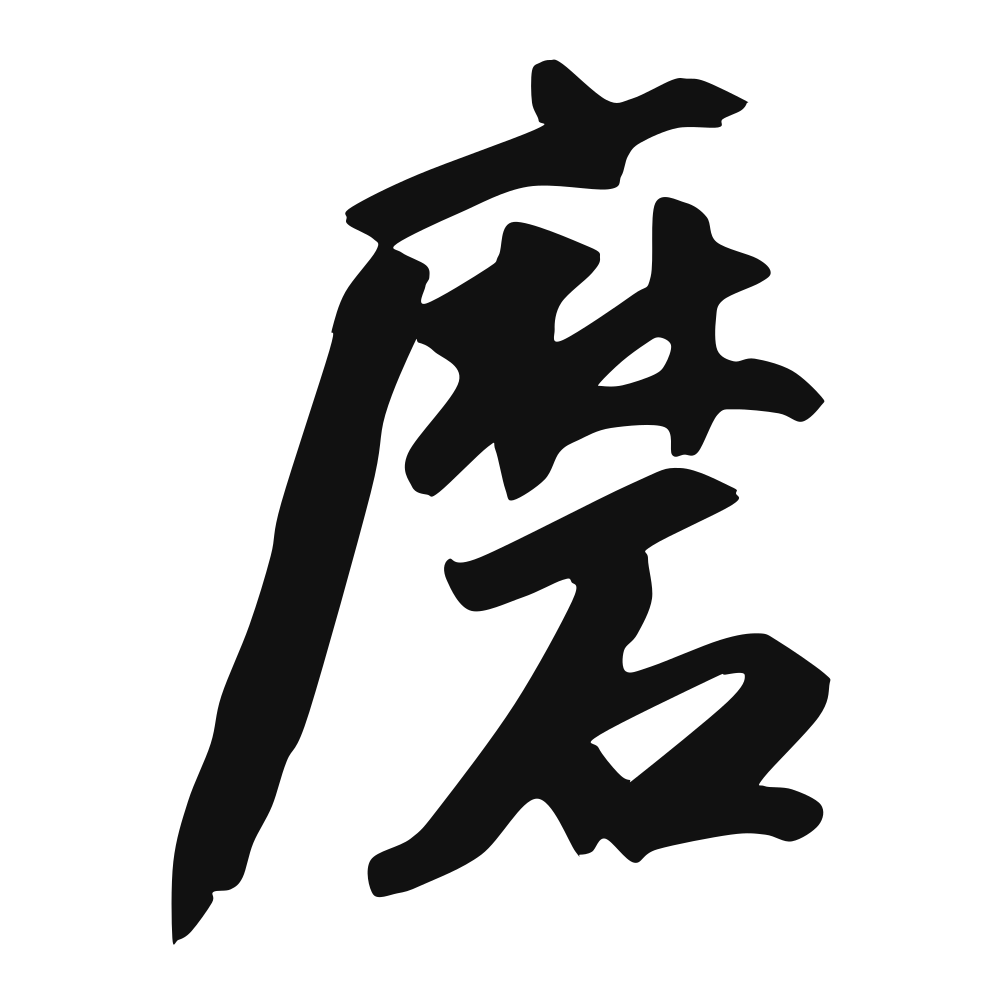
磨
to rub; to grind; to polish; to sharpen; to wear down; to die out; to waste time; to pester; to insist; grindstone; to turn round
Closest English meanings
grind·rub·mill
The Calligrapher — Lǐ Liúfāng 李流芳
Ming literatus and calligrapher; one of the Four Masters of Jiading famed for running script.
Ming calligrapher (), master of running script — known for 《西湖诗》. Ming dynasty
Cultural Story
The Book of Songs praises the refined gentleman “cut and filed, chiseled and ground” — 如琢如磨 — self-polish as moral discipline. Stone mills ground the family’s grain for centuries, and the word widened to every slow abrasion, including the heart’s.
Common words & phrases
- 折磨 torment · torture
- 磨练 temper · hone
- 磨灭 wear away · obliterate
- 石磨 millstone
- 磨损 wear · abrasion
- 打磨 polish · grind
Read the story behind the character
Modern Chinese keeps all its edges: exams 折磨, torment, students; hardship 磨练, tempers, character; time 磨灭, obliterates, old grievances; grandma’s 石磨, stone mill, still grinds soybeans for tofu; sneakers show 磨损, wear; and artisans 打磨, polish, each detail to perfection.
Why this character belongs on skin
The stone radical in 磨 tells you everything: this is the character of the millstone, of friction, of things worn smooth or worn away—your choice which. It means to grind grain, to sharpen a blade, to polish jade, and also to suffer long, 磨难, the grinding hardship that either destroys a person or finishes them. Chinese has no gentler truth: refinement is abrasion. The blade does not resent the whetstone; the jade does not sue the grindstone for its beauty. Kintsugi mends broken pottery with gold, but the older way is simpler—keep the stone turning until the edge is true. Everyone has been ground by something: a job, a grief, a decade. This character asks what the grinding made of you. Inked over the scar or beside it, 磨 reclaims the process—declares that the wheel turned on you, and you came out keener, smoother, luminous with use.
Own this character
Purchase delivers the original SVG of this glyph, brushed by Lǐ Liúfāng 李流芳, ready to place on skin, paper, or screen.