
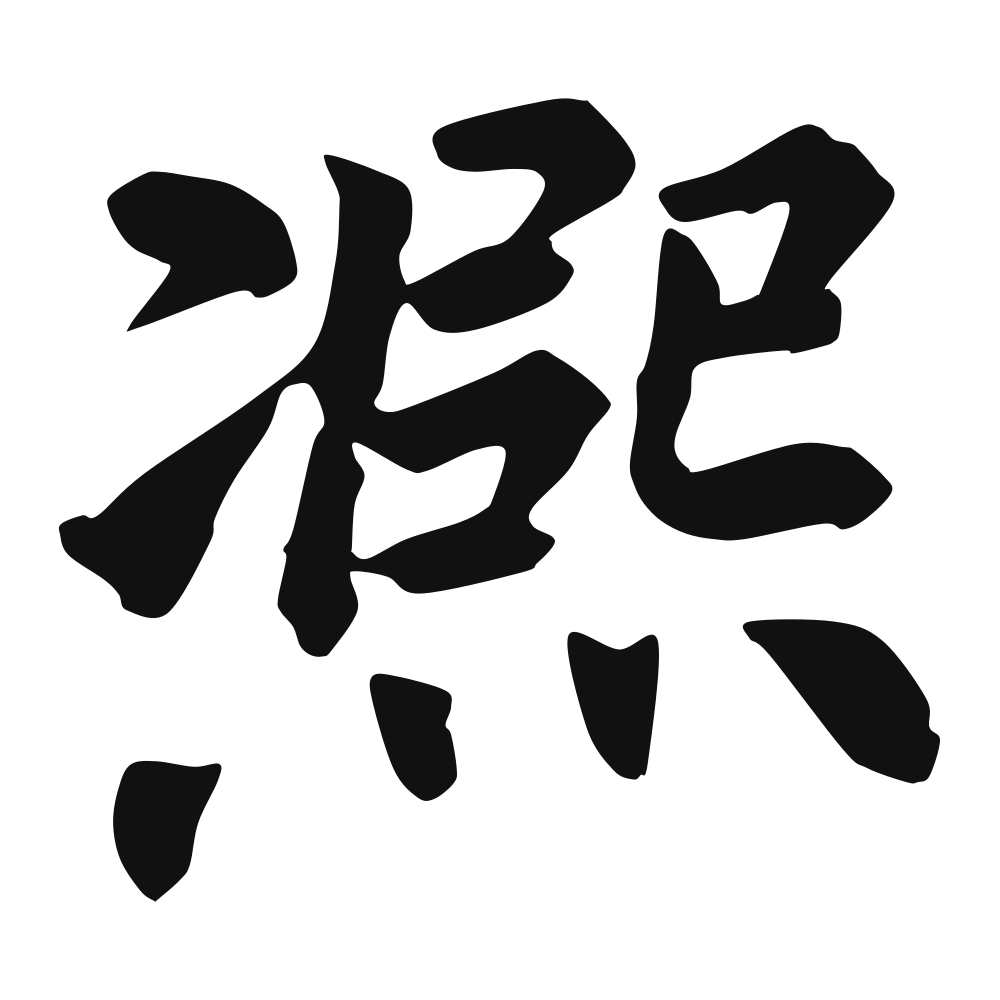
熙
(used in names); (bound form) (literary) bright; prosperous; splendid; genial
Closest English meanings
bright·prosperous
The Calligrapher — Lǐ Yōng 李邕
Tang running-script master famed for his stele inscriptions.
Tang calligrapher (678–747), master of running script — known for 《麓山寺碑》(李北海). Tang dynasty
Cultural Story
熙 originally carried the sense of broad, bright radiance and bustling plenty. The Laozi and early commentaries use bright 熙 imagery for flourishing order, while Sima Qian's Shiji paints markets 熙熙 with traders. Most famously, the Qing emperor 康熙 took 熙 in his reign name to mean 'prosperous and peaceful,' blessing an era. Folk sayings still invoke 熙和 for happy, harmonious households.
Common words & phrases
- 熙熙 bustling
- 熙攘 busy · crowded
- 康熙 Kangxi
- 熙和 happy and peaceful
Read the story behind the character
Walk any Chinese train station and you meet 熙熙攘攘 crowds, busy and crowded, never still. A night market grows 熙攘 with food stalls, or a festival square where families gather in 熙和 happiness and peace. Everyone knows 康熙 from costume dramas about that prosperous emperor, and we say a lively street is simply 熙熙 with life and motion.
Why this character belongs on skin
熙熙攘攘 — the joyful crowd, and 熙 is the bright, full character at its heart: a street alive with people, lanterns, noise, the sheer crowded evidence that life is happening and you are in it. For those of us raised in rooms too quiet about who we were, the queer gathering is a kind of 熙 — the pride block party, the club at 1 a.m., the kitchen loud with friends who became family. It is the warmth of being one face in a happy multitude, no longer the only different thing in the room. 熙 is belonging rendered as brightness, the sense that there is enough joy here for everyone. Wear it where it can catch movement — the shoulder, the wrist — a small festival under the skin, a reminder you were meant to be in the thick of the living, not watching from the door.
Own this character
Purchase delivers the original SVG of this glyph, brushed by Lǐ Yōng 李邕, ready to place on skin, paper, or screen.