
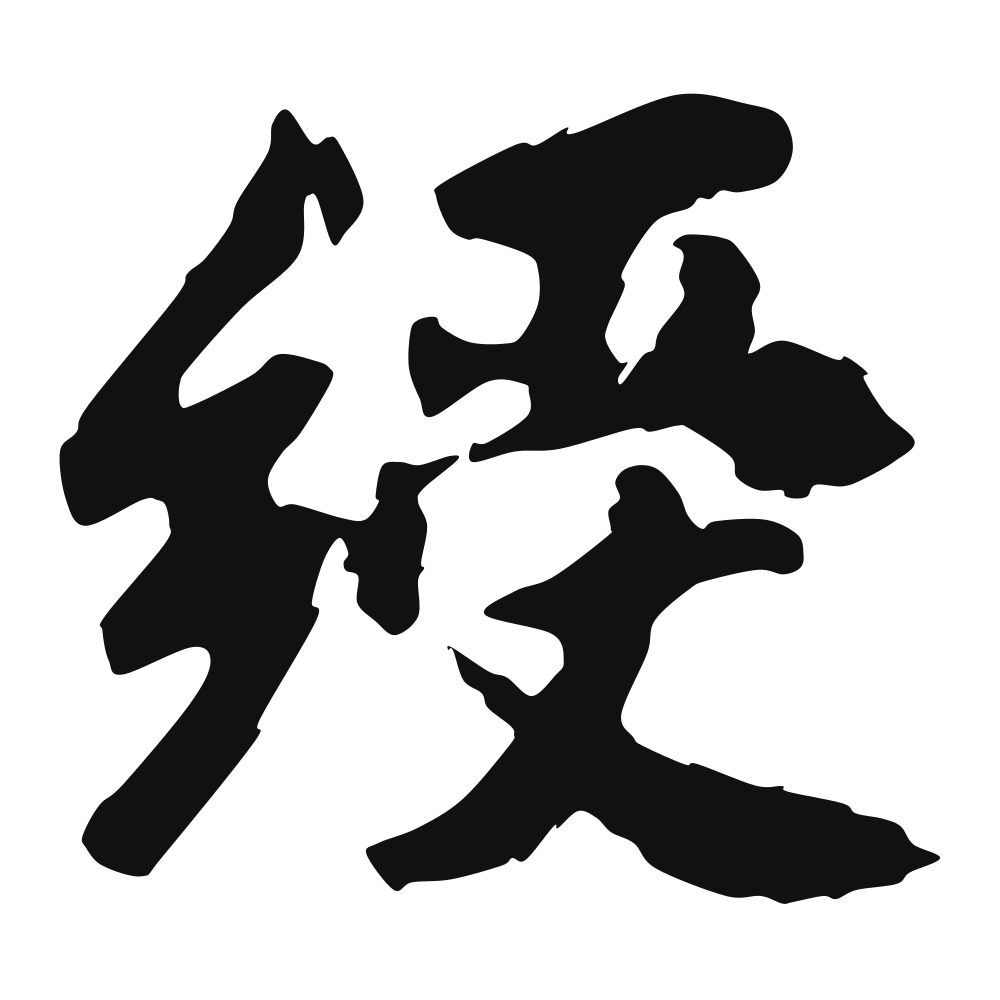
绶
cord on a seal
Closest English meanings
ribbon·silk cord·seal ribbon
The Calligrapher — Lǐ Yōng 李邕
Tang running-script master famed for his stele inscriptions.
Tang calligrapher (678–747), master of running script — known for 《麓山寺碑》(李北海). Tang dynasty
Cultural Story
绶 was the ribbon from which an official's seal hung, and its color was his rank made visible: Han laws assigned purple and blue cords to the highest ministers, yellow to the humble clerk, so a man's importance dangled visibly at his waist. To resign was to 解绶, untie the ribbon, and walk home, an image of exit that scholars never tired of painting.
Common words & phrases
- 印绶 seal ribbon · official seal
- 绶带 ribbon · sash
- 绶鸟 paradise flycatcher
Read the story behind the character
Shòu moved from the waist to the chest and shoulder. Medals hang from woven 绶带, ribbons, at every award ceremony; graduates don colored 绶带, honor stoles, over their gowns. Beauty pageants pin sash after sash across contestants, and birdwatchers carry field guides that name the 绶鸟, the ribbon-tailed bird of paradise, after the very same silk.
Why this character belongs on skin
Power, in the old empire, was a ribbon. When an official received his seal, he received with it a silk cord — this character — from which the seal hung at his belt, colors graded by rank like the braid on a general's shoulder. The ribbon made the authority visible; the seal made it real; the cord connected the two. Which is quietly profound. Authority was never meant to be held in the fist. It was meant to hang from a line of silk, carried close to the body, displayed not for glory but so everyone knew whose word could be trusted. Honor, every tradition agrees, is a burden worn in public. The ribbon can be taken back; that is the point of ribbons. But while it is yours, it says something. To ink this is to accept the cord — the trust, the visibility, the weight. Let the ink be the cord. Wear it accordingly.
Own this character
Purchase delivers the original SVG of this glyph, brushed by Lǐ Yōng 李邕, ready to place on skin, paper, or screen.