
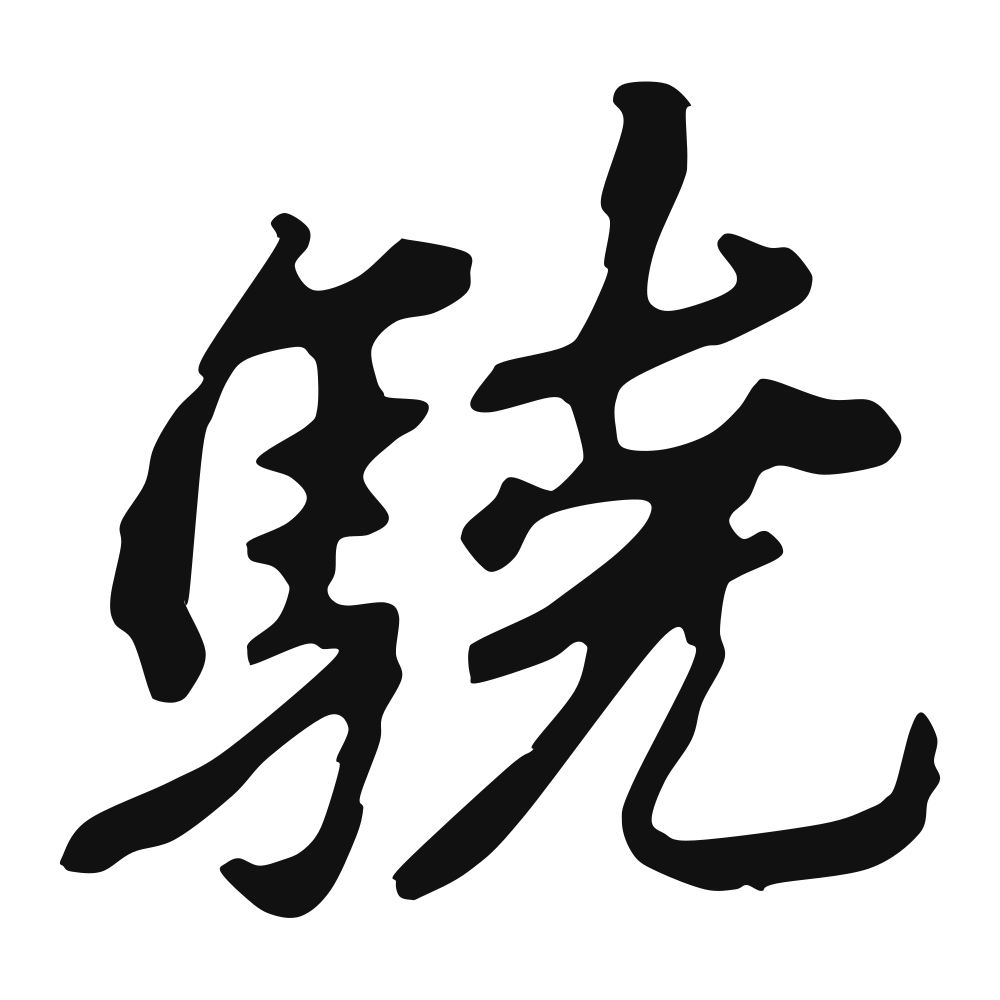
骁
good horse; valiant
Closest English meanings
brave·valiant·vigorous
The Calligrapher — Lǐ Yōng 李邕
Tang running-script master famed for his stele inscriptions.
Tang calligrapher (678–747), master of running script — known for 《麓山寺碑》(李北海). Tang dynasty
Cultural Story
骁 (xiāo) pairs 馬 with the phonetic 堯. 《説文解字》 gives 良馬也, “a fine horse,” one swift and strong. The brave steed became the type of the bold warrior who charges without fear.
Common words & phrases
- 骁勇 brave · valiant
- 骁将 valiant general
- 骁骑 cavalry · brave horse
Read the story behind the character
骁 means brave and vigorous. Generals are 骁勇 (valiant), a 骁将 (valiant general) leads the charge, and 骁骑 (cavalry, brave horse) swept old battlefields. The character still honors courage in sport and war.
Why this character belongs on skin
You can hear hooves inside this character. 骁 carries the horse radical and names a brave, fiery steed — the warhorse that does not flinch at drums — and by extension any daring soul who charges where others rein in. Generals of old won titles built on this word; 骁勇, fierce valor, was the highest praise a commander's vanguard could earn. Yet the horse is the key: valor here is not rage but trained power, muscle that consented to discipline and still keeps its wildness. Nietzsche might have called it the tamed animal that kept its lightning. As a tattoo, 骁 suits the part of you that led the charge — first in, last out — whether on battlefields literal or otherwise. Ink it near the muscle that did the work. It promises nothing gentle. It promises that when the drums start, you will not be at the rear.
Own this character
Purchase delivers the original SVG of this glyph, brushed by Lǐ Yōng 李邕, ready to place on skin, paper, or screen.