
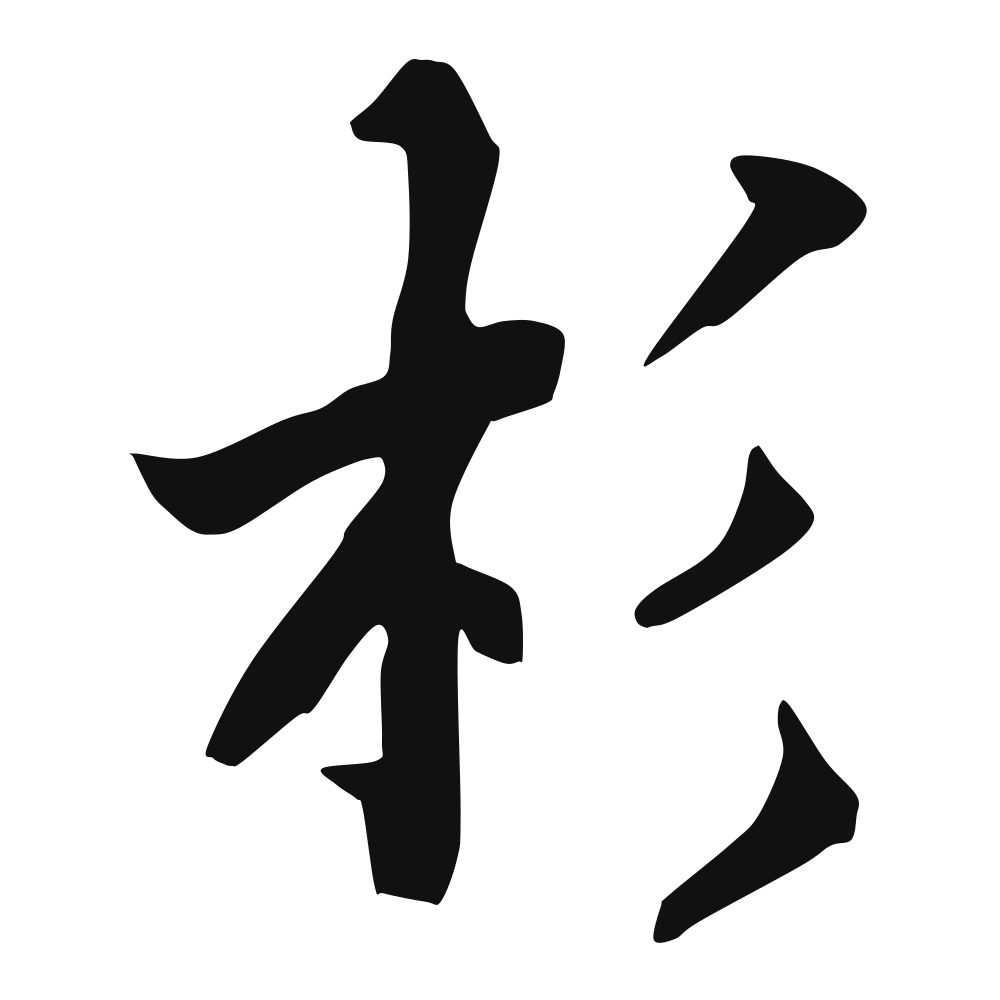
杉
China fir; Cunninghamia lanceolata
Closest English meanings
fir·china fir
The Calligrapher — Lín Zǎo 林藻
Tang calligrapher of running script, famed for the Shenwei Letter (Shenwei tie).
Tang calligrapher (), master of running script — known for 《深慰帖》. Tang dynasty
Cultural Story
杉 is the fir, a straight timber tree the builders of southern China loved. The 水杉, dawn redwood, was thought extinct until a stand was found in Hubei in 1941 — a living fossil suddenly returned. The wood is pale, scentless, and resists rot, the quiet workhorse of roofing and of coffins alike.
Common words & phrases
- 杉树 fir tree
- 水杉 dawn redwood
- 杉木 fir wood
- 云杉 spruce
Read the story behind the character
杉 is the tree in a provincial timber yard: 杉木 for a cheap wardrobe, 云杉 the tonewood under a piano's hood. A hiker in the hinterland walks a 杉树 grove after rain. The character names real lumber more than poetry; it is the soft pale plank you stand on, the tree that holds a roof without being famous.
Why this character belongs on skin
The shān stands straight — the fir, the cedar of the cold mountains, growing tall and unwavering where softer trees would lean. Its wood does not warp; its scent keeps the moths away; the ancients built with it because it held its shape against time. There is a virtue in a tree that simply refuses to bend out of character. We are asked constantly to warp — to soften, to slant, to fit the room. Shān is the answer of the man who will not. A tattoo of the straight trunk is a spine drawn on the skin, a promise worn where only the body can read it: I grew true. Let the seasons try. The ink runs straight down the back like a column of cold mountain wood, and the person wearing it has, at least once, chosen the harder upright line.
Own this character
Purchase delivers the original SVG of this glyph, brushed by Lín Zǎo 林藻, ready to place on skin, paper, or screen.