
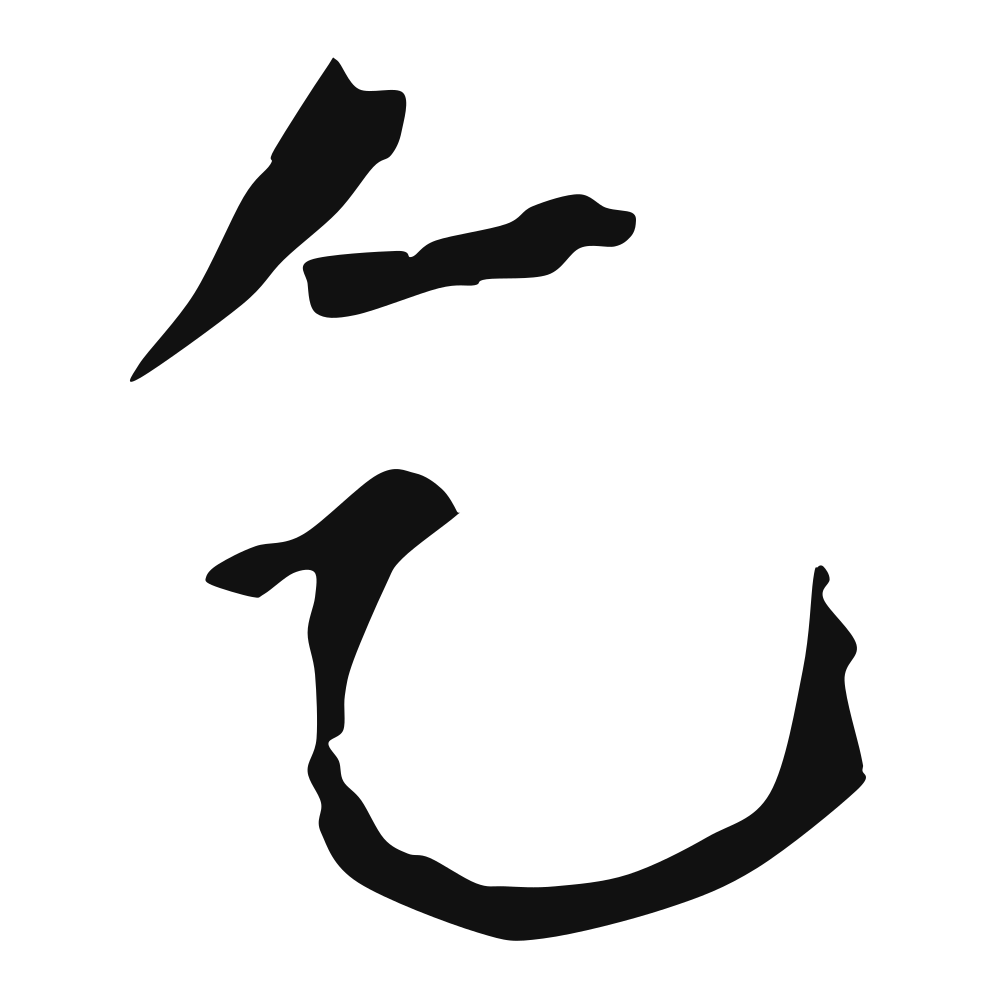
The Calligrapher — Liǔ Gōngquán 柳公权
Tang regular-script master famed for 'bones' of strength; rival to Yan Zhenqing.
Tang calligrapher (778–865), master of regular script — Tang master of bone-strength regular script, paired forever with Yan Zhenqing as 'Yan sinew, Liu bone'. Tang dynasty
Cultural Story
乞 is a man with his mouth turned down in appeal, to beg, to ask low. The 史記 records 乞師, a state sending to beg another for troops. A 乞兒 froze at the city wall. The character is the posture of need, the mouth that asks rather than demands. It is 丐's quieter cousin, the act without the bowl, the plea before the palm turns up.
Common words & phrases
- 乞丐 beggar
- 乞求 beg · plead
- 乞讨 beg for alms
- 乞怜 beg for pity
Read the story behind the character
乞丐 is the figure at the station; 乞求 the tone you use with customer service for a refund. 乞讨 is the raid-and-rescue headline about child beggars; 乞怜 the self-pity the columnist mocks. The character clusters around asking from below, for troops, for money, for mercy. You will not use it of yourself without shame; it names the moment need overrides pride and the mouth opens downward.
Why this character belongs on skin
The hand that opens palm-up is the oldest prayer. Qǐ is to beg, to ask with nothing in reserve—not the shameful cringe we imagine, but the raw honesty of need laid bare before the world. There is a dignity the West forgets: to ask is to admit you are alive, and alive things require. The returned prodigal comes home begging; the seeker at the temple gate holds out an empty bowl. To ink this character is not to announce poverty but permission—to want, to reach, to let others see the soft underside of a man who otherwise appears complete. We spend our lives performing sufficiency. This mark is the one place you stop. A small character for the largest surrender.
Own this character
Purchase delivers the original SVG of this glyph, brushed by Liǔ Gōngquán 柳公权, ready to place on skin, paper, or screen.