
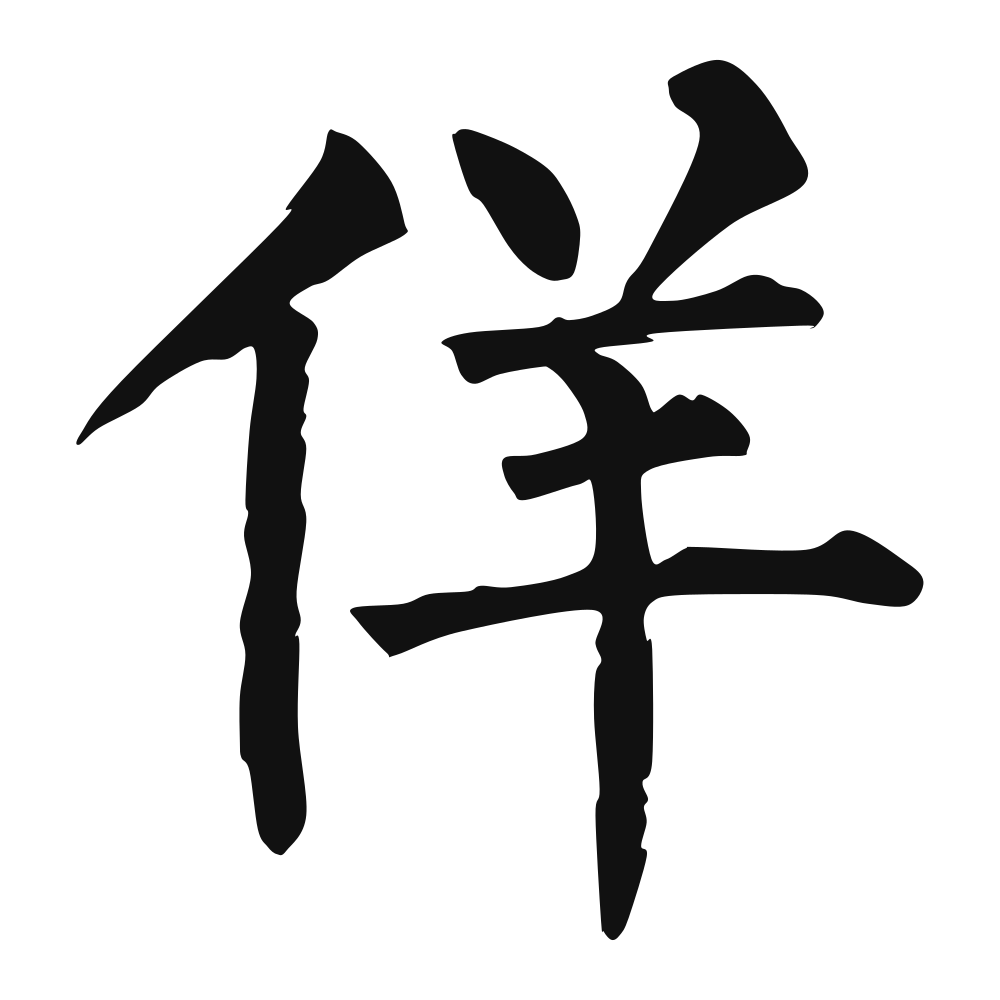
The Calligrapher — Liǔ Gōngquán 柳公权
Tang regular-script master famed for 'bones' of strength; rival to Yan Zhenqing.
Tang calligrapher (778–865), master of regular script — Tang master of bone-strength regular script, paired forever with Yan Zhenqing as 'Yan sinew, Liu bone'. Tang dynasty
Cultural Story
佯 is false show. In the 三国演义 Huang Gai takes a 佯装 beating to fool the enemy; a general orders a 佯攻 to draw troops away. The histories tell of men who 佯狂 — feign madness — to survive a suspicious court. To 佯 is to act what is not true for gain or safety.
Common words & phrases
- 佯装 pretend
- 佯攻 feint
- 佯狂 feign madness
Read the story behind the character
A kid 佯装 sleep when called; a striker makes a 佯攻 and slips past the defender. Online a user 佯狂 for laughs in a chat. Pretending — a sham rest, a fake move, a borrowed madness — is what this character performs when the truth would cost too much.
Why this character belongs on skin
佯 is the character of the beautiful lie — to feign, to pretend, 佯装, 佯狂: to play mad, the oldest survival trick in the empire's playbook. When the times turned lethal, the wise went shambling through the streets in borrowed rags, laughing at nothing, while the purge passed over them. Sun Bin feigned cowardice and destroyed an army. Zhuangzi wrote of the true man who seems drunk because he is beyond drinking. And Hamlet — the West's own 佯狂 — put on his antic disposition while the court closed in. The character is a mask drawn in a single stroke-set, the person radical beside 羊, the sheep: outward gentleness, inward wolf. There is darkness in it, sure — deception for gain. But there is also strategy as prayer, the fighter's patience, the knowledge that not every truth is safe to wear in daylight. Ink 佯 where only lovers see it, and let it keep your secret: the softest-looking ones in the room are often the ones reading everything.
Own this character
Purchase delivers the original SVG of this glyph, brushed by Liǔ Gōngquán 柳公权, ready to place on skin, paper, or screen.