
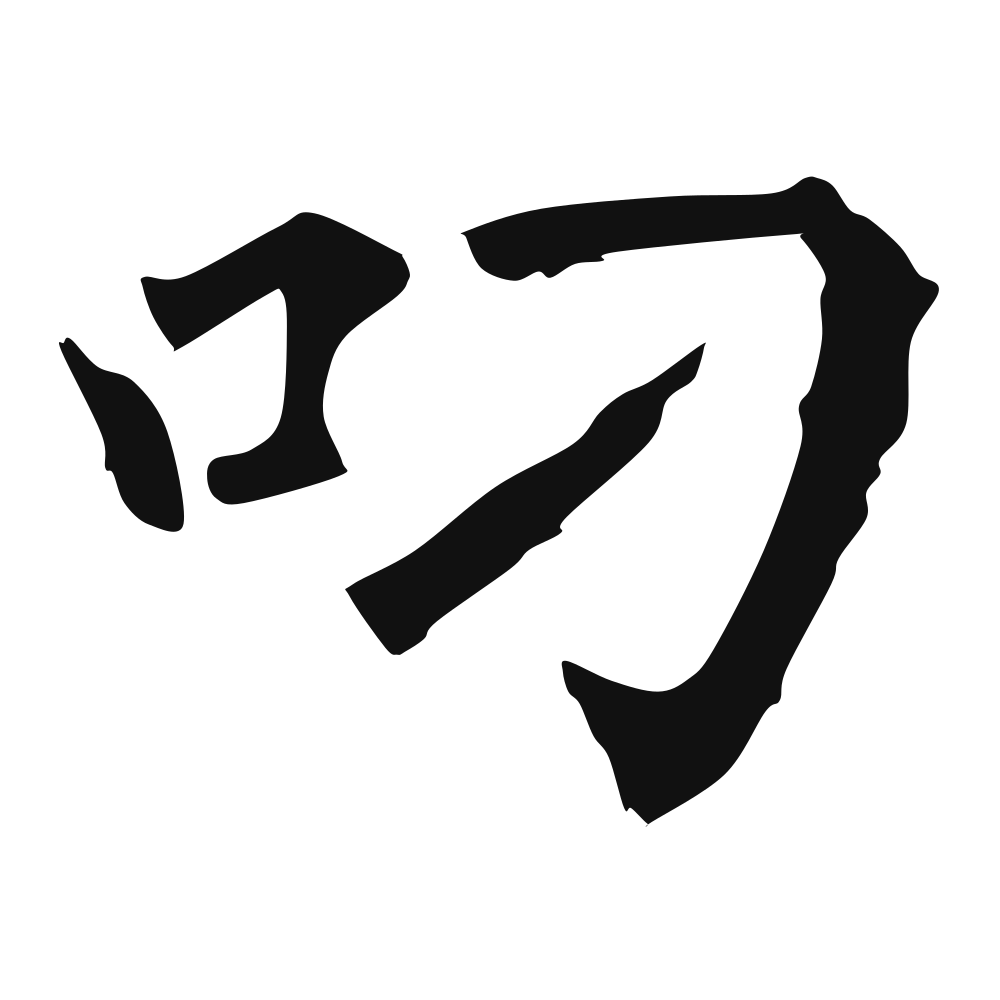
叼
to hold with one's mouth (as a smoker with a cigarette or a dog with a bone)
Closest English meanings
hold in mouth
The Calligrapher — Liǔ Gōngquán 柳公权
Tang regular-script master famed for 'bones' of strength; rival to Yan Zhenqing.
Tang calligrapher (778–865), master of regular script — Tang master of bone-strength regular script, paired forever with Yan Zhenqing as 'Yan sinew, Liu bone'. Tang dynasty
Cultural Story
叼, to hold in the mouth, is the vernacular kin of the old 衔. In the armies of the warring states soldiers "held the tally" -- 衔枚 -- a wooden slip in the mouth to keep them silent on the night march. The modern 叼 keeps that image of something carried by the jaws, a dog with a bone or a bird with a twig.
Common words & phrases
- 叼着 hold in mouth
- 叼走 carry off in mouth
- 叼起 pick up in mouth
Read the story behind the character
A dog 叼着 a ball back to the boy; a crow 叼走 the bright coin. The clerk 叼起 the envelope and crosses the room. The word does the jaw's small work -- the carrying, the stealing, the fetching. It names what the mouth holds without hands, from the pet at play to the bird at the sill, the thing taken up and borne off by bite alone.
Why this character belongs on skin
The crow carries the twig and the world gets built. 叼 is that small, precise act — to hold something in the mouth, a dog with a letter, a bird with the single stick that becomes a nest. The character is a mouth with a dangling thread, the thing kept close without the hands. It is how the helpless transport what they love. To mark yourself with 叼 is to admit you are carrying something — a memory, a promise, a person — in the only way you can, gently, in the teeth, refusing to drop it. This is what devotion looks like: mouth full, hands free, heart elsewhere but safe. The mouth that could bite instead chooses to bear. Some burdens we hold in our hands. The ones that matter most, we carry where we cannot let them go.
Own this character
Purchase delivers the original SVG of this glyph, brushed by Liǔ Gōngquán 柳公权, ready to place on skin, paper, or screen.