
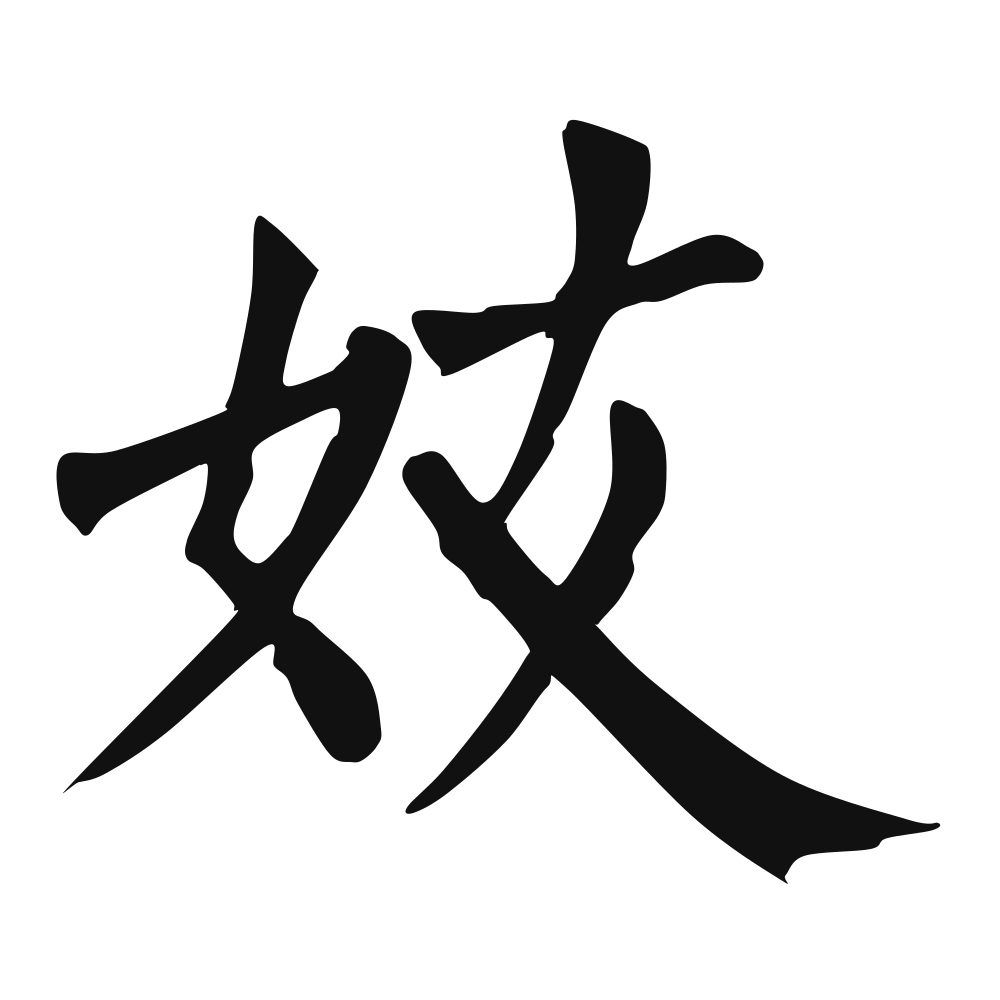
The Calligrapher — Liǔ Gōngquán 柳公权
Tang regular-script master famed for 'bones' of strength; rival to Yan Zhenqing.
Tang calligrapher (778–865), master of regular script — Tang master of bone-strength regular script, paired forever with Yan Zhenqing as 'Yan sinew, Liu bone'. Tang dynasty
Cultural Story
In the classical tradition 妓 did not always mean what we assume. During the Tang dynasty, 歌妓 and 舞妓 were trained musicians and poets attached to courts and banquet halls; the gifted 薛涛 even ran her own paper workshop. The word carried artistry and companionship long before it narrowed to its later, sadder sense of a woman sold for sex in a 妓院.
Common words & phrases
- 妓女 prostitute
- 妓院 brothel
Read the story behind the character
In the modern world the word is blunt and painful. News reports and documentaries still expose the trafficking of a 妓女, and the old term 妓院 names a brothel that most citizens have never seen but recognize from history. Police sweeps and social-worker campaigns use these words plainly, reminding readers that behind the headline is a person, not a costume from a costume drama.
Why this character belongs on skin
There is a woman behind every mask the world pays to see. 妓 was the one who sang for the banquet, who turned her beauty into bread, who learned early that the gaze can feed you or eat you. In the old cities she was both scorned and worshipped, the keeper of songs no wife was allowed to know. But the poets loved her for the secret: behind the practiced smile was a heart that loved badly and wholly, that traded the body to keep the soul intact. To wear 妓 is not to shame but to name the part of you that performs to survive, and the truer self that waits in the quiet room after the guests leave. Let it mark your skin as the honest cost of being seen. The ink is the face beneath the paint.
Own this character
Purchase delivers the original SVG of this glyph, brushed by Liǔ Gōngquán 柳公权, ready to place on skin, paper, or screen.