
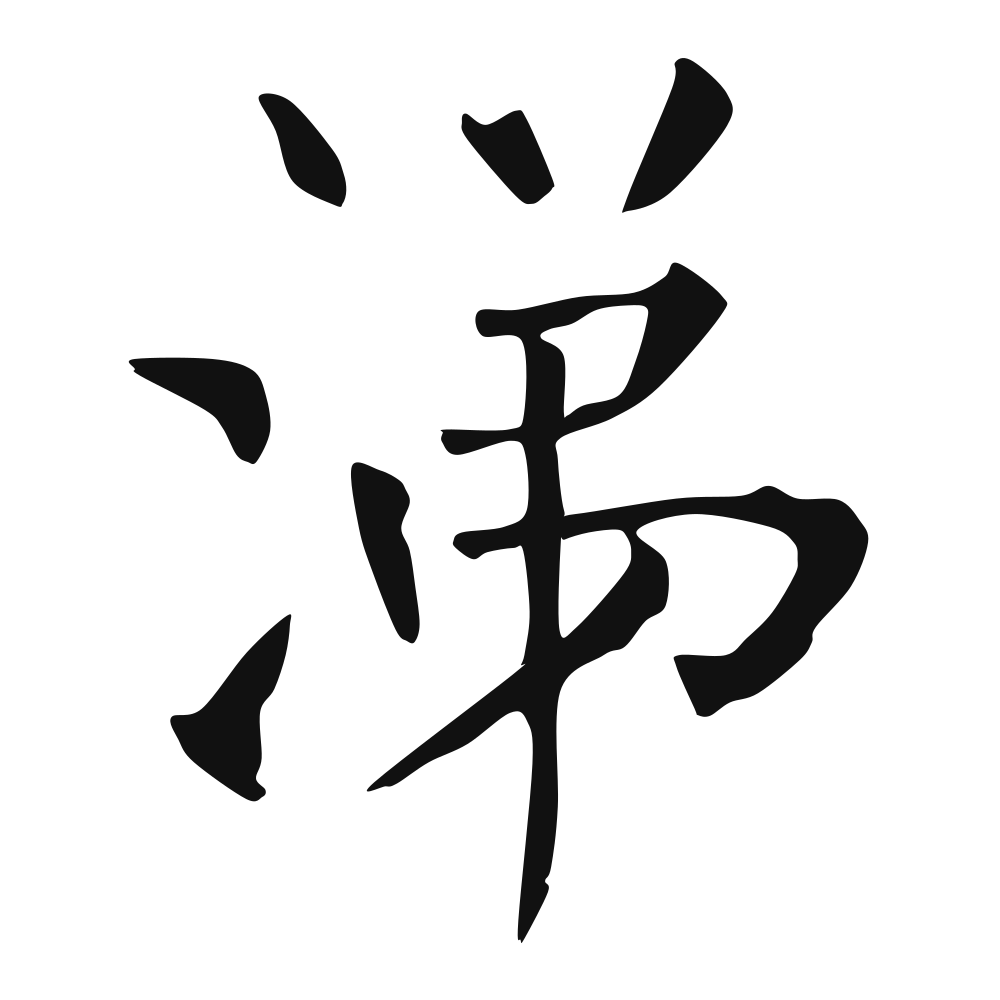
The Calligrapher — Liǔ Gōngquán 柳公权
Tang regular-script master famed for 'bones' of strength; rival to Yan Zhenqing.
Tang calligrapher (778–865), master of regular script — Tang master of bone-strength regular script, paired forever with Yan Zhenqing as 'Yan sinew, Liu bone'. Tang dynasty
Cultural Story
涕 originally meant tears, not mucus, the body's water of grief. The Qu yuan flows with 涕 at exile, and the Lun yu shows followers weeping 涕. Only later did it narrow toward the nose. 破涕为笑 and 痛哭流涕 keep the older, nobler sense of weeping aloud before the ones you love.
Common words & phrases
- 鼻涕 nasal mucus · snot
- 涕泪 tears
- 破涕为笑 turn tears into smiles
- 痛哭流涕 cry bitterly
Read the story behind the character
A child wipes 鼻涕 (nasal mucus, snot) on a sleeve in winter, and a reunion brings 涕泪 (tears) of joy. We cheer a cartoon baby who goes 破涕为笑 (turns tears into smiles) in seconds, and recall grandparents 痛哭流涕 (crying bitterly) at a long-lost letter from home.
Why this character belongs on skin
There is a dignity in the face that finally lets go. Tears are not weakness; they are the body keeping faith with what the mind would rather hide. In the old tongue this word held both the weeping eye and the running nose, the whole unglamorous truth of a person undone—and still, somehow, made beautiful by it. The Buddhists say the world is soaked in sorrow, and that to feel it fully is the first step toward mercy. A warrior cries, and the salt on his lashes is proof he was never a machine. To carry 涕 is to refuse shame at your own depth. It is the quiet admission that you loved enough to break. Let it be inked where only you will find it, a small warm river, a reminder that the heart was never meant to stay dry.
Own this character
Purchase delivers the original SVG of this glyph, brushed by Liǔ Gōngquán 柳公权, ready to place on skin, paper, or screen.