
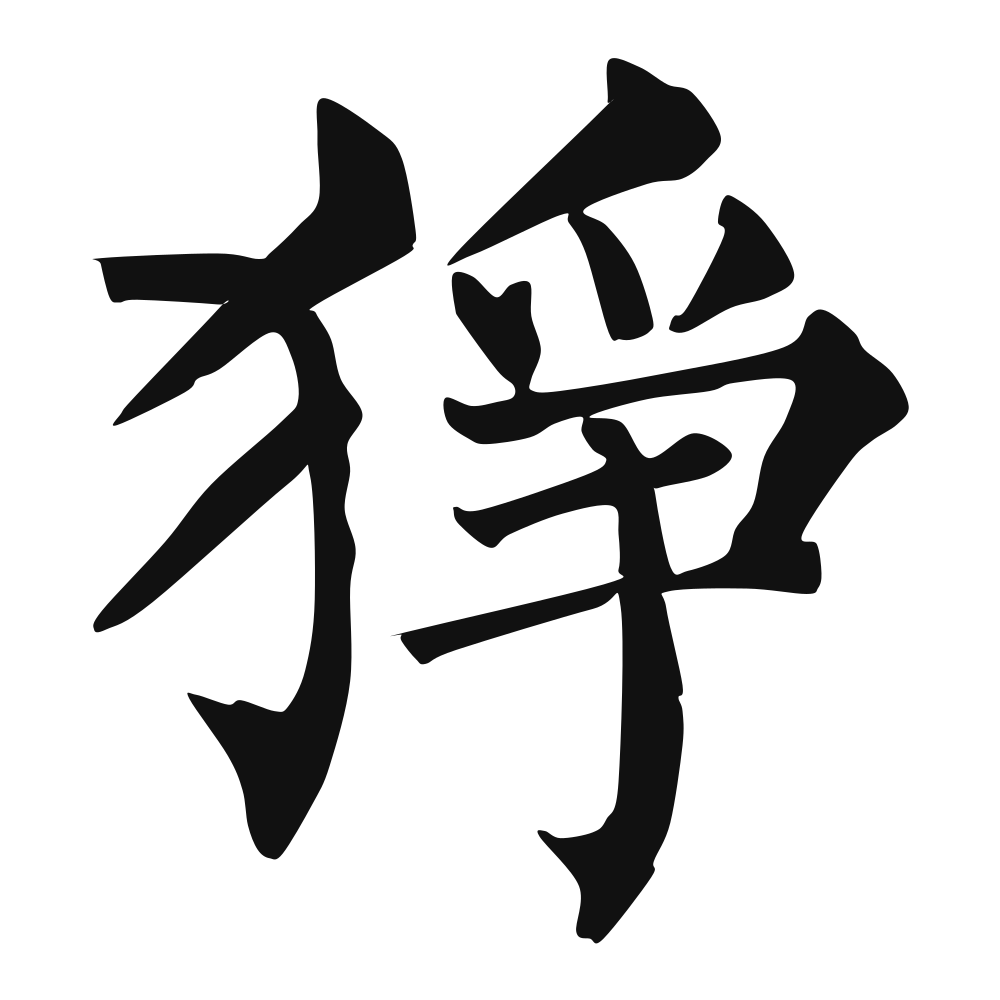
狰
usually seen in: malevolent (狰狞)
Closest English meanings
fierce·savage
The Calligrapher — Liǔ Gōngquán 柳公权
Tang regular-script master famed for 'bones' of strength; rival to Yan Zhenqing.
Tang calligrapher (778–865), master of regular script — Tang master of bone-strength regular script, paired forever with Yan Zhenqing as 'Yan sinew, Liu bone'. Tang dynasty
Cultural Story
狰 is named in the 山海經 as a beast with a red body, a horse's mane, and a single horn, feared for its terrifying look. Later the word 狰狞 described ferocious masks on temple doors meant to frighten demons, and the twisted faces of warriors who would not yield in battle.
Common words & phrases
- 狰狞 fierce · savage · hideous
Read the story behind the character
We use 狰狞 (fierce, savage) for a haunted-house mask, a villain's snarling face in a movie, or storm clouds 狰狞 before a typhoon. A car wreck twisted into 狰狞 metal, or a bully's 狰狞 expression in the schoolyard, the word still paints raw, ugly menace you can almost see.
Why this character belongs on skin
Some beauty wears a terrible face. 狰 is that face — the character from 狰狞, for the fierce and the ghastly, drawn originally from a mythical beast of the mountains whose very ugliness was a kind of power. The word warns and awes at once; it names the countenance that makes lesser things step back. There is a necessary fierceness in survival, the snarl that protects the tender underneath. To carry 狰 is to own the part of you the polite world fears — the rage that guarded your life, the no that kept you whole. It is not cruelty but boundary made visible. Ink it where you were once endangered, a hard vow: I am fearsome when I must be. The beast on the mountain asks nothing of you but respect. Wear it, and let them think twice, for the ink is the face you learned to show when the gentle one was not enough.
Own this character
Purchase delivers the original SVG of this glyph, brushed by Liǔ Gōngquán 柳公权, ready to place on skin, paper, or screen.