
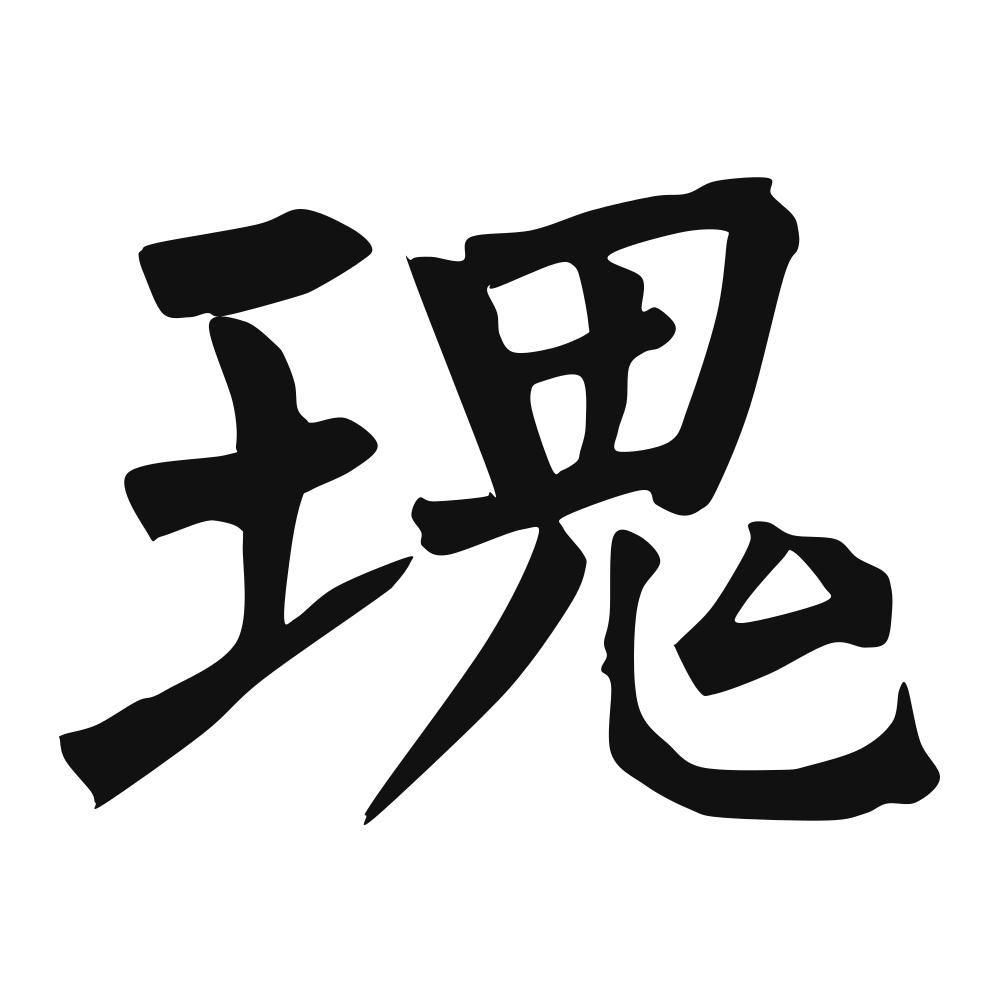
瑰
(semiprecious stone); extraordinary
Closest English meanings
rare·precious·rose
The Calligrapher — Liǔ Gōngquán 柳公权
Tang regular-script master famed for 'bones' of strength; rival to Yan Zhenqing.
Tang calligrapher (778–865), master of regular script — Tang master of bone-strength regular script, paired forever with Yan Zhenqing as 'Yan sinew, Liu bone'. Tang dynasty
Cultural Story
In ancient lexicons 玫瑰 was first a kind of gem, a red jade-like stone, before the name migrated to the flower; 玫瑰, 玫瑰, the rose, wears its mineral past in its very characters. 瑰 itself meant rare and marvelous — 瑰宝, a treasure, 瑰丽, gorgeously strange.
Common words & phrases
- 玫瑰 rose
- 瑰宝 treasure · gem
- 瑰丽 magnificent · gorgeous
Read the story behind the character
Modern Chinese leans on those two compounds constantly. Headlines call a temple mural 瑰丽, magnificent; museums label a recovered manuscript 国之瑰宝, national treasure. And every Valentine's season, florists sell 玫瑰 by the armful, a gemstone turned perfume.
Why this character belongs on skin
In its oldest life, 瑰 named jade so rare and round it seemed supernatural — treasure beyond the ordinary inventory of the world. Then the centuries passed, and the character drifted toward the rose, 玫瑰, that other incomparable object of desire. What a résumé: the rarest stone and the most dangerous flower, both answering to one sound, one brushwork. The rose radical sits beneath, thorns included. Every culture has made the rose its mirror — the Song of Songs had gardens of it, Rumi pressed it into the hands of the beloved, Sappho's fragments blush with it. To wear 瑰 is to claim rarity in both senses: precious enough to be hunted, beautiful enough to draw blood. It suits the collarbone or the inside of the wrist, somewhere a lover might find it. The stone and the bloom share one warning: anything this extraordinary will not be ignored. Neither, from now on, will you.
Own this character
Purchase delivers the original SVG of this glyph, brushed by Liǔ Gōngquán 柳公权, ready to place on skin, paper, or screen.