
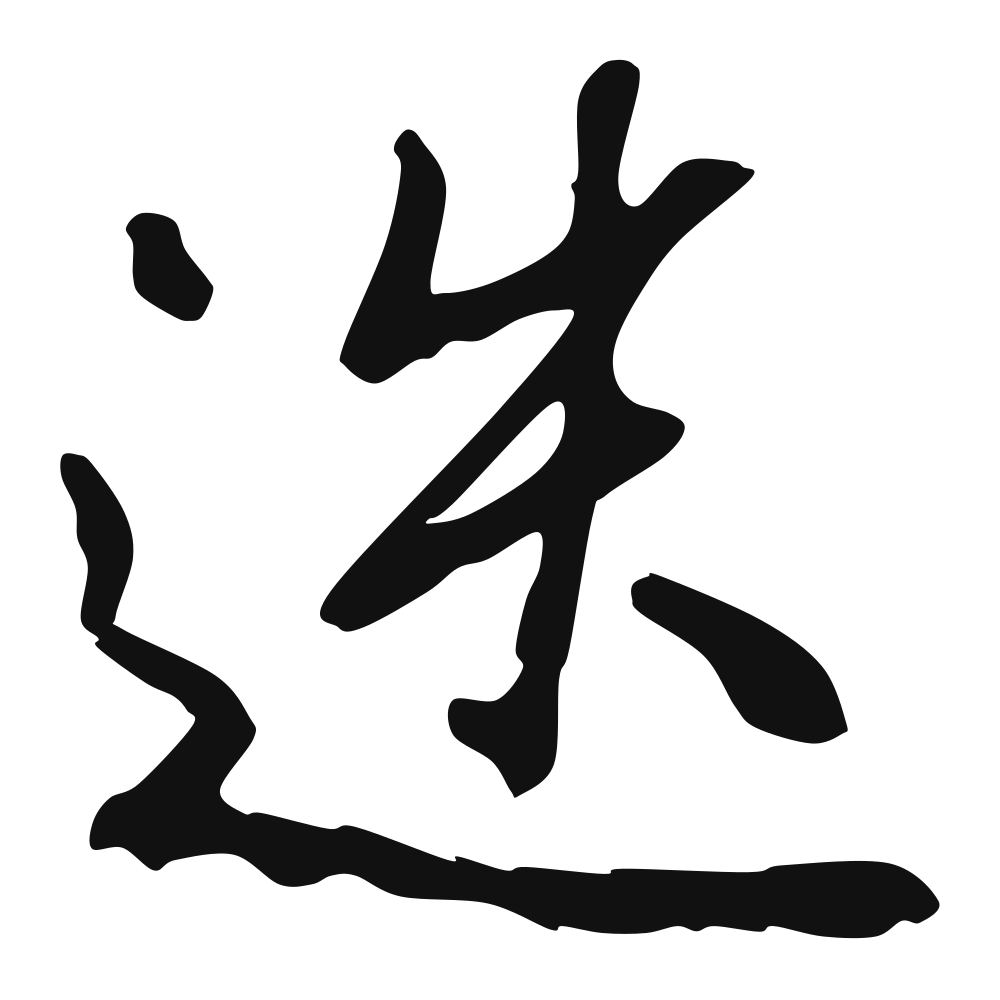
迭
alternately; repeatedly
Closest English meanings
alternate·repeatedly·successively
The Calligrapher — Liǔ Gōngquán 柳公权
Tang regular-script master famed for 'bones' of strength; rival to Yan Zhenqing.
Tang calligrapher (778–865), master of regular script — Tang master of bone-strength regular script, paired forever with Yan Zhenqing as 'Yan sinew, Liu bone'. Tang dynasty
Cultural Story
Die means one after another, each replacing the last — guards changing watch, seasons handing off. Zhou and Han texts used gengdie for rotating duty, a rhythm of take over, hand off, take over.
Common words & phrases
- 更迭 change · alternate
- 迭代 iterate
- 迭起 rise repeatedly
- 忙不迭 in a hurry · hastily
Read the story behind the character
Die now hums through tech: every app ships a dieai (iteration) each sprint, dieqi (rise in succession) describes waves of startups, gengdie (successive) governments and die-die-predictions fill the news. In speech, mang-bu-die — 'too busy even to' — apologizes for the reply that never got sent.
Why this character belongs on skin
One wave arrives and another takes its place before the first has even gone; that is the only constant. 迭 is to alternate, to come one after another in endless exchange, the seasons, the dynasties, the moods of a single restless heart. The historians wrote of 更迭, the passing of thrones, but the body knows it better: breath in, breath out, never the same breath twice. To resist 迭 is to argue with the tide; to accept it is to find a strange peace in the motion. The Dao flows because it changes; the still pond only breeds what it cannot move. To wear this character is to make friends with your own becoming, to stop grieving each passing form. Let it move across your skin like a current, a small mark that says you change, and in changing you continue, wave after wave, and none of them was ever finally you.
Own this character
Purchase delivers the original SVG of this glyph, brushed by Liǔ Gōngquán 柳公权, ready to place on skin, paper, or screen.