
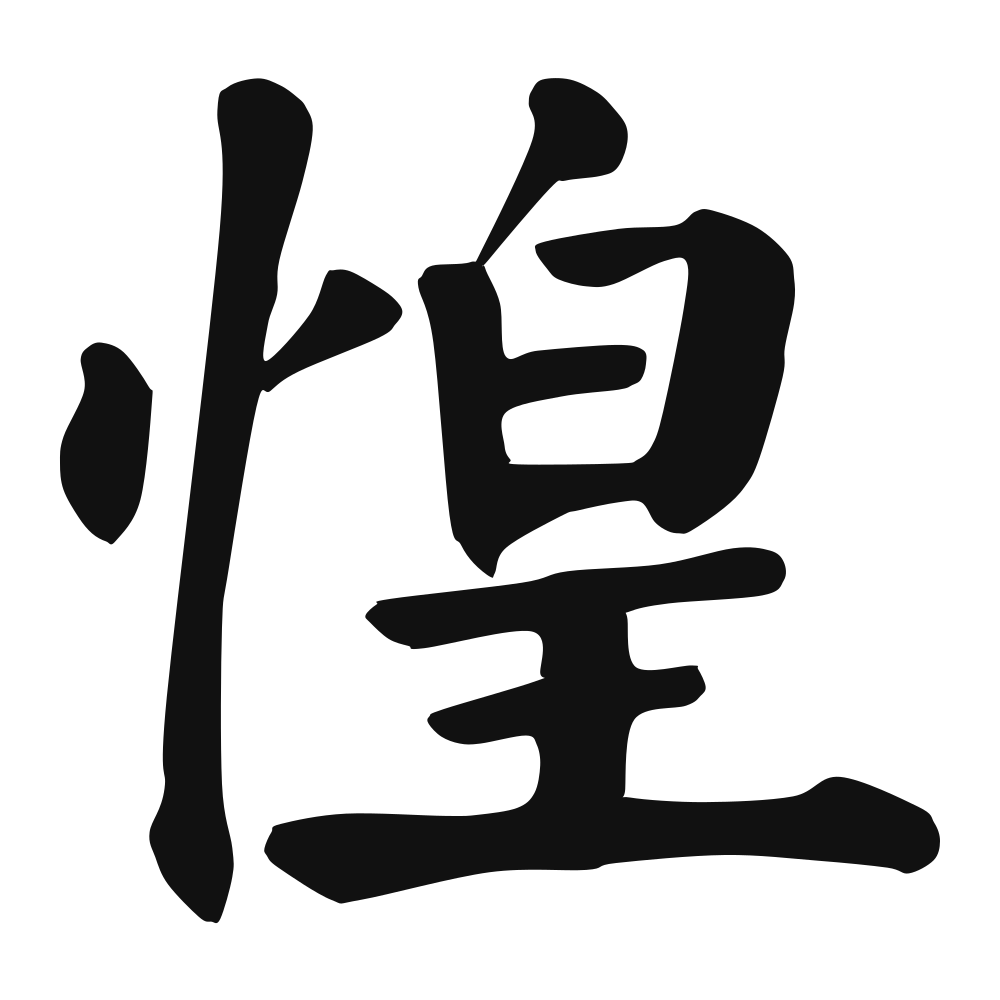
惶
(bound form) fear; dread; anxiety; trepidation
Closest English meanings
fearful·anxious·terrified·alarmed
The Calligrapher — Liú Yōng 刘墉
Qing minister famed for rounded, 'cotton-hidden-iron' running script.
Qing calligrapher (), master of regular script/running script — known for 浓墨宰相. Qing dynasty
Cultural Story
惶 is panic with no fixed object. The Histories describe a court 惶惶 when the edict arrives unexpectedly, everyone looking for the door. The heart with 皇, the sovereign, is fear borrowed from authority — the dread of the one who can end you. It is the scatter, not the freeze.
Common words & phrases
- 惶恐 terrified · fearful
- 惶惑 perplexed and alarmed
- 惊惶 alarmed · startled
- 惶惶 anxious · in fear
- 惶然 in alarm · frightened
Read the story behind the character
惶 is the public fright: 惶恐 the apology that overdoes respect, 惊惶 the crowd at the alarm, 惶然 the face caught doing nothing right. 惶惶 is the mood of a market before bad news lands. It names the fear that spreads by contact, the one you catch from others.
Why this character belongs on skin
惶惶不安 — the phrase for dread that will not sit down, the low hum of anxiety that follows you through bright rooms. The character pairs the heart with 皇, a word for imperial, grand — and old readers heard the joke in that: the fears that rule us feel royal in size, enthroned, issuing edicts we obey without question. Christians call this state keeping watch in Gethsemane; Buddhists call it the second arrow, the suffering we add to suffering. But notice what the character assumes: that dread lives in the heart, which means the heart is the ground it stands on — and the ground can withdraw its permission. Tattoo 惶 small, like a soldier's unit mark. It says: I know my occupier's name.
Own this character
Purchase delivers the original SVG of this glyph, brushed by Liú Yōng 刘墉, ready to place on skin, paper, or screen.