
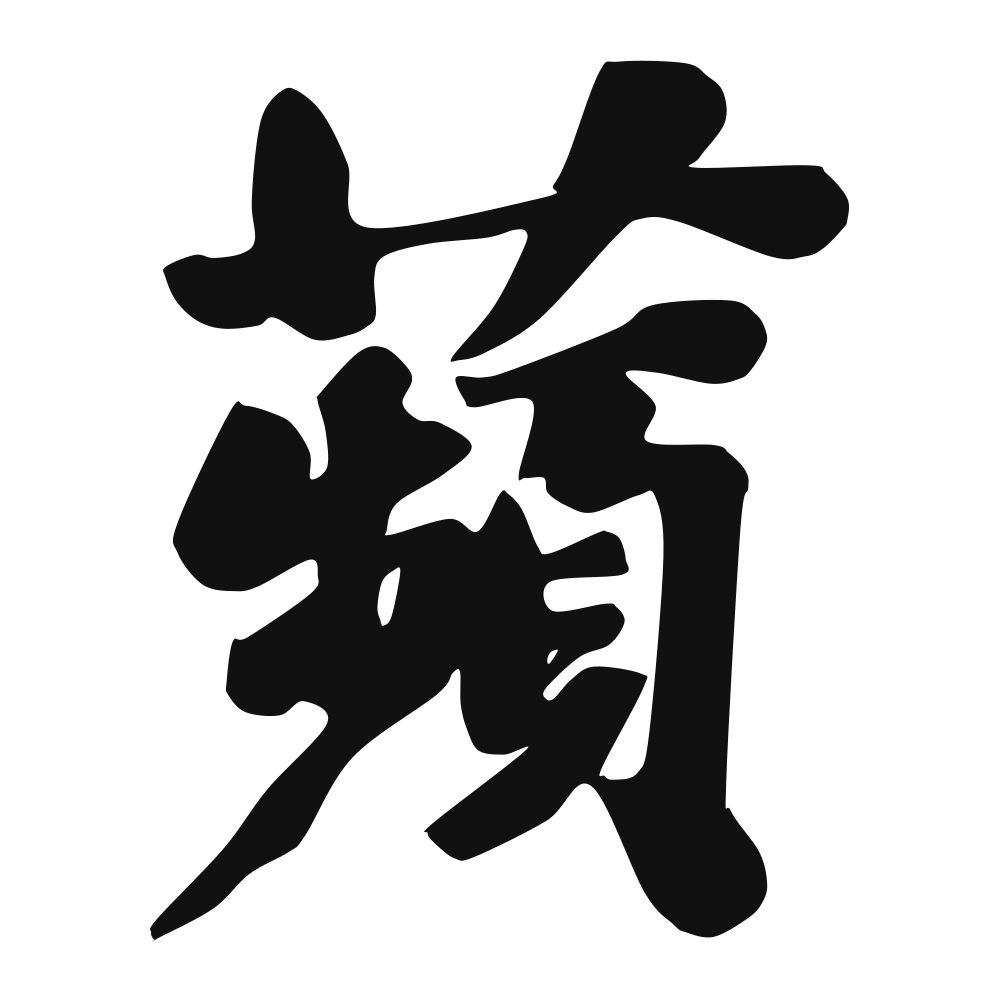
苹
(artemisia); duckweed
Closest English meanings
apple·duckweed
The Calligrapher — Liú Yōng 刘墉
Qing minister famed for rounded, 'cotton-hidden-iron' running script.
Qing calligrapher (), master of regular script/running script — known for 浓墨宰相. Qing dynasty
Cultural Story
The oldest uses belong to duckweed: the Book of Songs shows priestesses gathering floating pondweed by the banks to boil for sacrifice, the smallest plant in the water carrying the heaviest ritual freight. Centuries later the same graph settled onto the apple, a fruit that arrived along the trade roads and took a native name.
Common words & phrases
- 苹果 apple · apple fruit
- 苹婆 sterculia · botanical tree
Read the story behind the character
A phone box shows an apple with a bite missing and a lawsuit filed, a fruit stall stacks apples into pyramid displays for the school week, a southern market sells the custardy apple called pingpo, and a tech review compares devices by their logos. A child's first sentence is often just the word for the fruit in her hand.
Why this character belongs on skin
In the old songs a deer bends to eat wild píng by the river—a water plant, small and floating, the food of gentle creatures in a peaceful kingdom. Later the character borrowed itself to name the apple, the fruit that got us thrown out and keeps us curious. Píng is thus both the humble green at the water's edge and the forbidden red in the hand. The scholar's feast and the sinner's bite share one root. Ink it where appetite lives—the lips' shadow, the wrist—a small green-red mark for the part of you that eats what grows and what's forbidden alike, that knows hunger is holy and the deer and the exiles are the same. Take the fruit. Float. Both are you.
Own this character
Purchase delivers the original SVG of this glyph, brushed by Liú Yōng 刘墉, ready to place on skin, paper, or screen.