
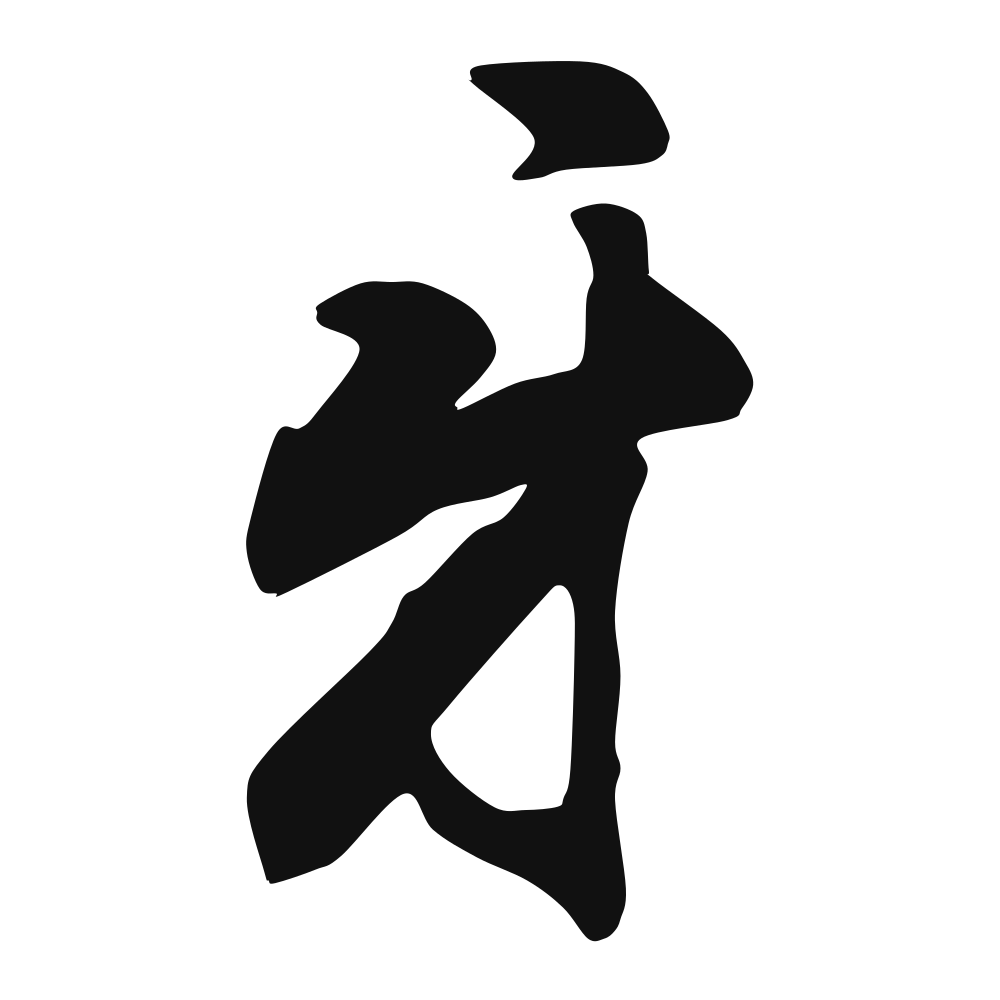
The Calligrapher — Lù Jī 陆机
Jin calligrapher of clerical-cursive script, author of the Pingfu Letter (Pingfu tie), earliest surviving work.
Jin calligrapher (), master of cursive script — known for 《平复帖》(存世最早墨迹). Jin dynasty
Cultural Story
牙 is the tooth, especially the large rear molars, distinct from 齿, front teeth, in old usage. The Shijing mentions 牙 in descriptions of beasts; hunters prized a tiger's 牙. The 牙 used in 爪牙 once meant a ruler's strong helpers. Dentition marked age and vigor, and ivory 牙 carvings were tribute. The char is bite, age, and ornament in one small bone.
Common words & phrases
- 牙齿 tooth · teeth
- 牙膏 toothpaste
- 牙刷 toothbrush
- 牙医 dentist
- 门牙 front tooth
Read the story behind the character
We brush 牙齿 teeth twice a day, buy 牙膏 toothpaste and a 牙刷 toothbrush, and visit the 牙医 dentist for a filling. A lost 门牙 front tooth becomes a childhood story, and we joke about 牙 in photos. From the toddler's first 牙 to grandpa's bridge, 牙 marks every stage of growing, eating, and grinning through life.
Why this character belongs on skin
牙 is the tooth, the fang, the hard edge that bites and defends. Unlike the front incisors, 牙 is the molar, the deep grinder that does the unseen work of survival. It is what a beast shows when the soft negotiation ends. To carry it is to honor the part of you that will not be eaten, the boundary made of bone. We are taught to hide our teeth, to smile with the mouth only. But a man needs his 牙 — the quiet capacity to say no with the body, to hold what is his. Wear it as a guardian mark, a small ferocity kept close. Let it rest where your jaw can feel it and remember: gentleness is only trustworthy because the tooth is real. The kindest among us are kind by choice, not by absence of bite. Keep the fang. Show it rarely. Mean it always.
Own this character
Purchase delivers the original SVG of this glyph, brushed by Lù Jī 陆机, ready to place on skin, paper, or screen.