
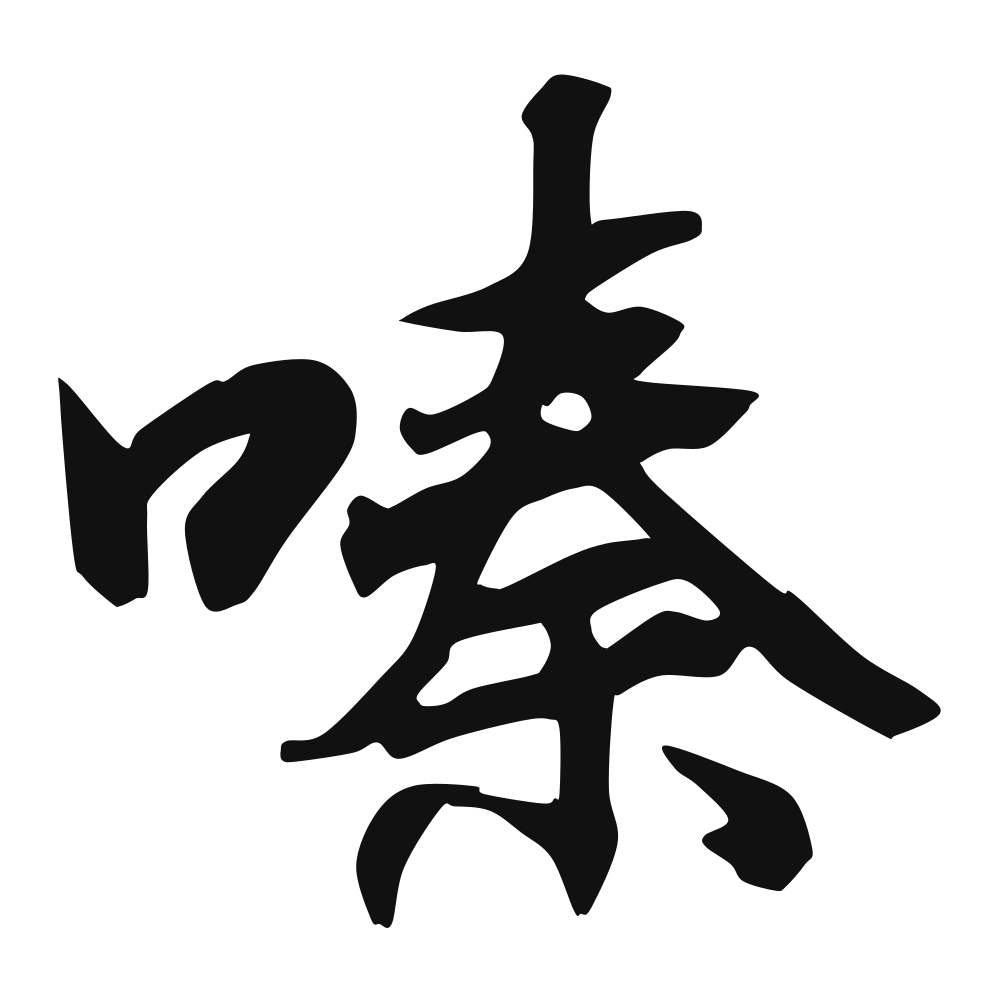
嗪
usually seen in: -azine (吖嗪); pyrazine (chemistry) (loanword) (吡嗪); phenazine (loanword) (吩嗪); piperazine (medicine) (loanword) (哌嗪)
Closest English meanings
-azine (chemical suffix)
The Calligrapher — Lù Jiǎnzhī 陆柬之
Tang calligrapher and nephew of Yu Shinan; his running-script 'Essay on Literature' survives
Tang calligrapher (), master of running script — known for 《文赋》. Tang dynasty
Cultural Story
嗪 is a modern, learned character with no root in the classics: it was coined by chemists as the transcription for the suffix '-azine,' the 口 (mouth) radical lending it a place among sound-words while the right side 秦 pins the pronunciation. It never appears in the Shi Jing or the histories, and no sage ever wrote it. Its 'tradition' is the tradition of science — the systematic borrowing of old graphs to name new molecules in the language of modern chemistry.
Common words & phrases
- 哌嗪 piperazine
- 嗪类 azines
- 吩嗪 phenazine
Read the story behind the character
In a chemistry lab a researcher measures 哌嗪 (piperazine) for a drug; a textbook lists the 嗪類 (azines) as a family of nitrogen compounds. An industrial plant synthesizes 吩嗪 (phenazine) for dyes and semiconductors, and a student memorizes these names for the exam. 嗪 appears only on lab benches and in journal articles — the quiet, technical character that lets Chinese science name the molecules behind medicines, materials, and the screens we read from.
Why this character belongs on skin
No ancient sage ever wrote this character. 嗪 belongs to the modern lexicon, born in chemistry labs — the syllable that ends benzodiazepine and phthalazine, a marker for rings of nitrogen woven into carbon. It is literally the sound of a new age finding its mouth: Chinese scientists reaching into an old script to name molecules that heal and soothe and sometimes save your life. There is something quietly moving in that. A writing system three thousand years old, built for oxen and rivers and dynasties, stretching without complaint to hold molecular rings invisible to any eye. The Daoists sought elixirs and mostly found poisons; the modern alchemists found geometry, and the character went along for the ride. If you wear 嗪, you wear the newest kind of magic — the kind drawn on whiteboards, tested in trials, dissolved into bloodstreams. A tattoo of science itself: humanity's oldest ink recording humanity's youngest spells.
Own this character
Purchase delivers the original SVG of this glyph, brushed by Lù Jiǎnzhī 陆柬之, ready to place on skin, paper, or screen.