
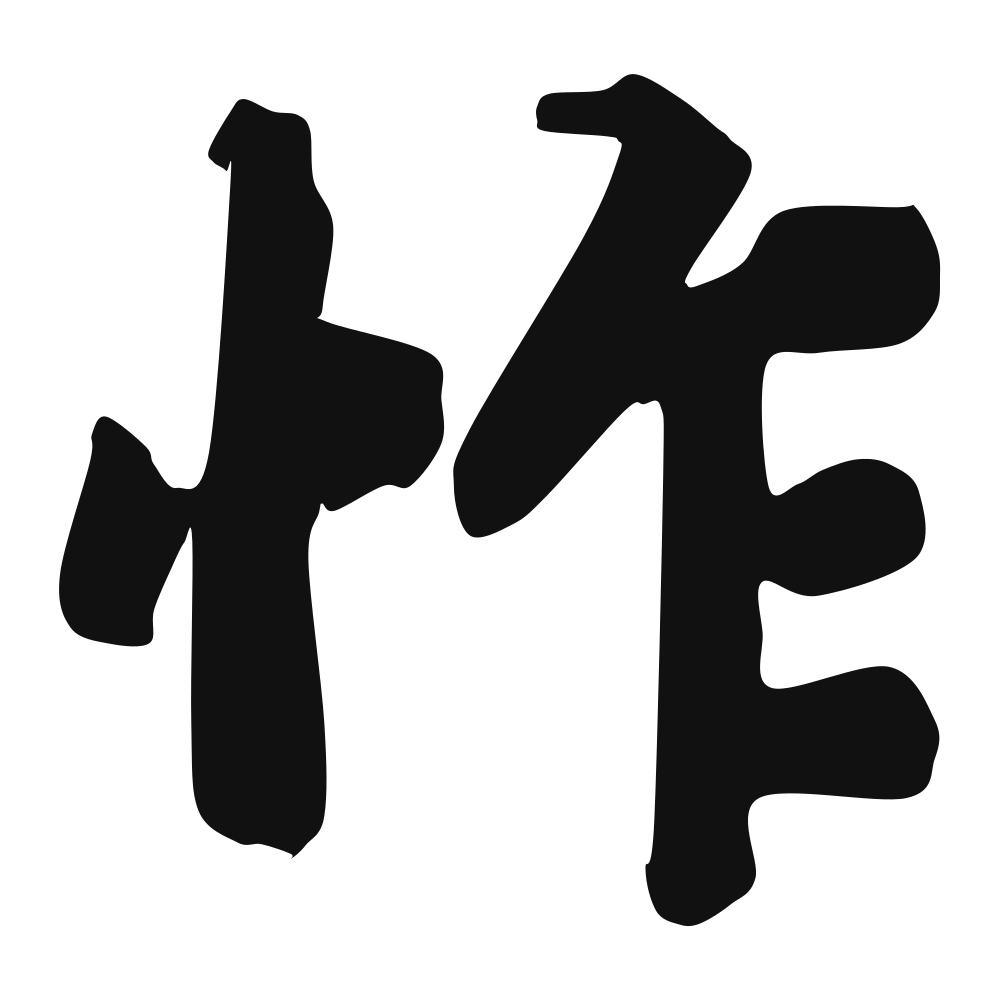
The Calligrapher — Lù Jiǎnzhī 陆柬之
Tang calligrapher and nephew of Yu Shinan; his running-script 'Essay on Literature' survives
Tang calligrapher (), master of running script — known for 《文赋》. Tang dynasty
Cultural Story
怍 is the heat of being found out. 論語 mocks the man 其言之不怍, who speaks without a flicker of shame — the shame itself is the rarer thing. The character is the face that knows it lied, the red that proof draws up before the excuse forms.
Common words & phrases
- 惭怍 ashamed
- 愧怍 ashamed · guilty
- 怍色 look of shame
Read the story behind the character
愧怍 is the word a honest memoir reaches for, 惭怍 the look a child cannot hide. The proof is a screenshot now; the red is the same. We still feel the heat when caught, and far less often before it; the old text named exactly the order in which we blush, and we have not improved it.
Why this character belongs on skin
The heat that climbs the throat when you know you have fallen short—怍, the flush of conscience, the heart radical beside the character for to make, as if shame were something we manufacture with our own choices. Confucius prized a person free of 怍 when facing heaven: face upward without blushing, and you have lived well. The blush is a moral organ, older than language, and this character is its written twin. There is tenderness in it too—the capacity for shame is the capacity for standards, for a self that wants to be better. To carry 怍 is not to carry guilt; it is to carry an inner tribunal that keeps you decent when no one watches. Quiet, serious, uncompromising ink.
Own this character
Purchase delivers the original SVG of this glyph, brushed by Lù Jiǎnzhī 陆柬之, ready to place on skin, paper, or screen.