
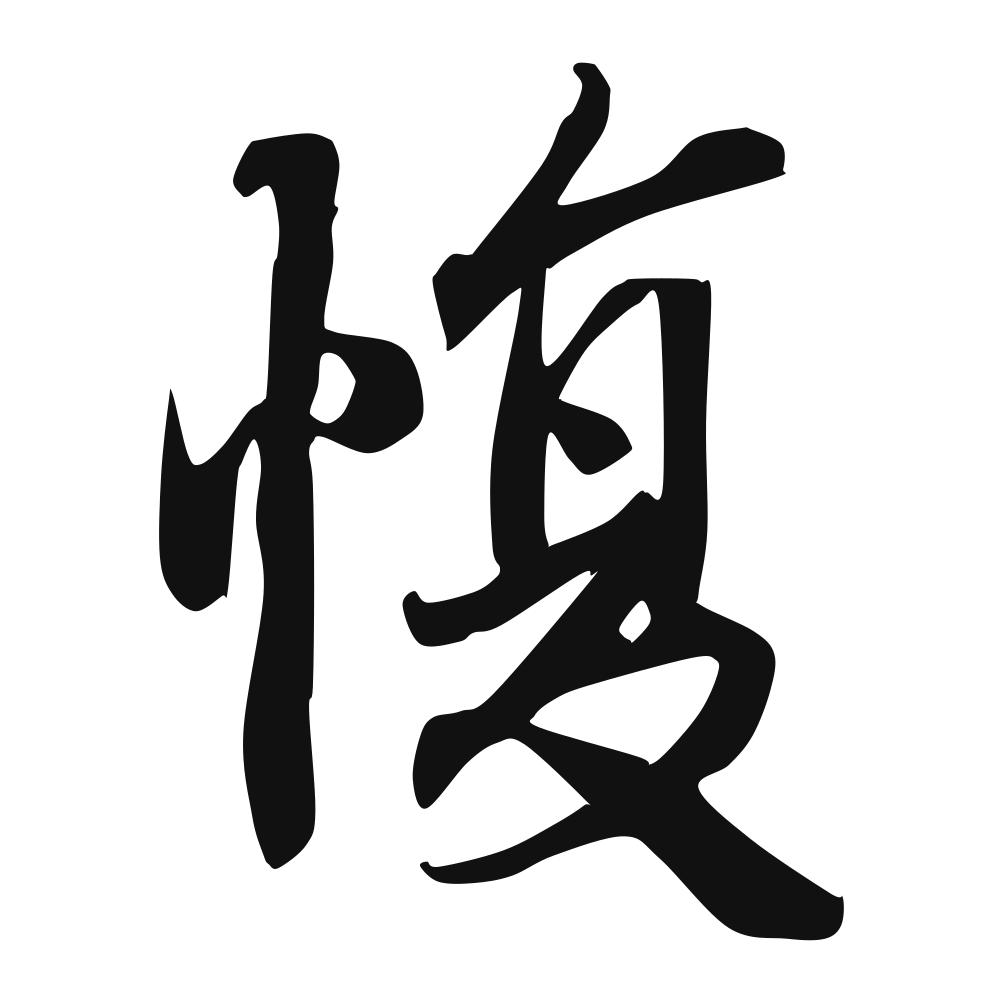
愎
perverse; obstinate; willful
Closest English meanings
obstinate·perverse·headstrong
The Calligrapher — Lù Jiǎnzhī 陆柬之
Tang calligrapher and nephew of Yu Shinan; his running-script 'Essay on Literature' survives
Tang calligrapher (), master of running script — known for 《文赋》. Tang dynasty
Cultural Story
愎 is the will that will not bend. The 左傳 damns the general 刚愎自用 — stubborn and self-opinionated — and the phrase has outlived every war it described. The heart with 复, to return, is a mind that loops back to its own insistence. It is the vice of the man sure he is right.
Common words & phrases
- 刚愎 obstinate · headstrong
- 刚愎自用 self-willed · obstinate and self-opinionated
- 愎谏 reject advice
Read the story behind the character
愎 survives almost only in 刚愎自用, the label pinned on the executive who ignores the room. It is a word for critics and historians, the diagnosis of the leader who cannot be told. Outside that one heavy phrase it has no life in the mouth at all.
Why this character belongs on skin
The annals reserve their coldest phrase for it: 刚愎自用—hard, self-willed, using only himself. 愎 is stubbornness grown structural, the will that cannot metabolize another view, the commander who hears counsel the way a wall hears rain. Zuo Zhuan coined the indictment of a general who refused his officers and marched his army into catastrophe; history has kept the pattern in continuous production ever since, from courts to boardrooms to marriages. The tragedy of 愎 is that it usually begins as strength—conviction, spine, the courage to be alone with a judgment—and then the drawbridge goes up. The craft is keeping the walls and keeping the gates. You have paid tuition on this lesson; everyone with a will has. Wear 愎 as the carved warning over your own gate: firmness of purpose, yes—drawbridge permanently down, or the fortress becomes the tomb.
Own this character
Purchase delivers the original SVG of this glyph, brushed by Lù Jiǎnzhī 陆柬之, ready to place on skin, paper, or screen.