
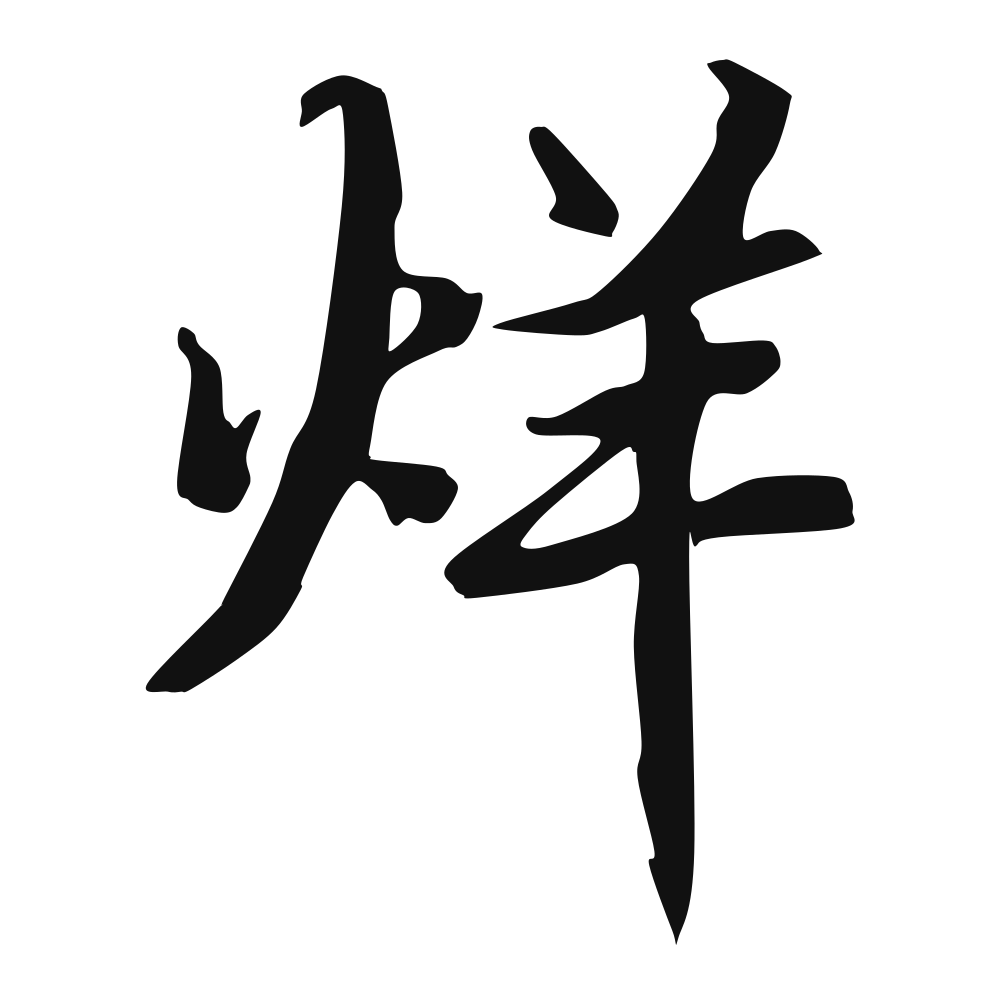
The Calligrapher — Lù Jiǎnzhī 陆柬之
Tang calligrapher and nephew of Yu Shinan; his running-script 'Essay on Literature' survives
Tang calligrapher (), master of running script — known for 《文赋》. Tang dynasty
Cultural Story
烊 means metal melting, and by a clever everyday turn, a shop 'melting shut' — closing. Classical usage is sparse, mostly in southern glosses for smelting and fusion. The word's charm is its double life: the same heat that liquefies bronze also ends the market day, fire as both making and ending, the forge and the locked gate.
Common words & phrases
- 打烊 close shop
- 烊化 melt
Read the story behind the character
Shops 打烊 at ten, rolling the shutter down as the day 'melts' closed, and ice cream 烊化 into a sticky puddle on a hot bench. You rush to buy milk before the store 打烊, then watch a snow cone 烊化 in the sun. The character quietly marks the small endings and softenings of city life.
Why this character belongs on skin
It begins as heat on the skin, the kind that loosens whatever in you has been standing too long. Yang is the character for melting — fire beside a solid thing, ore surrendering to flame until it runs bright and liquid, ready to be poured into a new shape. The ancients watched bronze flow in the foundry and understood something the body also knows: nothing precious becomes anything new while it stays rigid. The Daoist sages loved water and softness for this reason — what yields cannot be shattered. Even the Christian mystics spoke of souls being refined like metal in a furnace, not destroyed but changed, the dross burning off until only the true metal remained. You have been hard for a long time. You have held your shape against seasons that asked otherwise. This is the mark for the moment you finally let the fire do its work — not a breaking, but a melting into something poured, gleaming, and entirely yours.
Own this character
Purchase delivers the original SVG of this glyph, brushed by Lù Jiǎnzhī 陆柬之, ready to place on skin, paper, or screen.