
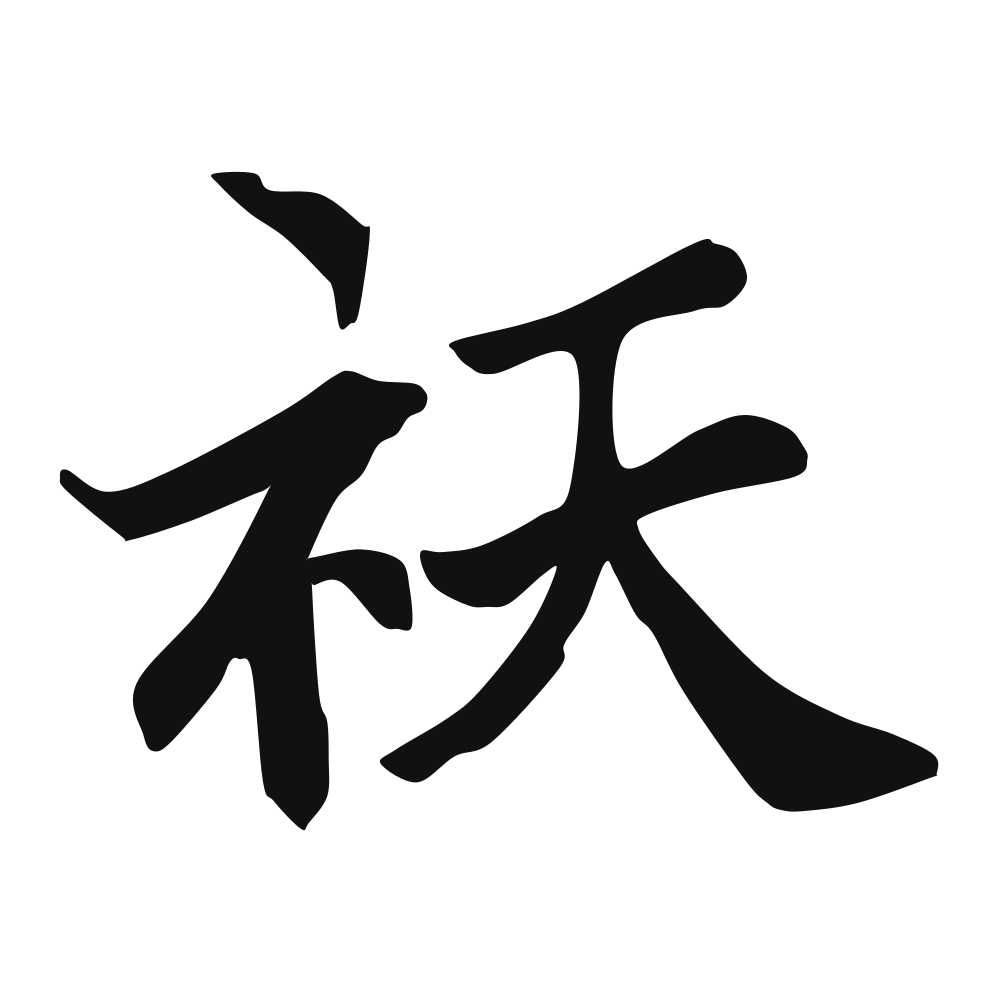
祆
Ahura Mazda, the creator deity in Zoroastrianism
Closest English meanings
Zoroastrian
The Calligrapher — Lù Jiǎnzhī 陆柬之
Tang calligrapher and nephew of Yu Shinan; his running-script 'Essay on Literature' survives
Tang calligrapher (), master of running script — known for 《文赋》. Tang dynasty
Cultural Story
祆 is China’s own word for Zoroastrianism, the Persian fire religion carried east by Sogdian merchants. Tang Chang’an licensed 祆祠, fire-temples, for its Central Asian communities, and the court even kept special officials to oversee this foreign faith.
Common words & phrases
- 祆教 Zoroastrianism
- 祆祠 Zoroastrian temple
Read the story behind the character
Outside scholarship, 祆 is rare now. Textbooks and documentaries introduce 祆教, Zoroastrianism, when tracing Silk Road religions; Xi’an’s exhibits of Sogdian tombs mention its 祆祠, temples. The character itself survives as a small museum-piece of Tang cosmopolitanism.
Why this character belongs on skin
祆 is one of the great meeting-points on the Silk Road—the character coined in Tang-dynasty China to write Zoroastrianism, the faith of fire, brought west-to-east by Persian merchants in Sogdian caravans. The radical is spirit; inside it, heaven. Fire temples stood in Chang'an; priests in white masks tended flames that were never allowed to die, because in that religion fire is the purest thing the visible world offers—an image of truth that consumes nothing and illuminates everything. Think of it: an inked bridge between Persia and Cathay, between the prophet Zarathustra and the Middle Kingdom. To wear 祆 is to carry that ancient flame, the idea that light is a moral force. A rare character, a traveler's character, a fire that has crossed the world to reach your skin.
Own this character
Purchase delivers the original SVG of this glyph, brushed by Lù Jiǎnzhī 陆柬之, ready to place on skin, paper, or screen.