
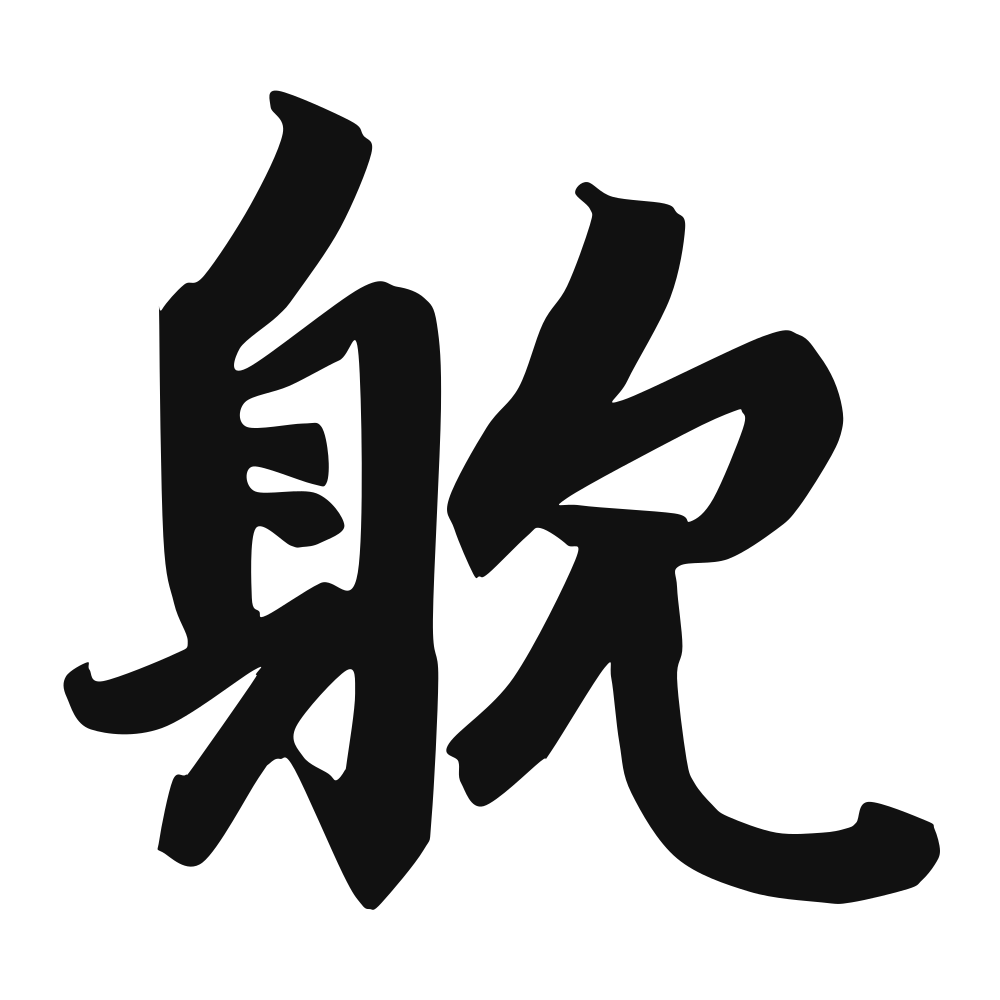
耽
to indulge in; to delay
Closest English meanings
indulge·delay·love
The Calligrapher — Lù Jiǎnzhī 陆柬之
Tang calligrapher and nephew of Yu Shinan; his running-script 'Essay on Literature' survives
Tang calligrapher (), master of running script — known for 《文赋》. Tang dynasty
Cultural Story
The ear radical betrays the character's logic: to 耽 is to linger where sound and pleasure hold you — ears stayed too long at the feast. The Book of Songs warns a bride plainly: do not lose yourself with a man, for when love sours the woman bears the ruin — the oldest Chinese warning against indulgence in another's charm.
Common words & phrases
- 耽误 delay · hold up
- 耽搁 delay · put off
- 耽溺 indulge · addict
- 耽乐 indulge in pleasure
- 耽玩 delight in
Read the story behind the character
The verb now chases screens and schedules: a weekend gamer 耽溺 (indulge, addict) until dawn; one late bus 耽误 (delay, hold up) the whole morning's meetings, and a rainy-day 耽搁 (delay, put off) pushes dinner to ten. Smaller pleasures keep the gentler sense — a collector 耽玩 (delight in) his stamps at midnight, and retirees 耽乐 (indulge in pleasure) over tea, entirely unrepentant.
Why this character belongs on skin
The ancients drew it as ears grown heavy — the listener so sunk in the song he forgets to rise. Dān is the sweet delay, the indulgence, the thing you linger in past wisdom: wine, a face, a sorrow you refuse to set down. To耽 is to be willingly late to everything else. The Daoist warns that the river waits for no man who pauses to admire his reflection; yet the poet answers that only the man who lingers learns the water's name. Buddhism names attachment the root of ache, and dān is its tender shape. Wear it where pleasure first lands — the throat, the wrist. Let it mark the things you chose to be late for, the beautiful delays that were, in the end, the only hours that were truly yours.
Own this character
Purchase delivers the original SVG of this glyph, brushed by Lù Jiǎnzhī 陆柬之, ready to place on skin, paper, or screen.